Direct Answer: PPE and poly barriers fail when contaminated gloves, soot-covered Tyvek suits, or wet cartons cross containment zippers into clean hallways and box trucks. Enforcing OSHA 1910.132 hazard-matched PPE, OSHA 1910.134 respiratory controls, OSHA 1910.1030 bloodborne hygiene, two-stage zippered decon airlocks, and clean-hands/dirty-hands splits keeps crews healthy and clean zones uncontaminated.
.md twin for estimator QA and carrier file documentation.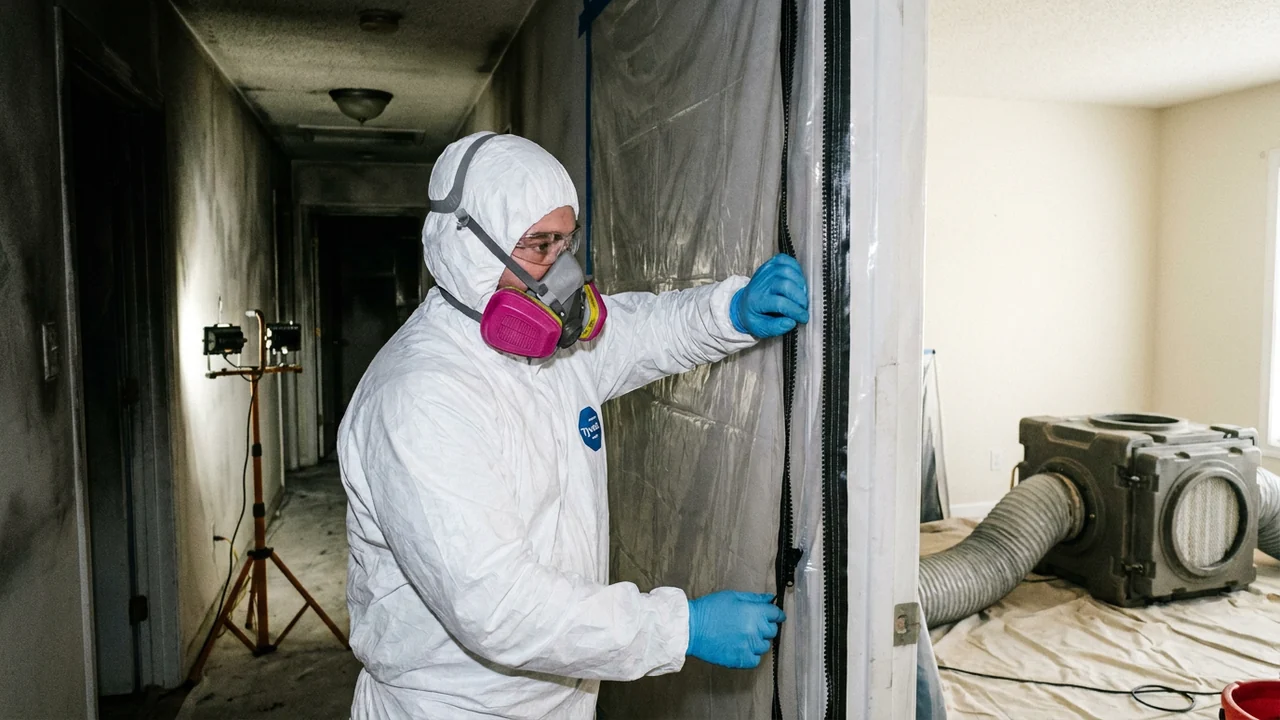
On heavy fire-soot and Category 3 sewage or flood losses, technical pack-out errors rarely start with a dropped box; they start with a technician unzipping a containment barrier with soiled nitrile gloves, wiping a sweaty forehead with a soot-stained sleeve, or carrying a wet cardboard box down an unaffected carpeted hallway. Within thirty minutes, toxic combustion particulates or enteric pathogens migrate onto clean living areas, truck steering wheels, and lunch coolers.
Defensible field hygiene integrates physical containment craft under ANSI/IICRC S320, ANSI/IICRC S500, and ANSI/IICRC S700 with federal worker-protection rules: OSHA 1910.132 PPE standards, OSHA 1910.134 respiratory protection, and OSHA 1910.1030 bloodborne pathogens controls.
Safety & Regulatory Scope Disclaimer: Restoration contents contractors and crew leads do not act as licensed Industrial Hygienists, medical officers, or environmental compliance authorities. Employers must maintain formal written PPE hazard assessments, respirator medical clearances and fit-test programs, and bloodborne-pathogen exposure plans, and must halt work for licensed abatement whenever regulated asbestos, lead, or biohazards exceed crew qualification.
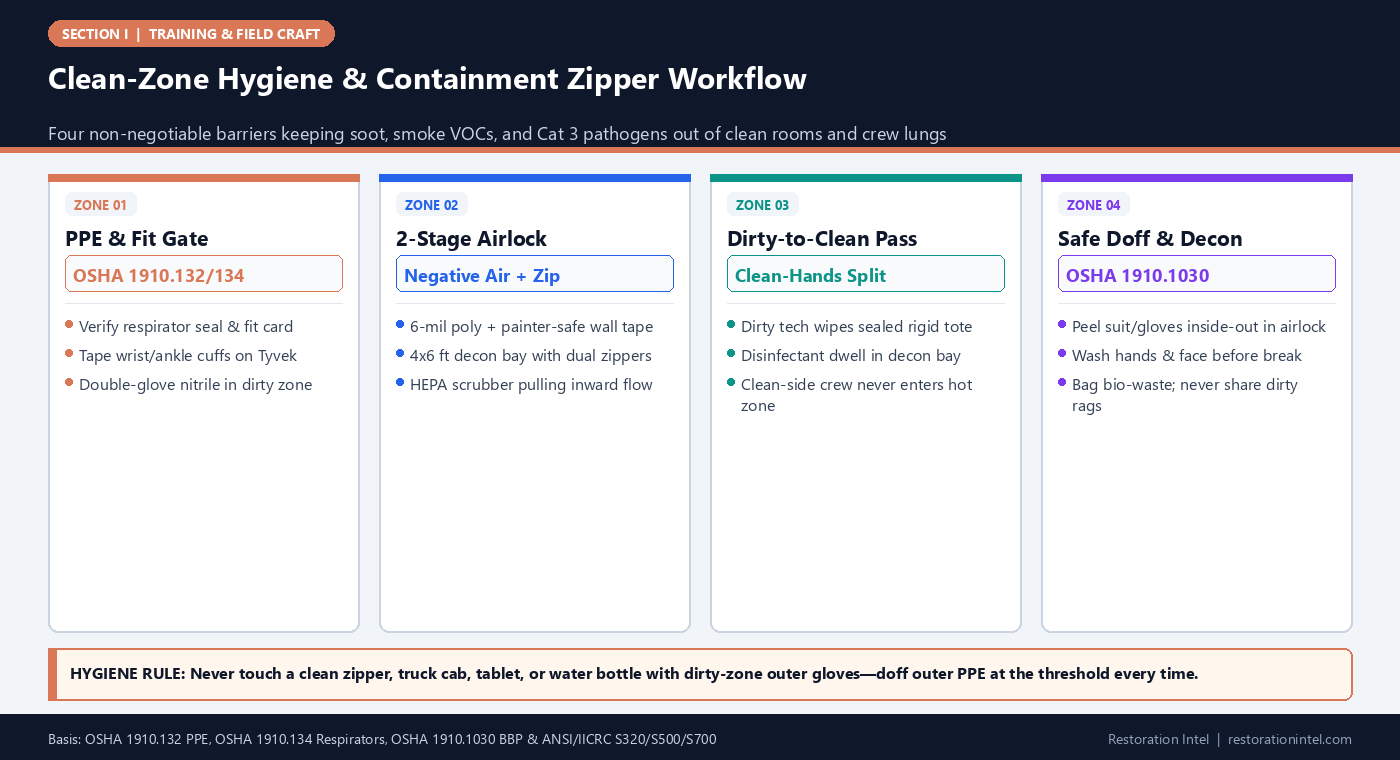
Clean-Zone Hygiene & Containment Zipper Workflow
PPE, Containment Zipper & Clean-Zone Hygiene Matrix (Soot vs. Category 3)
Operational controls comparing heavy fire-soot pack-outs against Category 3 sewage/flood contents transfers across barrier engineering, respiratory/dermal protection, and exit decontamination.
| Control Layer | Heavy Soot / Synthetic Fire Job | Category 3 Sewage / Flood Job | Common Field Breakdown | Mandatory Crew Correction |
|---|---|---|---|---|
| Respiratory Protection (OSHA 1910.134) | Fit-tested half/full-face elastomeric respirator with P100 + organic-vapor/acid-gas cartridges | Fit-tested N95+ / P100 particulate or elastomeric respirator; splash shield when agitating | Loose ear-loop dust masks, bearded facepieces, or expired saturated cartridges | Enforce clean-shaven seal check, written medical/fit clearance, and cartridge swap log |
| Dermal & Splash PPE (OSHA 1910.132 / 1030) | Breathable/particulate Type 5/6 coveralls, nitrile gloves, eye protection, dedicated boots | Fluid-resistant coveralls, double nitrile gloves, splash goggles/shield, rubber boot covers | Torn sleeve cuffs, bare wrists, or wearing soiled outer gloves into clean hallways | Tape glove-to-cuff seams in wet Cat 3; swap torn outer gloves immediately inside zone |
| Containment & Zipper Airlock | 6-mil poly doorway barrier with weighted/zippered flap + HEPA scrubber keeping soot negative | Two-stage 6-mil poly decon chamber (4×6 ft) with floor poly runners to exterior exit | Propping zippers open for cart traffic or blowing positive air into clean bedrooms | Maintain inward negative airflow; keep flaps zipped except during active decon pass |
| Container & Clean-Zone Transfer | Wipe/HEPA-vacuum carton exteriors in decon bay before passing to clean corridor team | Use washable lidded plastic totes ONLY (zero cardboard); EPA disinfectant wipe & dwell | Carrying dusty or wet-bottom boxes straight across clean rugs and truck seats | Enforce Dirty-Hands / Clean-Hands crew split across the decon threshold |
| Doffing, Breaks & Truck Hygiene | HEPA-vac suit before doffing; remove coveralls inside-out; wash hands/face prior to hydration | Step onto decon pad, strip outer gloves/boots/suit inside-out, seal in 6-mil bio-bag, handwash | Eating lunch, checking personal phones, or driving cab in soot/sewage coveralls | Store clean water, food, and clean spare PPE strictly outside hot zone in clean staging |
PPE Selection, Seal Checks, and OSHA 1910.132 / 1910.134 / 1910.1030 Discipline
Field crews often treat protective gear as a morning formality—putting on a Tyvek suit in the driveway and wearing the same torn gloves until lunch. On soot and Category 3 contents projects, improperly matched or poorly sealed PPE fails silently. Under OSHA 1910.132, employers select PPE based on documented task hazards: fine acidic soot and synthetic polymer smoke demand sealed eye protection and particulate-barrier coveralls, whereas raw sewage backflows require fluid-impervious garments, splash shields, and boot covers.
Respiratory protection carries even stricter rules under OSHA 1910.134. Disposable nuisance masks do not block combustion VOCs or bio-aerosols, and no tight-fitting respirator protects a worker with facial hair breaking the sealing flange or without prior medical evaluation and fit testing. Technicians entering smoke-loaded rooms pair P100 particulate filters with organic-vapor cartridges where off-gassing persists, running positive- and negative-pressure user seal checks at every donning.
Whenever raw sanitary sewage, hypodermic needles, medical waste, or bodily fluids may hide inside flooded drawers or laundry hampers, OSHA 1910.1030 bloodborne-pathogen practices govern handling: puncture-resistant sharps awareness (never compressing trash bags with bare hands or knees), double gloving, immediate soap-and-water handwashing after glove removal, and documented exposure reporting if skin or mucous membranes are breached.
- Verify fit before entry: Never assign a technician to tight-fitting respiratory work without documented medical clearance, annual fit testing, and a clean-shaven seal.
- Double-glove Cat 3 standard: Wear inner nitrile exam gloves beneath tougher outer work/chemical gloves so outer tears never expose bare skin.
- Protect tablets & radios: Seal field tablets inside wipeable clear zip sleeves before entering dirty zones so documentation tools never turn into fomite vectors.
Building Two-Stage Containment Zippers and Enforcing Clean-Hands / Dirty-Hands Splits
A single poly flap taped loosely over a doorframe tears within an hour of pack-out traffic. Effective containment uses 6-mil polyethylene sheeting fastened cleanly with low-tack painter’s tape protecting finished trim, reinforced by heavy containment tape and two zippered access chambers forming a four-by-six-foot decontamination airlock. Negative air created by a HEPA air scrubber inside the contaminated room draws clean make-up air inward across both zippers so disturbed soot or spores cannot drift outward.
Even the tightest barrier collapses if the same technician walks back and forth from the sewage room to the box truck. Instead, leads divide the crew into Dirty-Zone Handlers and Clean-Zone Receivers. Dirty-zone staff remain inside containment to photograph, inventory, and seal items into lidded plastic totes (mandatory for Category 3 per Cat 3 pack-out rules) or HEPA-vacuumed cartons, passing each sealed container into the decon vestibule.
Inside the decon bay, a designated tech wipes tote lids and handles with an EPA-registered disinfectant matching required label dwell time or HEPA-brushes dry soot off carton seams before setting the container on the clean exit pad. Clean-zone loaders never step past the clean zipper, ensuring truck interiors and unaffected hallways remain spotless.
- Painter-safe wall protection: Lay blue painter’s tape first on painted drywall or wood casings before applying high-tack containment tape.
- Never prop zippers open: Tape weights or magnetic self-closing strips alongside heavy-duty peel-and-stick zippers, and close immediately after each pass.
- Rigid totes for wet Cat 3: Ban corrugated cardboard from wet Category 3 zones; porous boxes wick sewage and collapse before reaching the truck.
Step-by-Step Safe Doffing Sequence to Prevent Self-Contamination
Epidemiological and industrial-hygiene studies consistently show that workers contaminate themselves most often while taking gear OFF, not while working in it. Grabbing the front of a soot-coated zipper or pulling off a respirator with sewage-wet gloves transfers concentrated residue straight onto hands, neck, and face. Crew leads must drill one fixed doffing sequence until it becomes automatic.
Step 1 happens inside the decon airlock before touching clean zippers: HEPA-vacuum loose dry soot from shoulders, sleeves, and boot soles (or step onto a disinfectant-dampened decon mat on Cat 3 water jobs), then peel off outer boot covers and outer gloves, dropping them directly into a lined 6-mil waste bag. Step 2: unzip and peel coveralls downward inside-out from shoulders to ankles without shaking fabric, rolling the contaminated exterior inward.
Step 3: step onto the clean pad, remove eye protection by the temple arms, remove the respirator strictly by the back straps without touching the filter facepiece, and strip inner nitrile gloves inside-out by hooking under the clean wrist cuff. Step 4: wash hands, wrists, and face immediately at the portable handwash station before drinking water, touching a phone, or entering a truck cab.
- Inside-out roll rule: Always peel coveralls and gloves so contaminated outer surfaces fold strictly inward toward the disposal bag.
- Respirator comes off last: Keep respiratory protection sealed while stripping dusty coveralls so airborne shake-off is never inhaled.
- Dedicated clean-cab rule: Never climb into a company truck cab wearing job-site coveralls or contaminated boots; change shoes at the clean tailgate.
Clean-Zone Staging, Break Hygiene, and Regulatory Handoff Boundaries
Clean-zone hygiene fails fastest during lunch breaks and late-afternoon fatigue. Crews must set up two physically separated staging areas on every dirty job: a clean hydration, snack, and spare-PPE table positioned upwind outside the decon line, and a dedicated dirty-tools and bagged-waste staging zone. Personal water bottles, coolers, tobacco/vapes, and street jackets never cross inside the perimeter.
Shared equipment—dollies, furniture straps, step ladders, and clipboards—also requires clean-zone discipline. Equipment used inside soot or Category 3 containment stays inside until wiped down and disinfected at job completion; never roll a sewage-muddy hand truck onto a customer’s clean driveway or into tomorrow’s clean-water residence.
Finally, crew leads must recognize when field hygiene hits a regulatory wall. Whenever disturbed pre-1980 thermal pipe insulation, chalking pre-1978 lead paint dust, unknown leaking chemical drums, or active medical biohazard spills appear, standard contents PPE and poly zippers are not sufficient. Stop capture, secure the zipper, keep unprotected occupants clear, and wait for licensed abatement or Industrial Hygienist clearance before resuming contents movement.
- Tool decon before truck loading: Wipe dolly wheels, step ladders, and extension cords in the decon bay before stowing them back in truck racks.
- Segregate PPE waste: Gooseneck-seal spent Tyvek suits, gloves, and filters in heavy-mil waste bags rather than tossing them loose in residential trash cans.
- Stop-work on regulated toxins: Never treat suspect asbestos, lead dust, or unidentified hazmat with routine soot/Cat-3 procedures.
Practitioner Verification Checklist (I-15)
- Confirm documented OSHA 1910.132 PPE selection, OSHA 1910.134 respirator medical/fit clearance, and clean-shaven seals before entry.
- Erect 6-mil poly containment with painter-safe under-tape, a two-stage zippered decon airlock, and negative-pressure HEPA airflow pulling inward.
- Enforce Dirty-Hands / Clean-Hands crew separation across the decon threshold so dirty gloves never touch clean hallways, zippers, or truck cabs.
- Use washable lidded plastic totes (never porous cardboard) inside wet Category 3 zones, wiping exteriors in the decon bay with EPA-registered disinfectant.
- Follow the fixed inside-out doffing sequence (boots/outer gloves -> coveralls -> eye/respirator by straps -> inner gloves) and wash hands/face before breaks.
- Decontaminate dollies, ladders, and tablet sleeves before loading clean trucks, and halt immediately if suspect asbestos, lead dust, or unknown hazmat appears.
Standards, Authority References & Related Reading
Primary standards, insurance definitions, and sibling Restoration Intel guides referenced in this brief:
- OSHA 1910.132 Personal Protective Equipment Standard
- OSHA 1910.134 Respiratory Protection Standard
- OSHA 1910.1030 Bloodborne Pathogens Standard
- ANSI/IICRC S320 Standard for Professional Contents Restoration
- ANSI/IICRC S500 Water Damage Standard
- ANSI/IICRC S700 Fire & Smoke Restoration Standard
- Related Guide: Managing Unlabeled Liquids, Chemicals, Aerosols, and Flammables During Pack-Out
- Related Guide: Night-Before Job Readiness Checklists: Chargers, Labels, Lighting, Tablets, and PPE Kits
- Related Guide: IICRC Cat 3 Contents Pack-Out Protocol
- Related Guide: Contents Restoration After Fire: Pack-Out Protocols, Cleaning Methods, and Insurance Inventory
- Related Guide: Salvage Is a Window, Not a Service
.md twin for desk QA and team training.Frequently Asked Questions
Why do pack-out crews need a two-stage zippered decon airlock instead of a single poly flap?
A single flap allows soot and bio-aerosols to puff into clean rooms during container transfers and leaves no dedicated space to wipe totes or doff dirty outer PPE before stepping onto clean flooring.
In what order should technicians remove contaminated PPE on soot or Category 3 jobs?
HEPA-vac or step on a decon pad first, then remove outer boot covers and outer gloves, peel coveralls inside-out without shaking, step to the clean pad, remove eye protection and respirator by the straps only, strip inner gloves inside-out, and wash hands and face.
Are disposable dust masks compliant for heavy fire-soot or Category 3 sewage pack-outs?
No. Under OSHA 1910.134, nuisance dust masks do not protect against fine combustion VOCs or sewage bio-aerosols; crews require hazard-matched fit-tested respirators (such as P100 or P100/OV elastomeric units) backed by medical evaluation and fit testing.
How does OSHA 1910.1030 apply to residential Category 3 contents pack-outs?
Whenever raw sewage, floodwater mixed with sanitary waste, sharps, or bodily fluids are present, crews must apply bloodborne-pathogen controls: double gloving, zero blind hand compression of waste bags, splash protection, safe inside-out doffing, and immediate handwashing.