Updated November 24, 2026 — expanded with ANSI/IICRC S500 Category 3 black-water isolation, EPA disinfectant dwell rules, and contents triage bridge alongside Print-First PDF brief and Markdown twin.
Direct Answer: The short answer: a sewage backup is a Category 3 (black water) event — grossly contaminated water carrying bacteria, viruses, and parasites. The first hour is about keeping people away from it, not cleaning it. Stop using water, keep everyone out, photograph everything, shut off HVAC so contaminants don’t spread.
.md twin for Water Mitigation & Structural Drying.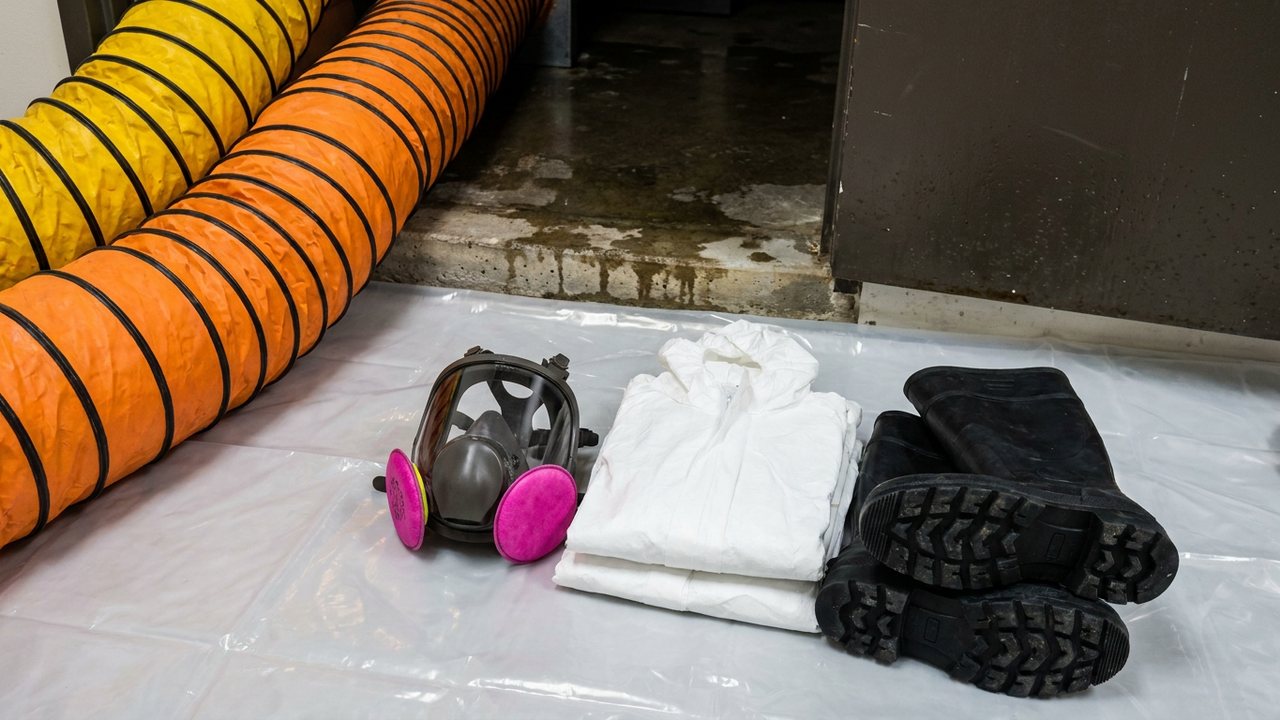
| Cat. 3 Phase | IICRC S500 & EPA Control | Porous vs. Non-Porous Rule | Clearance & Claim Documentation |
|---|---|---|---|
| 1. Hazard Isolation | Shut off HVAC & water; keep occupants clear. | Establish negative-air barrier at clean line. | Photograph standing water & sewer point. |
| 2. Extraction & PPE | Full splash/respiratory PPE; sealed bio-bags. | Extract sludge cleanly without aerosolizing. | Log backup endorsement vs. main sewer tie. |
| 3. Porous Tear-Out | Remove wet carpet, pad, particleboard, gypsum. | Flood-cut drywall above capillary wicking line. | Photo non-salvage in place (Cat. 3 triage). |
| 4. Gross Clean + Dwell | HEPA vac framing; scrub concrete & tile. | Apply EPA disinfectant for full wet dwell time. | Label lot, EPA reg. #, and dwell minutes. |
| 5. Verification & Dry | Verify framing dry standard before enclose. | Visual/ATP or IEP clearance on heavy losses. | Upload clearance sign-off prior to rebuild. |
The short answer: a sewage backup is a Category 3 (black water) event — grossly contaminated water carrying bacteria, viruses, and parasites. The first hour is about keeping people away from it, not cleaning it. Stop using water, keep everyone out, photograph everything, shut off HVAC so contaminants don’t spread through the ducts, and call professionals. This is not a DIY cleanup beyond a very small contained spill.
Why sewage is different from other water damage
The IICRC S500 standard classifies water losses by contamination level, and sewage sits at the top: Category 3 — black water. It can carry E. coli, salmonella, hepatitis A, norovirus, giardia, and other pathogens. Harm comes through skin contact, ingestion, and inhalation — the microbial load is highest in the first hours, and some of it becomes airborne.
The practical consequence: everything porous that touched it gets removed, not cleaned. Carpet, pad, drywall, insulation, fiberboard — these absorb contaminated water into their structure, and no amount of surface cleaning reaches it. Household cleaners aren’t designed for this; professional cleanup uses EPA-registered disinfectants after physical removal of the contamination. Non-porous surfaces (tile, sealed concrete, metal) can typically be cleaned and sanitized properly.
Your first five moves
- Stop using water. Every flush, shower, and laundry cycle feeds the backup. Nothing down any drain until the cause is known.
- Keep people and pets out. Children and pets especially — contact and splash transmit pathogens. If the backup is extensive, plan to stay elsewhere until professionals confirm the space is clear.
- Kill power to affected areas at the breaker — but only if you can do it without standing in water. Water near outlets or appliances plus electricity is its own emergency.
- Shut off the HVAC. Central air can pull contaminants and odors into the ductwork and spread them to clean rooms. This is the step most people miss.
- Photograph everything before touching anything. Water depth, affected rooms, damaged belongings, the source if visible. Your insurance claim is built on these photos. Then call your insurer and a certified restoration company.
Check the neighbors. If they’re backing up too, the problem is likely the city main — report it to your local utility. That changes both the fix and who pays.
What professional cleanup actually involves
A proper sewage remediation follows a defined sequence — this is what you’re paying for:
- Containment. The affected area is isolated with barriers; HEPA-filtered negative air machines capture aerosols during work.
- Extraction. Standing wastewater and solids removed with commercial extraction equipment, disposed of per local requirements.
- Removal of unsalvageable materials. Carpet, pad, affected drywall, insulation — anything porous that absorbed black water comes out. This prevents hidden contamination behind baseboards and inside wall cavities, where odor and bacteria persist.
- Cleaning and disinfection. Remaining surfaces are cleaned to remove organic soils first (disinfectants work poorly on top of visible contamination), then treated with EPA-registered products labeled for sewage cleanup.
- Structural drying. Industrial dehumidifiers and air movers bring moisture levels back to target; technicians verify with meters, not guesses.
- Restoration. Rebuild of removed materials — drywall, flooring, trim — returning the space to pre-loss condition.
Typical residential timeline: a few days to about a week, depending on severity.
What can be saved vs. what goes
- Usually saved: tile, sealed concrete, metal fixtures, solid wood furniture that can be properly disinfected (case by case)
- Usually removed: carpet and pad, drywall below the contamination line, insulation, particleboard/fiberboard, upholstered items that absorbed sewage, any food that contacted the water
The rule is simple: if it’s porous and it absorbed black water, it goes. Sentimental items are the hard calls — a professional can advise what’s safely restorable, but porous keepsakes from a sewage event are rarely worth the risk.
Insurance: check for the endorsement
This is the coverage gap that surprises people: many standard homeowners policies exclude sewer and drain backup unless you’ve added a specific endorsement or rider. It’s often an inexpensive add-on — and the time to discover you don’t have it is not during the backup. If neighbors are affected by a city main failure, municipal liability may enter the picture, which is another reason to document and report promptly.
Most policies also carry a “duty to mitigate” — you’re expected to take reasonable steps to prevent further damage (stopping water use, calling professionals promptly). Document that you did.
Prevention
- Backwater valve: the single best defense. Installed on your sewer lateral, it lets wastewater out but prevents the city line from pushing back in. Essential in areas with combined sewers or a history of surcharging.
- Sewer lateral inspection: older homes with clay or cast-iron lines are prone to root intrusion and collapse. A camera scope ($200–$400) finds problems before they become backups.
- Don’t treat drains as trash cans: grease, wipes (even “flushable” ones), and hygiene products are the most common causes of homeowner-side blockages.
- Know your endorsement: confirm the sewer backup rider is on your policy and know its limit.
Where this comes from
- Standard: IICRC S500 Category 3 (black water) classification and remediation principles (IICRC S500).
- Public health: CDC guidance on sewage contamination — discard porous materials, clean hard surfaces with detergent before disinfecting.
- From the field (labeled): the first-five-moves sequencing and the neighbor-check tip reflect working restoration practice (third-party, not any single official source).
- Related on Restoration Intel: Basement Water Damage · How Much Does Water Damage Restoration Cost? · Signs of Hidden Water Damage · Emergency Loss Documentation and Insurance Notification · Restoration Equipment
Black water is a health event first and a property event second. Keep people away, stop the inflow, document, and let certified crews do the rest.
Sewage Backup Cleanup: What to Do When Black Water Comes Inside — Visual Workflow
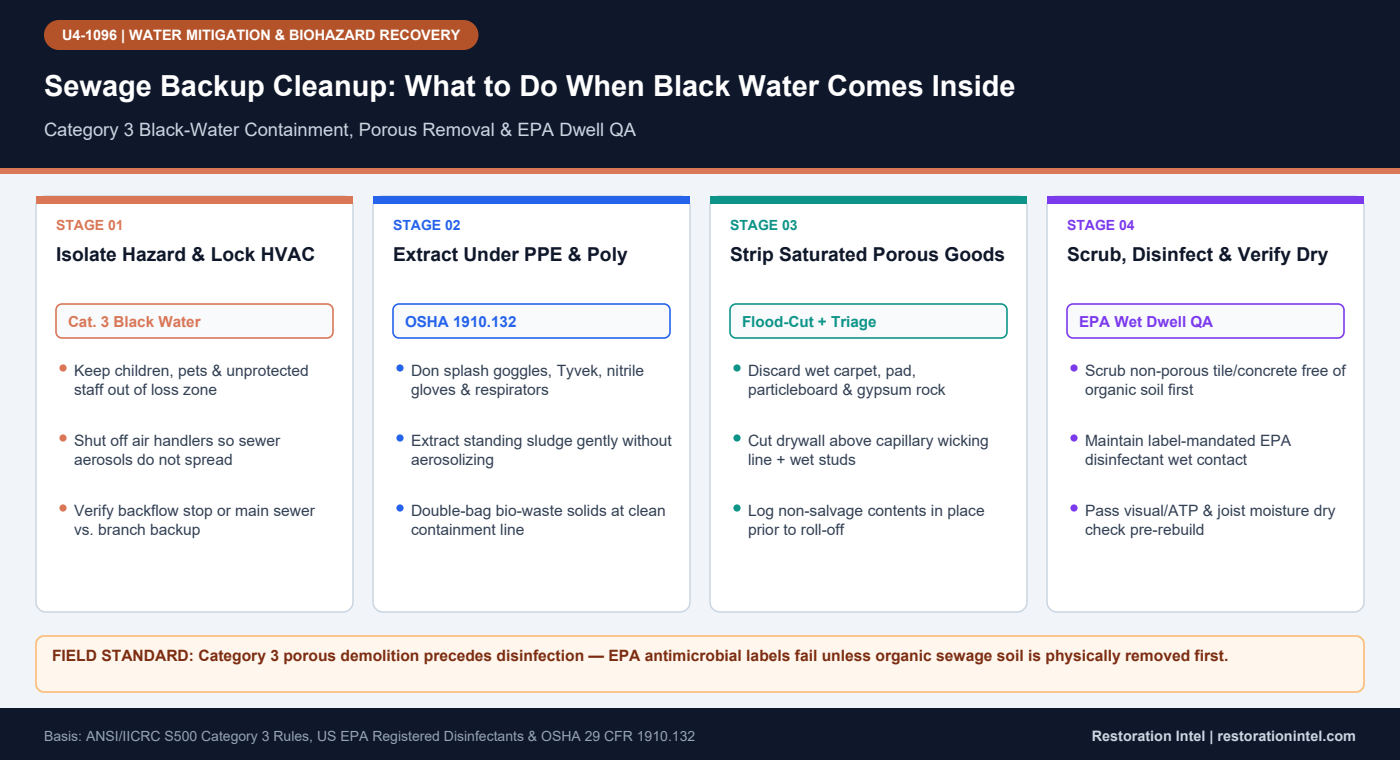
Practitioner Operational Takeaways
- Treat every sanitary sewer or septic overflow as Category 3 black water — surface spraying soiled carpet or drywall leaves pathogens trapped inside fibers.
- Lock out HVAC systems immediately and isolate negative-air containment before tearing out wet gypsum or baseboard cavities.
- Log EPA-registered disinfectant product names, EPA registration numbers, and actual wet-contact dwell minutes in daily sheets.
- Verify water/sewer backup endorsement limits early and photograph condemned porous contents in place before dumpster loading.
Standards & Primary References
- Markdown Twin (.md)
- ANSI/IICRC S500 Standard for Professional Water Damage Restoration
- US EPA Selected EPA-Registered Disinfectants
- First-24h Category 3 Contents Triage Protocol (RI #2554)
Frequently Asked Questions
Why can porous drywall and carpet not be disinfected after a sewage backup?
Black water penetrates cellular drywall core, padding, and wood fibers where surface disinfectants cannot achieve pathogen-killing wet contact with organic soil.
What is the required order between cleaning and disinfecting sewage?
Gross physical soil removal and detergent scrubbing come first; EPA-registered disinfectants are only effective on pre-cleaned surfaces held wet for full label contact time.
Does standard homeowners insurance cover sewage backups?
Standard policies usually exclude sewer and drain backups unless the owner carries a specific Water/Sewer Backup endorsement with a stated sublimit.
.md twin for carrier and field review.