Direct Answer: During the first 24 hours after a structure fire, contents crews must clear fire-marshal release and honor NFPA 921 origin-zone holds, stop acidic soot corrosion and hose-water moisture through rapid dehumidification and metal corrosion-inhibitor misting, and stabilize invisible greasy protein films without hot water or smearing before permanent etching and staining lock in.
.md twin for estimator QA and carrier file documentation.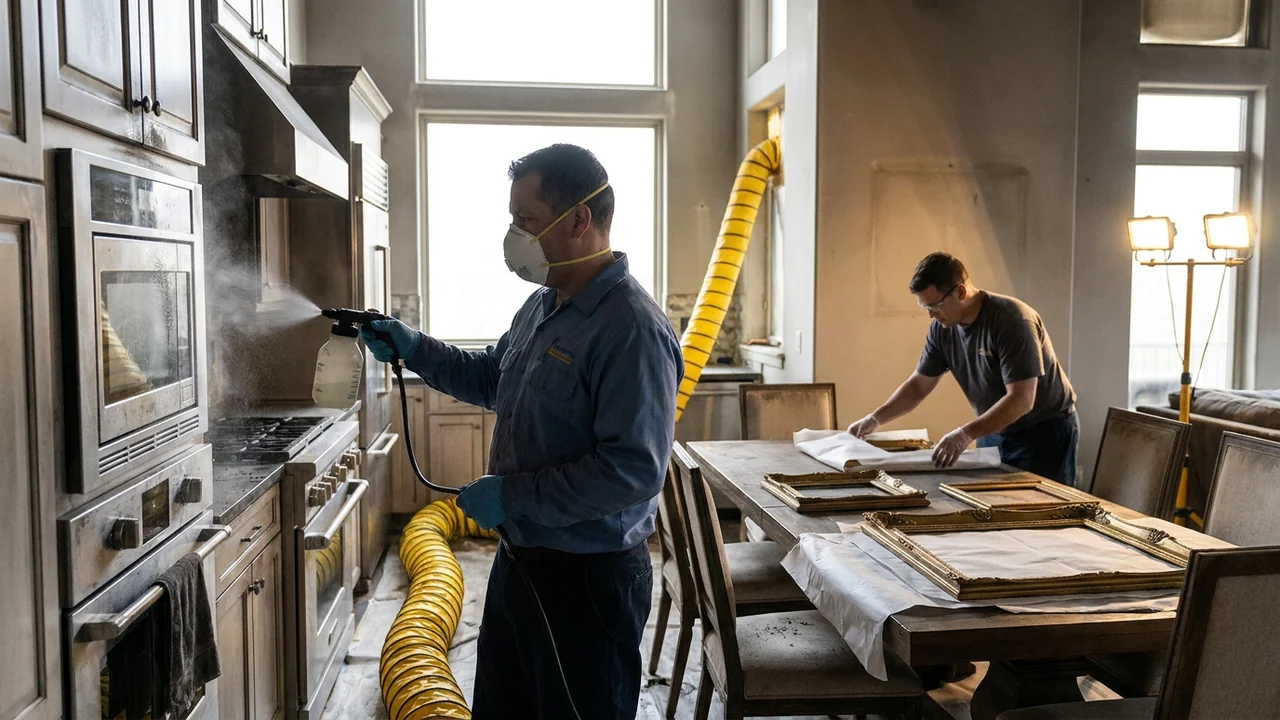
Once fire suppression crews roll up their hoses, a quieter destructive clock starts ticking across the structure’s personal property. Modern residential and commercial fires burn synthetic polymers, polyvinyl chloride wiring, foam cushions, and cabinetry adhesives, producing acidic soot loaded with chlorides and sulfates. Combined with water left behind by fire hoses and humid air, those acidic particles begin pitting chrome faucets, tarnishing brass hardware, etching natural stone countertops, and corroding circuit-board solder joints within the first 24 hours.
Protein-residue fires—common in residential kitchens when meat, poultry, or cooking oils scorch slowly inside an oven or on a stovetop—introduce an entirely different day-one hazard. Often leaving little visible black carbon soot, protein combustion deposits an invisible, yellowish polymerized grease aerosol across every cabinet face, appliance door, upholstery fiber, and hallway wall. If rushed crews apply warm water or harsh alkaline sprays before understanding the film chemistry, they smear lipids deeper into porous surfaces and lock in a pungent, persistent rancid odor.
Effective first-24-hour stabilization under ANSI/IICRC S700 and ANSI/IICRC S320 demands restraint as much as speed: confirming structural clearance, protecting NFPA 921 origin-and-cause evidence, equipping teams with respiratory and dermal PPE under OSHA 1910.132, and executing targeted mitigation steps that keep salvage windows open.
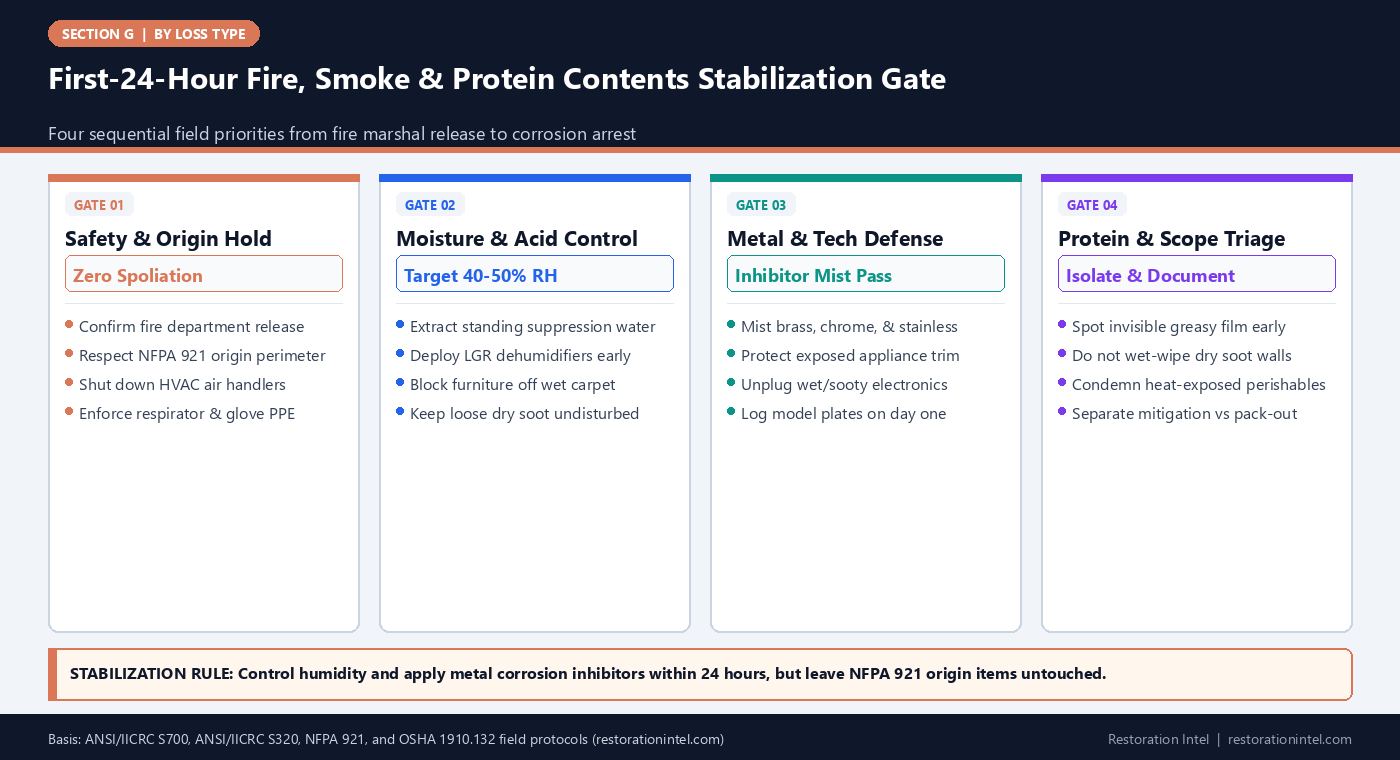
First-24-Hour Fire, Smoke & Protein Contents Stabilization Gate
First-24-Hour Fire & Smoke Residue Triage & Stabilization Matrix
Immediate stabilization steps and strict prohibitions sorted by combustion residue and secondary suppression exposure.
| Residue / Exposure Type | Visual & Olfactory Clues | Primary 24-Hour Damage Mechanism | Approved Day-One Action | Prohibited Action That Worsens Loss |
|---|---|---|---|---|
| Dry Soot (High-oxygen wood/paper burn) | Fine, powdery black ash that brushes away easily without smearing | Airborne redistribution and permanent embedding into open textures if wiped wet | HEPA vacuum with soft brush nozzle held slightly off surface; isolate rooms | Wet wiping, damp ragging, or blasting high-velocity air movers across dry soot |
| Wet / Synthetic Soot (Smoldering plastics/foam) | Thick, sticky, tar-like black residue with sharp acrid plastic odor | Rapid acidic etching of glass, lacquer softening, and permanent fabric staining | Stabilize humidity, document affected finishes, and apply protective barrier on metals | Scrubbing painted walls or fabrics with dry sponges that smear oily tars |
| Protein Residue (Kitchen meat/grease fire) | Light amber/yellow haze or near-invisible tacky film with strong rancid smell | Lipid polymerization onto cabinet finishes, metals, and HVAC returns | Shut off HVAC, ventilate safely where approved, and document film under raking light | Running hot-water wipes or high-heat drying before degreasing solvents |
| Suppression Water + Soot Slurry | Wet carpets, pooled ash water on floors, and saturated lower cabinet bases | Capillary wood swelling, rapid rust blooms, and secondary mold growth within 48 hrs | Extract standing water, deploy dehumidification, and elevate furniture onto poly blocks | Leaving wood legs sitting on wet carpet or sealing up warm damp rooms |
| Polished Metals & Brightwork | Soot film over chrome faucets, brass lamps, stainless appliances, and hardware | Acid-chloride pitting and irreversible surface corrosion accelerated by humidity | Lightly clean/protect accessible trim with approved water-displacing corrosion inhibitor | Using abrasive pads or leaving damp acidic soot resting overnight on fixtures |
| Electronics & Motorized Appliances | Soot around cooling vents, damp cords, or smoke exposure in media centers | Conductive carbon tracking, short circuits, and solder-joint corrosion | Verify power is off, photograph rear vents/plates, and move to climate-stabilized hold | Plugging in or testing smoky electronics to see if they still turn on |
Site Clearance, NFPA 921 Origin Holds, and OSHA PPE Before Entry
First-24-hour urgency never overrides life safety or forensic chain of custody. Before any contents technician carries a camera or dehumidifier across the threshold, the project lead must verify formal release from the fire department, confirm utility isolation (gas shutoff and electrical lockout/tagout where damaged), and check structural shoring around charred joists or compromised ceilings. Crews entering post-fire interiors face airborne particulates, hydrogen cyanide remnants, carbon monoxide off-gassing, and broken glass—requiring fit-tested respiratory protection, eye shields, and protective coveralls under OSHA 1910.132.
Equally critical on day one is honoring any origin-and-cause preservation hold governed by NFPA 921. When an insurer’s special investigation unit, subrogation engineer, or public fire investigator has not yet cleared the origin room—for example, a kitchen range, utility closet lithium battery, or living-room space heater—contents crews must tape off that perimeter and leave every charred appliance, melted power strip, and debris layer completely undisturbed.
At the same time, crews should immediately shut down central HVAC systems if still energized and cover supply/return registers with polyethylene barrier film. Running a furnace blower or ceiling fan in a smoke-affected home drives acidic soot and protein aerosols into pristine closets and guest bedrooms within minutes.
- Origin-zone tape barrier: Mark suspected ignition rooms as NO TOUCH until written release arrives from the adjuster or fire investigator.
- HVAC shutdown first: Power down thermostats and seal floor/ceiling registers before disturbing dusty fire debris.
- Zero power-on testing: Never flip wall switches or plug in smoke-exposed electronics during initial stabilization walkthroughs.
Arresting Acidic Corrosion and Suppression-Water Damage Within 24 Hours
Structure fires are almost always compound water-and-smoke losses. Firefighting hose streams inject hundreds or thousands of gallons of water into drywall cavities, hardwood floors, and upholstered furnishings. When elevated relative humidity meets acidic combustion soot, electrochemical corrosion accelerates rapidly across chrome plumbing fixtures, brass lamps, stainless refrigerator panels, cast-iron cookware, and exposed aluminum trim.
Within the first 24 hours, stabilization teams must extract standing suppression water, set up commercial Low-Grain Refrigerant (LGR) dehumidifiers to pull indoor relative humidity down into a controlled 40 to 50 percent target band, and place impervious foam blocks or polyethylene squares beneath every piece of furniture standing on wet flooring. Crucially, avoid blasting high-velocity centrifugal air movers across rooms coated in dry or synthetic soot until loose ash has been controlled, or airflow will aerosolize soot into clean cavities.
For high-risk non-origin brightwork—stainless appliance fronts, decorative brass hardware, copper cookware, and polished steel tools—perform an approved corrosion-arrest pass using a water-displacing corrosion inhibitor misted lightly onto accessible surfaces after initial baseline photography. As noted in Salvage Is a Window, Not a Service, that 20-minute day-one step routinely saves thousands of dollars in pitted appliance and fixture replacements.
- Dehumidify without soot blow: Prioritize LGR dehumidification and HEPA air scrubbers before deploying aggressive floor fans in soot zones.
- Brightwork inhibitor pass: Document pre-treatment soot, then apply light corrosion inhibitor to stainless, chrome, brass, and copper trim.
- Stone & marble protection: Gently lift wet cardboard, soaked newspapers, or soot-laden metal cans off marble and granite tops immediately to stop permanent acid ring etching.
Recognizing and Stabilizing Invisible Protein-Residue Films
Protein-residue losses account for some of the most underestimated claims in contents restoration. When a pot roast burns dry, cooking oil flashes inside a pan, or grease ignites inside a range hood and extinguishes quickly, there may be almost no charred drywall or thick black soot on living-room end tables. Yet volatilized animal fats and protein aerosols travel on warm convection currents throughout open floor plans, condensing onto cool cabinets, glossy picture frames, electronics screens, and closet garments.
Because protein film forms a near-transparent, sticky varnish rather than dry powder, standard dry-cleaning chemical sponges slide over it or burnish the grease into satin paint and raw wood pores. Equally damaging, wiping protein residue with hot water before applying a targeted protein-breaking degreaser causes lipids to smear and bond even tighter to lacquer and vinyl.
On day one, crews should run clean white-cloth wipe tests across horizontal surfaces in adjacent rooms, inspect glossy finishes under oblique flashlight angles, and tag every room displaying tacky residue or burnt-protein odor. Controlling indoor temperature and keeping heat down prevents the sticky lipid film from baking deeper into surfaces prior to controlled plant cleaning.
- Oblique protein scan: Shine an angled LED beam across cabinet doors, TV screens, and tabletops two rooms away from the kitchen to catch thin amber varnish.
- Avoid dry heat & hot water: Keep ambient temperatures cool to moderate and prohibit hot-water mopping on protein-coated contents.
- Textile isolation: Bag unwashed drapery and closet garments in breathable protection or move straight to priority plant processing before rancid odors set.
Day-One Triage Scope Hygiene: Emergency Stabilization vs Full Pack-Out
Confusion often erupts between emergency first-24-hour stabilization charges and full contents pack-out restoration under fire contents pack-out protocols. Carriers generally authorize immediate emergency mitigation—board-up, water extraction, dehumidification, corrosion-inhibitor application, and securing high-value electronics or jewelry—without waiting for a full line-item cleaning estimate. By contrast, packing out an entire residence into vault storage requires clear scope documentation and adjuster coordination.
During the initial stabilization walkthrough, divide contents into four operational buckets: origin-hold items (locked and untouched), urgent stabilization targets (metals, stone, wet furniture legs, electronics near damp zones), immediate health condemnations (open pantry food, blistered cans, heat-exposed medications, melting baby bottles), and bulk contents awaiting formal pack-out inventory. Logging emergency steps separately from pack-out boxes keeps billing clean and transparent.
Finally, capture room-wide overview photos and critical OEM rating plates on day one before any mitigation wipes touch trim panels. Following Two Standards, One Truck discipline on day one guarantees emergency protection never accidentally erases the pre-cleaning damage proof adjusters need.
- Separate emergency log: Itemize day-one water extraction, furniture blocking, HEPA scrubbing, and inhibitor misting apart from pack-out box counts.
- Immediate food/med triage: Photograph and gain owner consent to discard obvious heat- and smoke-ruined open food and pharmaceuticals so spoilage odors do not compound.
- High-value security handoff: Inventory and photograph jewelry, watches, firearms, and critical documents with the homeowner before leaving the secured property.
Practitioner Verification Checklist (G-13)
- Verify formal fire-department release, utility safety, and OSHA 1910.132 respiratory/dermal PPE before entering the loss site.
- Identify and tape off any NFPA 921 origin-and-cause perimeter so suspect appliances, wiring, and debris remain completely undisturbed.
- Shut down HVAC air handlers, extract suppression water, deploy dehumidification toward 40-50% RH, and block furnishings off wet flooring.
- Photograph pre-treatment soot/film on brightwork before misting water-displacing corrosion inhibitor onto accessible metals and appliance trim.
- Perform oblique-light and wipe checks across adjoining rooms to flag invisible protein-residue spread without smearing grease with hot water.
Standards, Authority References & Related Reading
Primary standards, insurance definitions, and sibling Restoration Intel guides referenced in this brief:
- ANSI/IICRC S700 Fire & Smoke Restoration Standard
- ANSI/IICRC S320 Standard for Professional Contents Restoration
- NFPA 921 Guide for Fire and Explosion Investigations
- OSHA 1910.132 Personal Protective Equipment Standard
- Related Guide: Structure Fire, Smoke & Protein-Residue Losses: Non-Salvageable vs Restorable Criteria
- Related Guide: Structure Fire, Smoke & Protein-Residue Losses: Damage Evidence & Forensic Photography Rules
- Related Guide: Contents Restoration After Fire: Pack-Out Protocols, Cleaning Methods, and Insurance Inventory
- Related Guide: Salvage Is a Window, Not a Service
- Related Guide: Two Standards, One Truck: Documentation When the Brand and the Scorecard Disagree
.md twin for desk QA and team training.Frequently Asked Questions
Why should restoration crews apply corrosion inhibitor within the first 24 hours after a fire?
Acidic soot from burning plastics and wiring combines with fire-suppression humidity to pit chrome, brass, stainless steel, and copper rapidly. Early inhibitor misting displaces moisture and slows etching until full cleaning occurs.
What makes a protein-residue kitchen fire harder to spot on day one than a standard wood fire?
Protein fires leave minimal black carbon soot, depositing instead a nearly transparent, sticky amber lipid aerosol that travels through air currents and bakes onto finishes if wiped with hot water or exposed to heat.
Can crews move charred appliances out of the kitchen during emergency stabilization?
Not if the kitchen is the suspected fire origin or under an NFPA 921 investigation hold. Photograph from outside the tape boundary and wait for written release from the adjuster or fire investigator.
Should air movers be placed in soot-coated rooms immediately after fire hoses are shut off?
No. Placing high-velocity air movers directly on loose dry soot or ash aerosolizes particulates into clean rooms and drives soot deeper into upholstery. Prioritize dehumidification, water extraction, and HEPA air filtration first.