Direct Answer: Safe pack-out after a wind, hail, or ceiling-collapse loss requires reversing standard workflow: clear and contain unbreached perimeter rooms first under shoring clearance, HEPA-extract dry plaster dust and fiberglass before wrapping, isolate attic-runoff wet items from clean vault loads, and track every box across emergency board-up and pack-out phases.
.md twin for estimator QA and carrier file documentation.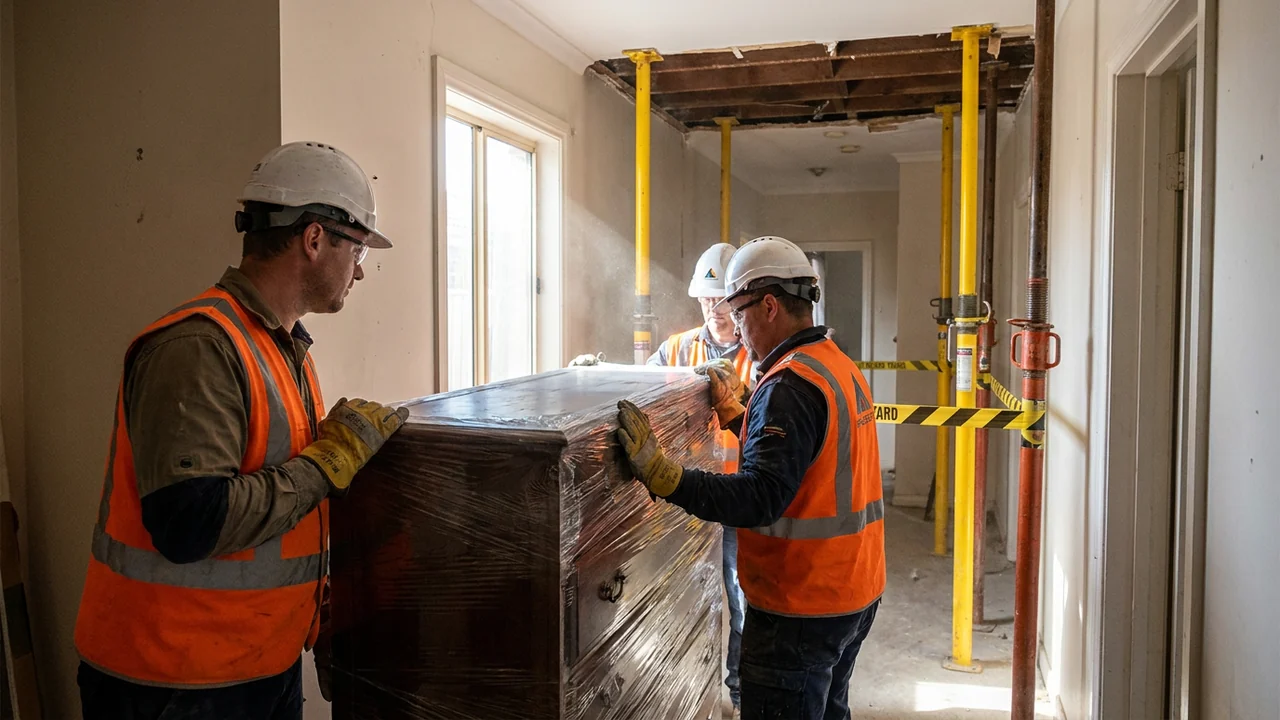
Packing out a storm-damaged building with an open roof cavity, shored ceiling joists, and pulverized plaster dust across the floor violates every assumption of a routine dry residential move. In an intact home, crews walk room-to-room wrapping casegoods in quilted blankets and loading open cardboard boxes into a single vault truck. On a roof-breach or structural collapse job, carrying clean perimeter furnishings through an uncontained plaster-dust hallway contaminates previously untouched bedding, clothing, and electronics during extraction.
Equally dangerous is sealing damp, fiberglass-laced, or alkaline-dust-coated items inside tight stretch wrap or non-vented cardboard. According to ANSI/IICRC S320 and ANSI/IICRC S500 containment principles, cross-contamination happens both across space (tracking collapse debris into clean vaults) and over time (trapping storm moisture against veneers and textiles inside transit crates until mold blooms before unloading).
Disciplined pack-out sequencing resolves both risks through zone order, pre-wrap dry decontamination, physical segregation of wet versus dry vault streams, and airtight chain-of-custody logging inside platforms such as XactContents. Establishing clear extraction lanes and containment airlocks protects crew safety under structural shoring while preventing secondary handling claims.
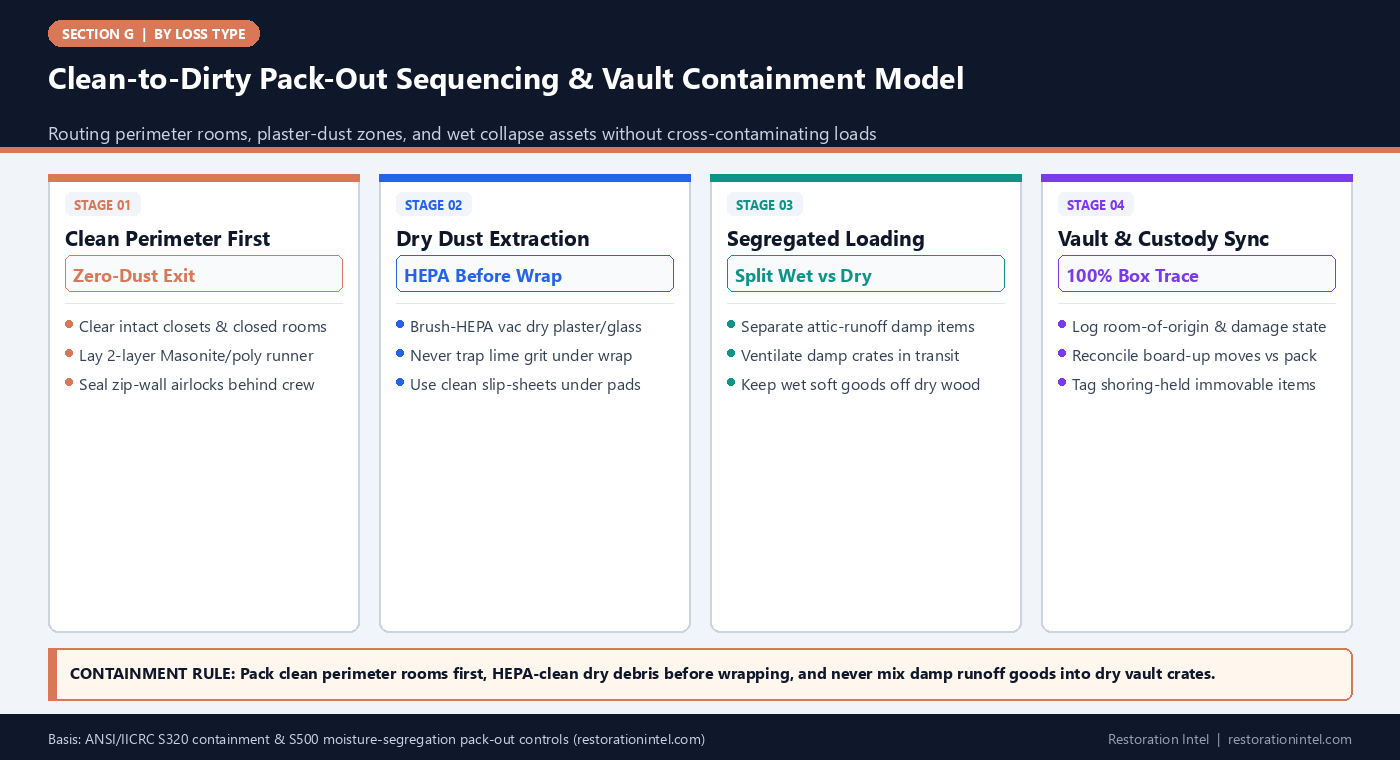
Clean-to-Dirty Pack-Out Sequencing & Vault Containment Model
Pack-Out Sequencing & Containment Protocol by Damage Zone
Operational controls for moving, wrapping, staging, and vaulting contents across multi-zone wind, hail, and collapse structures.
| Property Zone | Pack-Out Order | Pre-Wrap Preparation | Containment & Wrapping Spec | Truck / Vault Segregation |
|---|---|---|---|---|
| Closed Intact Rooms (Low Dust) | 1st (Extract before collapse zone) | Verify zero moisture & inspect door-gap dust only | Clean quilted pads + fresh stretch wrap; tape poly runner to exit | Clean-Dry Vault Stream (Priority return or dry storage) |
| Window-Breach Perimeter Zone | 2nd (After glass sweep & board-up) | HEPA-vac loose tempered glass & inspect electronics vents | Double-wall corrugated boxes with glass-hazard labels on seams | Dry-Contaminated Processing Stream (Inspect before storage) |
| Dry Plaster & Insulation Fallout | 3rd (Under negative-air HEPA) | Soft-brush + HEPA vacuum dry lime/gypsum off surfaces | Kraft paper + clean moving blankets (never wrap abrasive dust directly) | Particulate-Cleaning Intake Bay (Dry cleaning queue) |
| Direct Roof-Drip / Collapse Zone | 4th (After shoring & debris clear) | Confirm structural clearance; blot/extract excess moisture | Breathable vented totes or perforated poly wrap for transit only | Wet-Triage / Drying Chamber (Zero sealed vaulting while damp) |
| Attic-Runoff Saturated Soft Goods | 5th (Dedicated dirty-run haul) | Tag hazard level; drain free water; isolate from dry wood | Heavy 6-mil poly containment bags/liners labeled Cat 2/3 runoff | Quarantined Wash / Non-Salvage Staging (Never mix with clean loads) |
| Shoring-Blocked Heavy Assets | Hold / On-Site Shielding | Photograph clearance obstacle & moisture baseline | Loose-tented poly canopy over Masonite deck; clear of shoring jacks | On-Site Protected Hold Log (Re-assess post-shoring removal) |
Clean-to-Dirty Sequencing and Shoring-Zone Load Paths
Standard residential pack-outs typically begin nearest the front door to clear staging space. In a roof-breach or ceiling-collapse home, starting near the front foyer can fail completely if the breach sits directly above the main hallway or if shoring jacks narrow the stairwell. Instead, crews must sequence pack-out strictly from cleanest to most contaminated zones while honoring structural shoring footprints.
Closed bedrooms, intact walk-in closets, and downstairs rooms spared from overhead failure are packed first and moved out through protected clean corridors before technicians unseal or disturb collapsed ceiling rooms. Once clean rooms are emptied and cleared off site, crews install zippered poly airlocks with negative-air HEPA filtration around the collapse footprint so airborne gypsum, lime dust, and fiberglass fibers never drift backward into clean stairwells.
Inside shored areas, heavy dressers, pianos, and safes cannot simply be dragged past temporary steel post jacks. Bumping a load-bearing shoring shore while maneuvering a wrapped armoire risks sudden structural shift. Crews must measure clear corridor width around shoring bases in advance, remove drawers and mirrors to trim weight, or place heavy immovable items into an on-site protected hold until engineers clear structural framing.
- Walk clean-to-dirty backwards: Empty unbreached closets and clean rooms before breaching collapse-zone containment zippers.
- Measure shoring clearances first: Map doorway and post-jack clearances with a tape measure before wrapping oversized dining tables or sofas.
- Protect haul floors twice: Lay poly sheeting under taped Masonite runners along extraction corridors so wet boots never track plaster slurry onto clean hardwood.
Why Dry HEPA Extraction Must Precede Blankets and Stretch Wrap
Wrapping a credenza or lacquered coffee table covered in coarse gypsum plaster grains and micro-glass splinters directly inside quilted moving blankets turns transit vibration into sandpaper. Over a thirty-minute highway ride to the processing warehouse, weight from stacked pads grinds alkaline plaster particles across tabletop veneers, leaving swirling micro-scratches across previously undamaged finishes.
Before applying a single moving pad or stretch-wrap pass in Zone 2 or Zone 3 rooms, technicians must perform controlled dry particulate removal using soft natural-bristle brushes paired directly with HEPA vacuum nozzles. Keeping dust extraction dry on site prevents creating alkaline paste while removing the grit that causes mechanical transit abrasion.
Equally critical is blanket hygiene between rooms. Moving blankets exposed to fiberglass insulation or wet attic dust must be quarantined immediately into dirty laundry totes rather than folded back onto clean truck racks. Reusing a fiberglass-dusted blanket on a clean bedroom mattress transfers irritant glass fibers across the entire clean-room inventory.
- Brush-and-HEPA pass before pad contact: Clear all visible plaster granules, drywall chunks, and glass chips prior to blanketing casegoods.
- Color-code moving pads: Separate clean-zone pads from particulate/collapse-zone pads using distinct bag tags or tape bands on the truck.
- Use clean kraft slip-sheets: Place fresh kraft paper or foam sheeting between polished wood surfaces and outer quilted pads in dusty environments.
Isolating Damp Storm Contents from Dry Vault Storage Streams
A major driver of secondary warehouse mold claims is loading rain-dampened upholstery, boxed books, or wet-edge wooden chairs into sealed wooden storage vaults alongside dry household goods. Within 48 hours inside an unvented vault, trapped moisture spikes relative humidity past 75 percent, seeding fungal growth across clean neighboring boxes and warping adjacent solid wood panels.
Under ANSI/IICRC S500 and ANSI/IICRC S320, any item carrying elevated moisture readings or attic-runoff exposure must travel in segregated, breathable transport—never tightly stretch-wrapped in plastic cocoons—straight into dedicated intake drying and decontamination bays rather than long-term storage vaults.
On the receiving dock, warehouse leads enforce a strict wet-dry gate: only contents verified below target equilibrium moisture content and cleared of particulate contamination advance into climate-controlled vaults. Maintaining separate intake lanes also supports clean scope reporting inside XactContents and aligns with the operational framework outlined by the RIA.
- Breathable transit for damp goods: Use vented plastic crates or open-top poly-lined racks for damp textiles, never sealed cardboard boxes.
- Separate truck decks or runs: Keep Category 2/3 attic-runoff loads physically partitioned from clean perimeter contents with poly barriers or separate box trucks.
- Dock moisture sign-off: Require pin/pinless meter clearance on incoming wooden furniture and rugs before assigning permanent warehouse vault numbers.
Reconciling Chain of Custody Across Emergency Dry-In and Full Pack-Out
Storm losses rarely have one tidy pack-out day. During emergency dry-in, carpenters or homeowners frequently drag wet rugs into the garage, stack dining chairs onto a covered porch, or shove end tables into an adjacent hallway so tarps and shoring poles fit. By the time the contents crew arrives 24 to 48 hours later, dozens of items sit outside their original insured rooms.
As reinforced in A Pack-Out Record Is Not a Priced Inventory, blindly logging an item’s temporary emergency staging spot as its room of origin creates reconciliation chaos for adjusters and homeowners alike. Crews must interview the mitigation lead and owner during walkthrough to record both current staging location and true pre-loss room.
Every item left behind under shoring protection, discarded during emergency bio-clearance, or routed directly to specialty electronics/piano vendors requires an explicit disposition code in the master custody log. That end-to-end paper trail eliminates missing-item disputes when the rebuilt structure is finally ready for pack-back months later.
- Dual-location tag fields: Log both ‘Pre-Loss Origin Room’ and ‘Temporary Staging Spot’ for items shifted during emergency tarping or shoring.
- Sub-vendor transfer receipts: Capture signed chain-of-custody handoffs when pianos, art, or electronics transfer straight from site to specialty cleaners.
- On-site hold inventory tags: Tag heavy shoring-blocked assets and photographed non-salvageables in the master manifest so total room counts balance to 100 percent.
Practitioner Verification Checklist (G-28)
- Sequence pack-out strictly from unbreached perimeter rooms toward collapse zones, installing negative-air HEPA barriers before disturbing ceiling debris.
- Confirm shoring clearances and haul-path floor protection prior to moving heavy furniture out of structurally stabilized rooms.
- Perform dry soft-brush and HEPA vacuum extraction on plaster dust and glass grit before any quilted moving pads or stretch wrap touch finishes.
- Segregate damp or attic-runoff-exposed contents into vented, quarantined transit containers separated from clean-dry vault loads.
- Reconcile pre-loss origin rooms, emergency dry-in relocations, specialty sub-vendor transfers, and on-site hold items in one master custody manifest.
Standards, Authority References & Related Reading
Primary standards, insurance definitions, and sibling Restoration Intel guides referenced in this brief:
- ANSI/IICRC S320 Standard for Professional Contents Restoration
- ANSI/IICRC S500 Water Damage Standard
- Restoration Industry Association (RIA)
- Verisk XactContents Platform Overview
- Related Guide: Wind, Hail, Roof Breach & Structural Collapse Losses: First-24-Hour Contents Triage & Stabilization
- Related Guide: Wind, Hail, Roof Breach & Structural Collapse Losses: Damage Evidence & Forensic Photography Rules
- Related Guide: Wind, Hail, Roof Breach & Structural Collapse Losses: Cleaning Methodology & Processing Documentation
- Related Guide: A Pack-Out Record Is Not a Priced Inventory
- Related Guide: Two Standards, One Truck: Documentation When the Brand and the Scorecard Disagree
.md twin for desk QA and team training.Frequently Asked Questions
Why should intact perimeter rooms be packed out before the ceiling-collapse room?
Clearing clean rooms first lets crews extract uncontaminated property through dust-free corridors before opening collapse zones that release airborne plaster, lime, and fiberglass particles.
Can crews stretch-wrap plaster-dusted furniture to keep dust contained during moving?
No. Wrapping loose plaster grit or glass chips directly under tight pads and stretch wrap grinds abrasive particles into wood finishes during truck transit. Dry HEPA vacuuming must happen first.
How do you handle damp contents when the warehouse isn't ready for cleaning the same day?
Stage damp items in vented crates inside a dehumidified drying bay with airflow—never inside sealed cardboard boxes or unvented wooden storage vaults.
How should items shifted by emergency tarping crews be logged in the inventory?
Record both the pre-loss room of origin confirmed with the homeowner or mitigation lead and the temporary staging spot so carrier room schedules reconcile accurately.