Updated November 24, 2026 — refreshed with verified 2-page PDF field brief, bespoke workflow diagram, and primary standards references.
Direct Answer: Restoration is a compounding relationship business across adjusters, property managers, emergency plumbers, and peer contractors. Durable referral pipelines are never built by transactional cold pitches—they form when operators contribute first through clean documentation, active RIA advocacy participation, and vetted peer networks that share technical intelligence.
.md twin for Insurance Claims & TPA Governance.
Updated October 6, 2026.
Restoration is a relationship business at every level. The insurance adjuster who knows and trusts your documentation. The property manager who has your number memorized. The plumber who calls you when they find water damage they can’t fix. The RIA colleague who refers you to a job in a market you’re expanding into. These relationships are not accidents — they are built intentionally, over time, through showing up consistently and providing value before asking for it.
The RIA and Industry Associations
The Restoration Industry Association (RIA) is the primary national trade association for restoration contractors. The Floodlight podcast has covered the RIA’s government affairs efforts, educational programming, and the advocacy work that has shaped carrier relationships across the industry. For restoration companies that compete in insurance-dependent markets, RIA membership provides regulatory intelligence, carrier relationship tools, and peer access that is difficult to obtain elsewhere.
The CORE Collective Model
The CORE Collective — featured in Episode 131 of Head, Heart & Boots — is a curated industry event that brings together restoration contractors with insurance carriers in a structured format designed for genuine connection rather than sales pitches. The event’s value is in the deliberate architecture: limited attendees, facilitated conversations, and content that creates common ground between restorers and the carriers they work with.
Building Referral Networks
The most durable referral networks in restoration are built on reciprocity — giving before asking. This means referring jobs outside your service area to trusted peers, contributing genuine expertise to industry groups rather than mining them for leads, and building relationships with adjacent trades (plumbers, roofers, HVAC contractors) who encounter property damage before the restoration call is made.
Frequently Asked Questions
How do you build a referral network with insurance adjusters?
By making adjusters’ jobs easier. Clean documentation that doesn’t require follow-up. Accurate scopes that don’t require excessive supplements. Responsive communication that resolves questions quickly. Adjusters work with dozens of contractors; the ones who get consistent referrals are the ones who create the least friction in the claims process.
Is it worth attending national industry conferences for a regional restoration company?
Yes, particularly for access to information about PE trends, carrier relationship management, and technology that smaller regional operators wouldn’t encounter otherwise. The relationships built at national conferences often produce value in unexpected ways — a peer referral, a vendor introduction, or market intelligence that changes a strategic decision.
How do you build a relationship with a commercial property management company?
By finding the right person, providing value before asking for business, and maintaining consistent contact over a long period. Most commercial property management relationships are built over 6-18 months of regular touchpoints — lunch, ERP walkthroughs, industry event introductions — before a job creates the opportunity to demonstrate performance.
What is the most effective way to get referrals from restoration peers?
By being the kind of company that others are proud to refer. This means: picking up the phone when a peer calls, referring jobs generously when they fall outside your capacity, and building a reputation for quality that your peers can stake their own relationships on.
Related: Restoration sales and marketing guide · Customer experience and referrals · Emergency readiness plans for sales.
Networking for Restoration: Build Adjuster and Contractor Relationships That Fill Your Pipeline — Visual Workflow
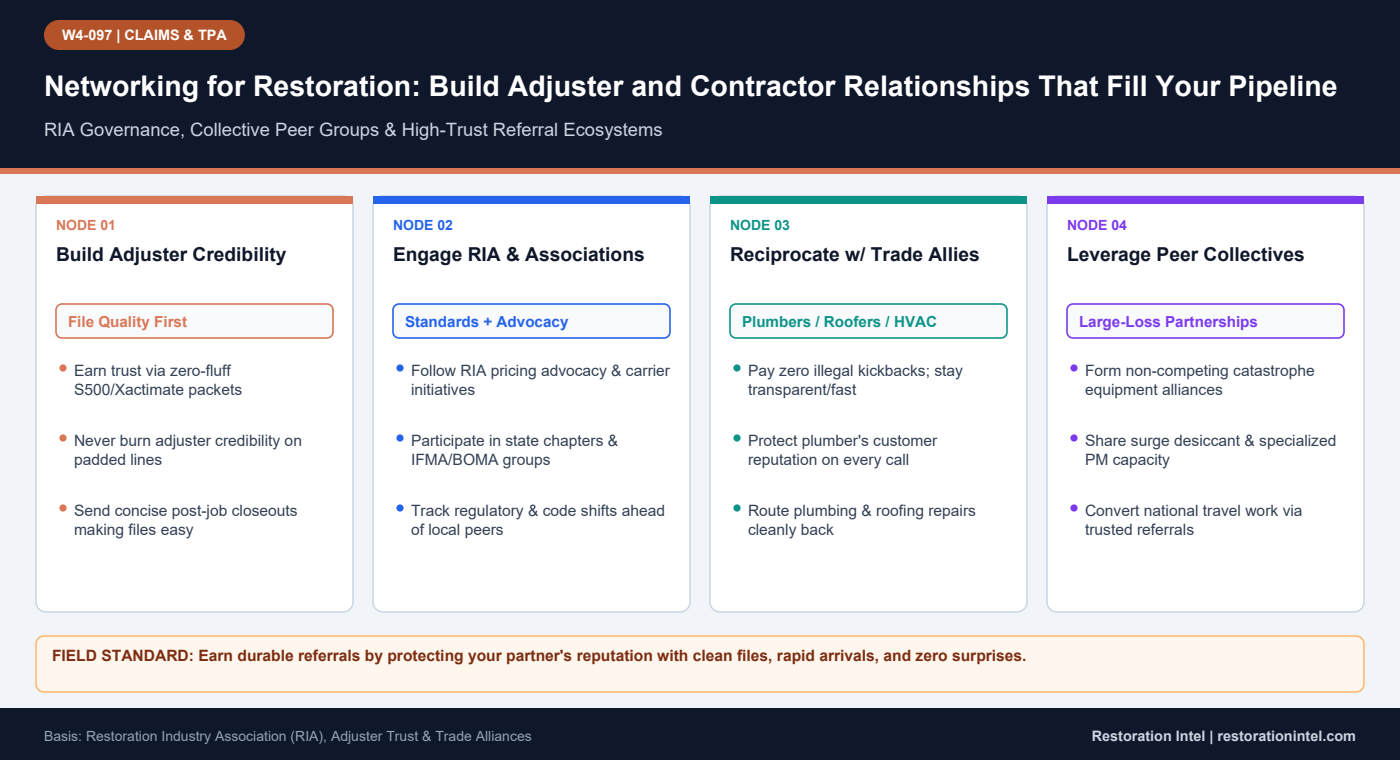
Field Benchmark & Decision Matrix
| Network Partner | What They Value Most | High-Trust Outreach Rhythm | Referral-Killing Mistake |
|---|---|---|---|
| Adjusters & IAs | Clean pre-demo photos, daily GPP & concise F9 notes | Brief CE classes, prompt updates & clean closes | Submitting inflated lump sums causing audit heat |
| Service Plumbers | Fast arrival that makes referring tech look pro | 2 a.m. dispatch guarantee + return repair work | Disparaging repair work or stalling customer call |
| BOMA / IFMA Managers | Zero occupant disruption & clear SLA scorecards | Committee service + complimentary facility ERPs | Aggressive sales pitches at association mixers |
| Peer Restorers (RIA) | Reliable overflow labor/gear during regional CAT | Honest sub-contracting & reciprocal referrals | Poaching referred client post-emergency loss |
| Insurance Brokers / Agents | Claim rescue when insured panicked pre-FNOL | Educational claim checklists (never cash bribes) | Causing messy coverage disputes w/ bad advice |
Practitioner Operational Takeaways
- Treat spotless job documentation and reliable communication as your primary networking engine—adjusters and property managers refer vendors who keep files painless.
- Stay active in the Restoration Industry Association (RIA) and local facility associations (BOMA/IFMA) to stay ahead of carrier and legislative shifts.
- Give value first to plumbing, mechanical, and roofing partners by treating their referrals fast and returning restoration rebuild trade scope cleanly.
- Build vetted reciprocal alliances with non-competing peer contractors to trade excess equipment capacity and surge referrals during major storms.
Standards & Primary References
- Markdown Twin (.md)
- Restoration Industry Association (RIA)
- Verisk Claims & Estimating Solutions
- Restoration Sales & Marketing: Commercial Playbook
.md twin for carrier and field review.