Direct Answer: Fire- and flood-exposed lithium-ion batteries, pressurized propane cylinders, aerosols, solvents, and reactive household chemicals must NEVER be packed into enclosed moving boxes, box trucks, or warehouse storage vaults; field crews must segregate, photograph in place, isolate outdoors or in compliant containment, and route disposal through licensed hazmat or homeowner custody channels.
.md twin for estimator QA and carrier file documentation.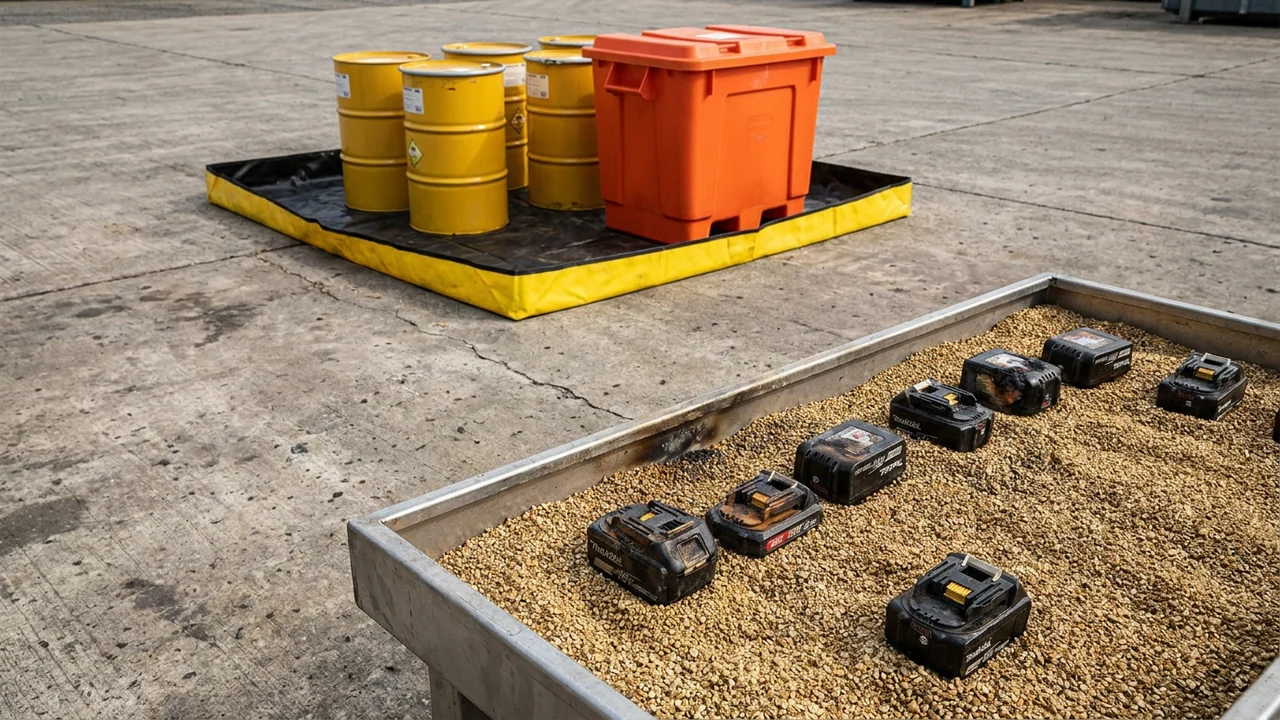
Every residential garage and commercial shop hides thermal-runaway and vapor-ignition hazards: e-bike battery packs, 20V cordless tool batteries, camping propane cylinders, pool chlorine tabs, aerosol spray cans, and aged solvent tins. After a structure fire or basement flood, those items shift from routine household goods into unstable transport and warehouse risks.
Packing a water-soaked power-station battery or a heat-stressed propane bottle inside a sealed cardboard carton inside an unmonitored wooden vault can ignite a catastrophic secondary warehouse fire days later. Following NFPA lithium-ion battery safety guidance, OSHA HazCom rules, and EPA hazardous waste frameworks keeps crews, trucks, and storage facilities protected while preserving full claim documentation.
Hazmat & Battery Stabilization Protocol on Pack-Outs
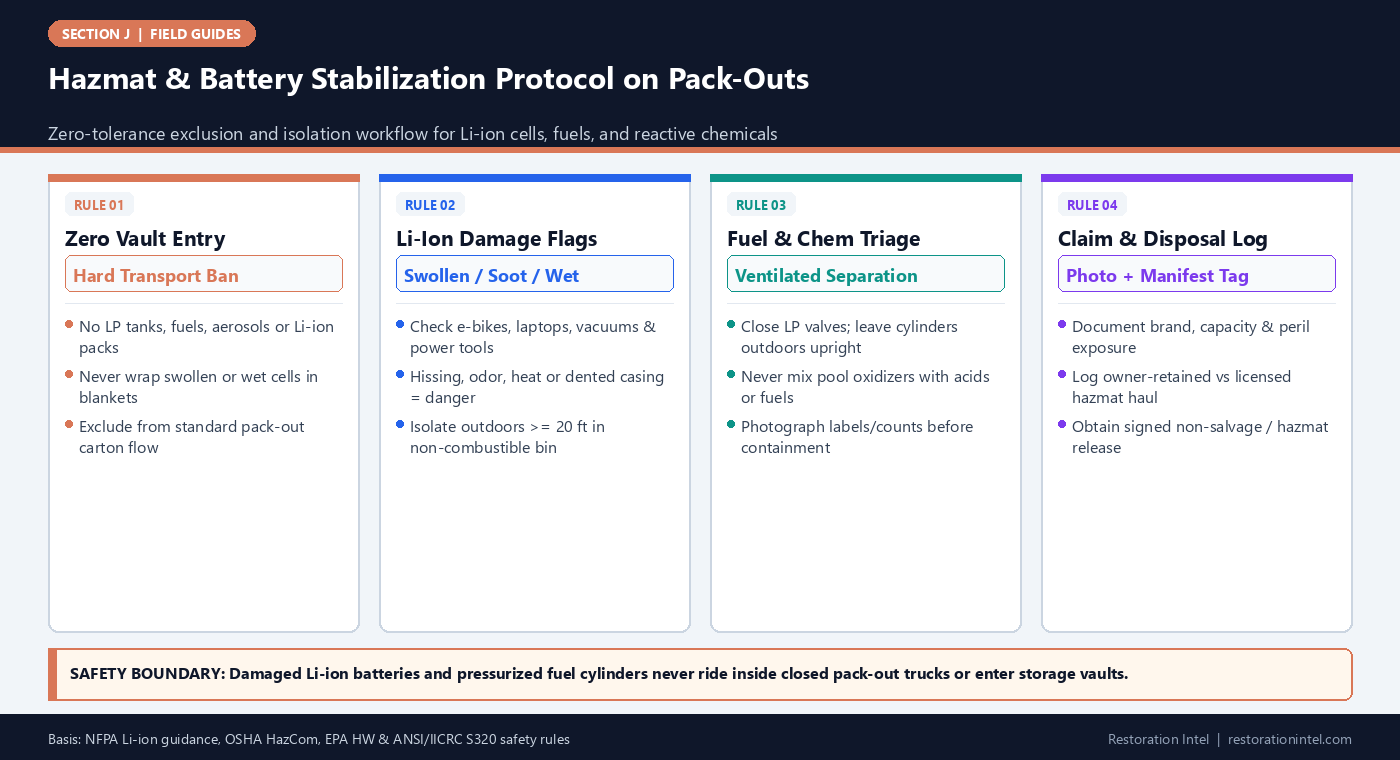
Field Stabilization & Custody Matrix for Hazardous Pack-Out Items
Apply these immediate stabilization and documentation steps whenever fire- or water-exposed hazardous goods appear during walkthroughs or pack-outs.
| Hazard Class | Common Field Examples | Immediate Field Trigger | Mandatory Stabilization Action | Vault / Claim Disposition |
|---|---|---|---|---|
| Damaged / Wet Lithium-Ion Batteries | E-bike packs, cordless tool batteries, portable power stations, laptops, robot vacuums | Visible soot, water immersion, swelling, melted casing, chemical odor, or warmth | Do NOT charge or bag tightly; remove battery if safe, move outdoors >= 20 ft from combustibles into sand/vermiculite or steel containment drum | Prohibited from truck/vault; document serial/Wh rating in place and log total-loss hazmat disposal |
| Intact Consumer Electronics w/ Internal Li-Ion | Undamaged laptops, tablets, cameras in unaffected perimeter rooms | Zero heat, impact, or moisture exposure; owner requests transport | Power fully OFF (not sleep mode), tape/protect power switches, pack upright in marked visible-inspection cartons | Transport under special handling rules only; never leave charging or inside hot trucks |
| Propane, Butane & Pressurized Cylinders | 20-lb BBQ LP tanks, 1-lb camp cylinders, acetylene/oxygen welding bottles, CO2 tanks | Any heat exposure, valve dent, rust, or indoor discovery during pack-out | Close valve securely, keep upright outdoors in shaded ventilated zone away from doors/vents; never store in sealed vans | Prohibited from enclosed transport/vaults; homeowner retains on-site or fire/hazmat disposal |
| Flammable Liquids & Solvents | Gasoline cans, paint thinners, mineral spirits, lacquer, oil-based stains, lawn equipment fuel | Open or heat-warped plastic jugs, rusted tins, soaked cardboard bottoms | Drain mower/blower fuel only per shop safety SOP or leave outdoors upright in secondary containment tray | Prohibited from vault storage; document for total-loss replacement or owner retention |
| Oxidizers, Pool Chemicals & Corrosives | Calcium hypochlorite pool shock, muriatic acid, bleach, drain cleaners, fertilizers | Wet cartons, compromised lids, proximity to fuels or organic wood/cardboard | Isolate oxidizers far away from fuels/solvents in dry secondary plastic containment outdoors | Never co-pack; route through licensed municipal or commercial hazmat disposal vendor |
| Aerosols, Paints & Unknown Containers | Spray paints, brake cleaner, lubricants, unlabeled basement jugs | Heat bulging, rusted seams, illegible/missing GHS labels | Leave upright in ventilated staging; photograph visible labels without opening mystery drums | Exclude from pack-out boxes; log count/type for owner retention or hazmat manifest |
Why Flooded and Heat-Exposed Lithium-Ion Batteries Pose Delayed Re-Ignition Risk
Lithium-ion cells exposed to fire heat, impact debris, or floodwater (especially brackish or salt water) do not always fail immediately. Internal separator degradation or conductive mineral bridging from floodwater can trigger delayed thermal runaway hours or even days after a crew leaves the house — turning a quiet warehouse vault or closed box truck into an intense, toxic, self-oxidizing fire.
Per NFPA safety resources, crews must actively sweep closets, utility rooms, and garages for detachable tool batteries, e-mobility packs, and Li-ion jump starters on Day 1. Never toss loose 18V/20V packs into a communal hardware tote where exposed terminals can short against screwdrivers or metal brackets.
- Check every cordless tool and e-bike before boxing: Pop detachable packs off drills, saws, and stick vacuums and inspect terminals for water droplets, soot, or swelling.
- Watch for delayed failure signs: Any hissing, sweet/metallic solvent smell, cell bulging, or warmth above ambient temperature requires immediate outdoor isolation and fire-department guidance if actively venting.
- Never submerge damaged cells indoors: Move unstable packs outdoors away from overhangs, structures, and vehicles using insulated PPE.
Segregating Fuels, Propane, and Incompatible Chemicals Before Packing Trucks
Household pack-outs frequently uncover half-full gasoline cans next to lawnmowers, spare 20-pound propane cylinders in basement corners, and pool shock buckets tucked under garage workbenches. Placing an incompatible oxidizer (like pool chlorine) inside the same closed truck body as spilled fuel vapors or cardboard creates an immediate exothermic reaction risk under OSHA HazCom rules.
Create a strict physical boundary on every job: all fuels, pressurized gases, aerosols, and reactive chemicals are flagged with bright hazard tape during walkthrough, photographed on-site for the owner’s contents record, and either left in secured outdoor owner custody or manifested to a licensed EPA-compliant hazardous waste handler.
- Inspect power equipment tanks: Gas-powered mowers, snowblowers, and generators cannot enter climate-controlled vaults until tanks and carburetors are purged dry and documented per facility safety policy.
- Keep oxidizers and flammables separate: Never stack pool chemical pails alongside paint thinners or oiled rags, even temporarily on a driveway tarp.
- Verify SDS availability for commercial shops: On commercial garages, salons, or labs, pull the facility’s Safety Data Sheet binder before touching chemical shelving.
Documenting Excluded Hazmat Cleanly So the Homeowner Still Recovers Value
Excluding a heat-exposed cordless tool battery, propane cylinder, or contaminated pantry of garage chemicals from truck transport does NOT mean omitting those items from the insurance claim. Technicians still owe the policyholder complete photo proof of brand, capacity (such as watt-hours, gallon size, or cylinder tare), and peril exposure before safe hazmat disposition.
Log excluded hazmat on an explicit Non-Pack / Hazmat Exclusion Schedule tied to the job’s disposal witness log and obtain homeowner signature confirming whether the owner retained items outdoors or authorized licensed disposal.
- Photograph labels before containment: Shoot brand, model, voltage/Ah, or chemical volume clearly while sitting on the outdoor staging tarp.
- Track third-party disposal receipts: Attach licensed hazardous-waste haul tickets directly to the claim file for carrier reimbursement.
- Keep disposal and pack-out manifests separate: Never let a warehouse box manifest imply a excluded propane tank or swollen battery entered storage.
Practitioner Verification Checklist (J-16)
- Sweep every room, garage bay, and utility closet on Day 1 for Li-ion batteries (e-bikes, power tools, power stations), LP tanks, fuels, and reactive chemicals.
- Prohibit damaged, soot-exposed, swollen, or flood-wet Li-ion packs and pressurized fuel cylinders from entering enclosed moving cartons, trucks, or storage vaults.
- Isolate thermal- or water-compromised Li-ion cells outdoors at least 20 feet from structures and combustibles inside non-combustible containment.
- Document brand, capacity/watt-hours, and peril condition in place so excluded hazmat items still substantiate total-loss claim recovery.
- Log owner retention or licensed EPA-compliant hazmat disposal receipts on a signed exclusion/disposal schedule.
Standards, Authority References & Related Reading
Primary standards, insurance definitions, and sibling Restoration Intel guides referenced in this brief:
- NFPA Lithium-Ion Battery Safety Resources
- OSHA Hazard Communication Standard (HazCom)
- US EPA Hazardous Waste Framework
- ANSI/IICRC S320 Standard for Professional Contents Restoration
- Related Guide: Field Guide: Non-Salvageable Disposal Authorization & Witness-Log Template
- Related Guide: Field Guide: High-Sensitivity Legal Exclusions — Firearms, Medications, Cash, Jewelry, and Passports
- Related Guide: Field Guide: Quick-Triage Decision Tree for Soft Goods, Upholstery, Casegoods, and Electronics
- Related Guide: Field Guide: Calculating Pack-Out Box Count and Vault Square-Footage Estimates on Day-1 Walkthroughs
- Related Guide: Contents Restoration After Fire: Pack-Out Protocols
.md twin for desk QA and team training.Frequently Asked Questions
Can a flood-submerged e-bike or power-tool battery be dried out and packed into storage?
No. Water intrusion — especially dirty or salt water — causes internal corrosion and delayed short-circuiting that can trigger thermal runaway days later. Isolate outdoors and treat as hazmat total loss.
Are small 1-pound camping propane cylinders allowed inside pack-out boxes?
No. Pressurized fuel cylinders must never be packed inside sealed boxes, enclosed moving vans, or indoor storage vaults due to leak and over-pressure explosion hazards.
How do crews handle gas lawnmowers or chainsaws that need storage during reconstruction?
They must remain in outdoor/ventilated owner custody unless fuel tanks and lines are safely purged dry per shop safety protocol and approved for non-vaulted vented storage.
Does excluding hazmat from pack-out mean the homeowner loses insurance coverage for those items?
No. Photographing the damaged batteries, fuels, or chemicals in place with brand and capacity proof allows the estimator to claim them on the non-salvageable / total-loss schedule.