Direct Answer: Garage and outbuilding pre-loss capture documents tool-chest drawers, cordless battery ecosystems, small-engine serial plates, and recreational gear while mapping lithium-ion batteries and flammables so emergency crews pack out safely.
.md twin for estimator QA and carrier file documentation.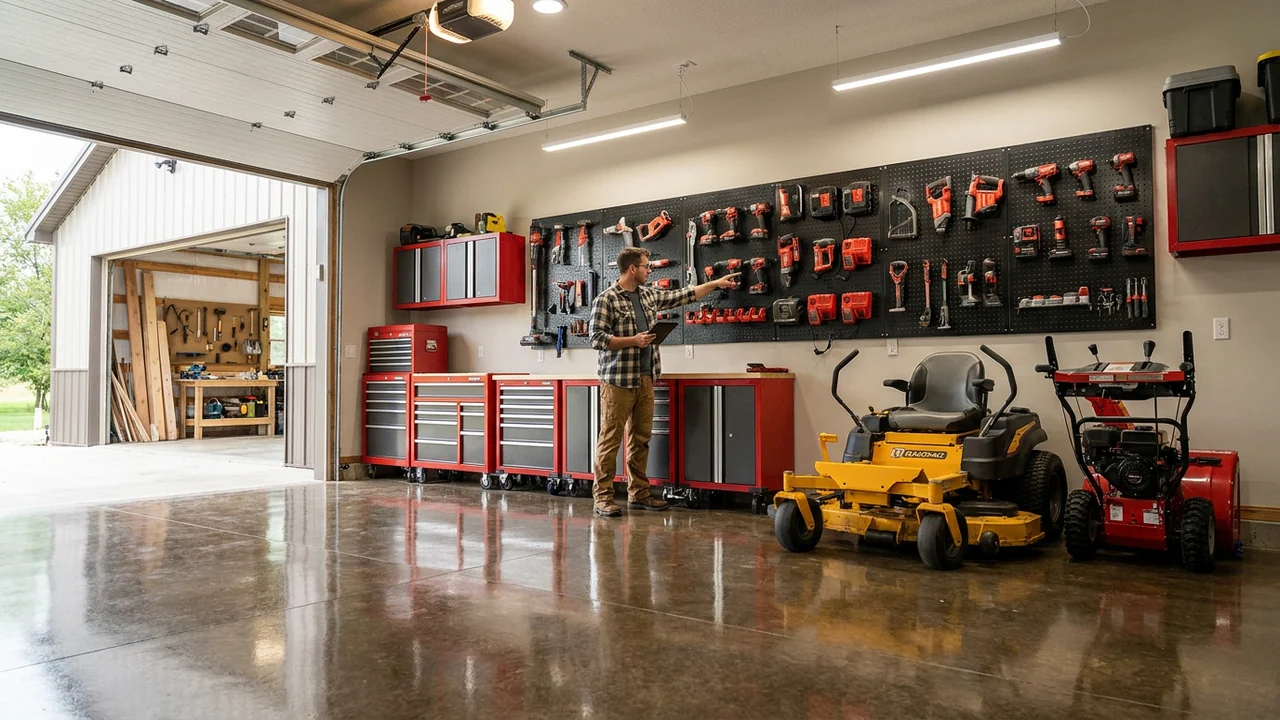
Ask a homeowner what is inside their two-car garage or backyard workshop, and they will casually estimate ‘a lawnmower, some hand tools, and bikes.’ Walk that same garage with an estimator’s clipboard, and the actual Replacement Cost Value regularly shocks everyone on site. A single rolling tool chest stuffed with mechanics sockets, cordless brushless impact drivers, high-capacity lithium-ion battery packs, diagnostic scanners, a 240V air compressor, a riding mower, and two mountain bikes routinely rivals the value of an entire furnished living room.
Yet garages, carports, and detached sheds are almost always rushed or skipped during DIY pre-loss walkthroughs. Worse, garage fires and flash floods leave dense piles of scorched steel, corroded bearings, and waterlogged battery packs where generic descriptions like ‘box of mixed tools’ force XactContents schedules down to bargain-basement hardware comps under IRMI RCV pricing.
Outbuildings also concentrate the highest concentration of hazardous materials on a residential lot. Mapping lithium-ion charging stations, fuels, and pressurized cylinders alongside tool inventories aligns property readiness with ANSI/IICRC S320, NFPA lithium-ion safety guidance, and OSHA HazCom handling realities.
Garage & Outbuilding Pre-Loss Capture Standard
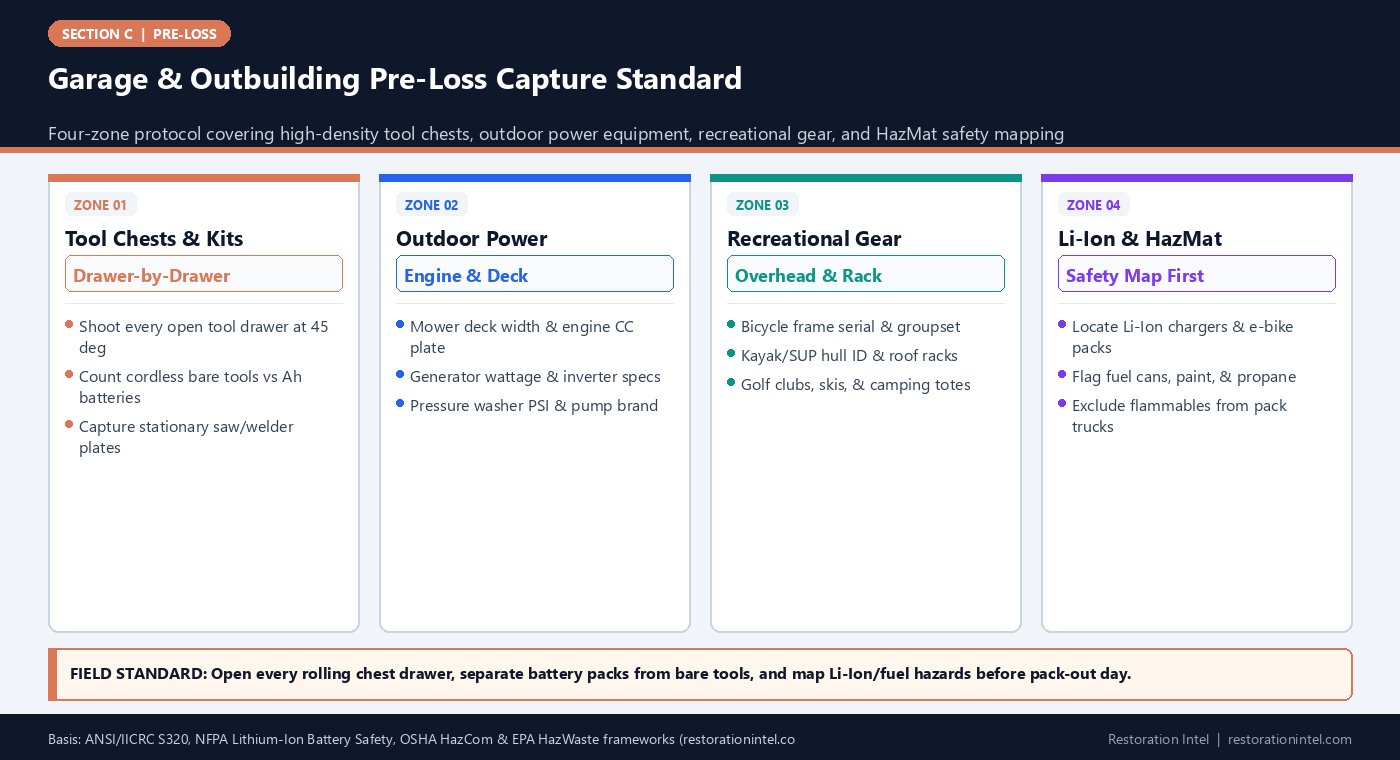
Garage, Shed & Outbuilding Pre-Loss Capture Matrix
High-value identification details and safety controls across residential garage and detached outbuilding asset classes.
| Outbuilding Asset Class | Details Missed in Wide Doorway Shots | Required Pre-Loss Photo & Spec Standard | Estimated Value Multiplier | Loss-Day Pack-Out & Safety Rule |
|---|---|---|---|---|
| Mechanics Hand Tools & Rolling Chests | 100+ sockets, torque wrenches, & specialty pullers hidden in drawers | 45-degree open-drawer sweeps + chest badge/model sticker | Professional vs consumer tool lines span 5x–10x cost | Wrap heavy drawers individually; photograph rust/heat bloom fast |
| Cordless Power Tools & Battery Ecosystems | Tool tier (brushless/pro) & battery amp-hour (Ah) pack counts | Lay tools + batteries together; capture voltage & Ah labels | High-Ah packs often rival bare tool replacement cost | Segregate wet/fire-exposed Li-Ion packs outdoors per NFPA safety |
| Stationary Shop Equipment & Welders | Motor HP, cast-iron table size, dust-collector CFM, & tank PSI | Front elevation + motor/tank rating plate + accessory jigs | Heavy machinery often requires rigging & 240V disconnects | Document shaft rust & bearing binding before mitigation dry-out |
| Lawn Mowers, Snowblowers & Generators | Zero-turn deck width, dual-fuel inverter rating, engine model | Side view + chassis serial plate + engine shroud spec label | Commercial-deck mowers & inverter units double base pricing | Drain fuel/oil only per HazMat rules; never load fueled units into vaults |
| Bicycles, E-Bikes, Kayaks & Roof Systems | Carbon vs alloy frame, electronic shifting, kayak hull ID | Drive-side bike photo + bottom-bracket serial + rack/box tags | E-bikes & carbon frames carry $2k–$10k+ component tiers | Isolate damaged e-bike Li-Ion batteries away from dry truck loads |
| Fuels, Solvents, Propane & Pool Chemicals | Unlabeled cans, aerosol shelves, & compressed cylinders | Shelf overview photo only for hazard awareness mapping | Low replacement value; extreme pack-out liability | Never pack flammables/solvents on vault trucks per OSHA/EPA rules |
Why Garages and Detached Sheds Suffer the Biggest Valuation Gaps
Garages and detached workshops accumulate value quietly over decades. A homeowner upgrades from basic hand tools to a 72-inch rolling cabinet, adds a cordless outdoor power ecosystem, hangs two mountain bikes and a kayak from ceiling hoists, and tucks a portable inverter generator behind seasonal camping totes. Because those purchases happen one weekend project at a time, almost nobody tracks the cumulative replacement total.
Even worse, standard pre-loss walkthroughs frequently stop at the mudroom door or snap a single blurry frame from the garage threshold with the overhead door shut. When a lithium-ion charger fire or wind-driven tree collapse destroys a detached shed, open-grid pegboards and melted plastic tool cases leave behind unrecognizable lumps of steel. Without pre-loss proof, estimators struggle to substantiate anything beyond generic entry-level replacements.
A disciplined garage capture takes twenty to thirty minutes using the room-sweep discipline outlined in The Minimum Viable Pre-Loss Walkthrough and Two Standards, One Truck—turning hidden workshop clutter into structured, defensible line items.
- Attached vs detached clarity: Label folders explicitly (`Garage_Attached` vs `Shed_Detached_South`) so contents locations match site plans.
- Ceiling & rafter sweep: Look up—roof-top cargo boxes, aluminum ladders, kayaks, and seasonal tires often hang unseen above doorway eye level.
- Humidity-zone check: Detached unconditioned sheds expose steel tools and leather tack to ambient rust; pre-loss dates prove clean prior condition.
Drawer-by-Drawer Tool Chests and Cordless Battery Ecosystem Documentation
Closed tool chests are black holes for claims estimators. Photographing a red rolling cabinet from across the garage proves the box existed, not what sat inside its eleven ball-bearing drawers. A single drawer of USA-made ratcheting wrenches, insulated electrical drivers, and digital torque gauges can outweigh the cost of the steel cabinet holding them.
Open one drawer at a time from top to bottom, shoot from a 45-degree angle with overhead shop light so chrome sockets and brand stamps don’t wash out, and call out specialty kits aloud if recording narrated video. For heavy mechanics cabinets with foam shadow inserts, one overhead crisp photo per drawer lets an estimator count every wrench and socket set cleanly.
Cordless power tools require one extra check: separate bare tools from battery packs and multi-bay chargers. A Milwaukee, Makita, or DeWalt brushless hammer drill looks similar in a wide shot whether paired with compact 2.0Ah packs or heavy 8.0Ah/12.0Ah high-output batteries. Lay tools and batteries out cleanly on the workbench or shoot the battery-well amp-hour stickers directly.
- One-drawer-at-a-time rule: Never pull multiple heavy top drawers simultaneously (tip hazard); open, shoot, and latch sequentially.
- Amp-hour & brushless tags: Capture model prefixes (`Fuel`, `XR`, `LXT`) and battery `Ah` ratings so estimators avoid DIY-tier pricing.
- Specialty diagnostic gear: Shoot OBD-II scanners, laser levels, multimeters, and thermal cameras open in their hard cases with model plates legible.
Outdoor Power Equipment, Recreational Gear, and Small-Engine Serial Capture
Outdoor power equipment and recreational gear share a common estimating trap: subtle frame, deck, and drivetrain variants create massive price differences. A 54-inch fabricated-deck zero-turn mower with a commercial Kawasaki engine carries a completely different replacement profile than a 42-inch stamped-deck residential tractor from the same brand. Likewise, two road bikes or tandem kayaks look nearly identical in a dark garage corner unless frame stickers and drivetrains are documented.
For mowers, snowblowers, pressure washers, and generators, capture two plates whenever present: the equipment chassis serial tag (showing deck width, kW wattage, or PSI) and the engine block specification label. For bicycles and e-bikes, shoot the full drive-side profile showing derailleur/fork components, then flip or angle down to capture the stamped bottom-bracket serial number.
Camping, hunting, fishing, and ski gear stored in opaque plastic totes need the lid-off rule: pop every stacked tote lid, snap one clean overhead group shot showing tents, reels, waders, or boots inside, and label the tote side with permanent marker.
- Dual-plate small engines: Photograph both the machine chassis rating plate and the engine manufacturer spec decal.
- Drive-side bike standard: Always photograph bikes from the chain/gears side first so derailleur and brake tiers are visible.
- Lid-off tote sweep: Never inventory stacked opaque storage bins closed; lift lids sequentially for fast overhead group verification.
Lithium-Ion Batteries, Fuels, and Chemical Hazards During Pack-Out
Garages and sheds routinely house hazards that restoration crews cannot legally or safely load into enclosed box trucks under OSHA HazCom, US EPA Hazardous Waste rules, and NFPA lithium-ion battery safety guidance. Damaged or water-submerged e-bike packs, cordless mower batteries, and power-tool packs pose delayed thermal-runaway fire risks inside closed climate-controlled storage vaults.
Similarly, fuel-filled chainsaws, pressurized propane cylinders, pool chlorine tabs, oil-based stains, and unlabeled solvent jugs must be flagged before an emergency crew ever arrives. Mapping the chemical shelf and battery charging station inside the pre-loss dossier gives first-wave crews immediate situational awareness.
On loss day, ANSI/IICRC S320 pack-out leaders use that map to isolate intact flammables on site, photograph damaged small engines before draining fuel per safety policy, and quarantine compromised lithium-ion batteries outdoors rather than sealing them inside plastic totes.
- Li-Ion charging map: Note e-bike, mower, and tool battery banks clearly so emergency crews quarantine wet or heat-stressed cells outdoors.
- Zero-flammable truck rule: Flag gasoline cans, propane tanks, solvents, and pesticides as non-transportable HazMat in the pre-loss map.
- Power-down before pack: Mark 240V shop compressors, welders, and subpanels clearly so crews confirm lockout/de-energizing before disconnecting.
Practitioner Verification Checklist (C-12)
- Sweep every attached garage, carport, and detached shed including overhead rafter hoists, wall pegboards, and stacked storage totes (lids off).
- Photograph every rolling tool-chest drawer sequentially at 45 degrees and separate cordless bare tools from amp-hour battery pack counts.
- Capture chassis rating plates, engine decals, and drive-side frame/serial photos on all outdoor power equipment, generators, bikes, and watercraft.
- Map lithium-ion battery banks, fuel cans, propane cylinders, solvents, and 240V shop equipment clearly for Day-1 pack-out safety segregation.
- Export garage and outbuilding items into dedicated location folders synced off-site alongside purchase receipts and dealer invoices.
Standards, Authority References & Related Reading
Primary standards, insurance definitions, and sibling Restoration Intel guides referenced in this brief:
- ANSI/IICRC S320 Standard for Professional Contents Restoration
- NFPA Lithium-Ion Battery Safety Resources
- OSHA Hazard Communication Standard (HazCom)
- US EPA Hazardous Waste Framework
- IRMI Insurance Glossary: Replacement Cost Value (RCV)
- Verisk XactContents Platform Overview
- Related Guide: The Minimum Viable Pre-Loss Walkthrough: What Any Property Owner Can Capture in 45 Minutes
- Related Guide: Pre-Loss Video Narration Scripts That Actually Parse Into Itemized Inventories Later
- Related Guide: Pre-Loss Serial Plate and Invoice Vaulting: Organizing Digital Proof So Fire or Flood Doesn't Destroy It
- Related Guide: Preventing Co-Insurance Penalties Through Accurate Pre-Loss Contents Valuation
- Related Guide: A Price Tag on a Lost Item Is Worth Nothing
- Related Guide: Two Standards, One Truck: Documentation When the Brand and the Scorecard Disagree
.md twin for desk QA and team training.Frequently Asked Questions
Why isn't one wide doorway photo of a garage enough for a pre-loss inventory?
A wide doorway shot hides thousands of dollars inside closed rolling tool chest drawers, opaque storage totes, and overhead ceiling hoists, and fails to capture the voltage, amp-hour, deck-width, and brand-tier details needed to prevent generic low-tier estimating comps.
How should cordless power tools and lithium-ion batteries be documented pre-loss?
Group each brand platform on a bench, photograph the model labels on the bare tools alongside the exact amp-hour (Ah) ratings on the battery packs, and note where chargers and e-bike batteries sit so crews can isolate damaged cells safely after a fire or flood.
Can restoration pack-out crews transport lawnmowers with gas in the tank or garage chemical shelves to a vault?
No. Under OSHA HazCom, EPA waste/transport controls, and fire-safety standards, crews cannot haul gasoline cans, propane cylinders, unlabeled solvents, or thermally compromised lithium-ion batteries inside enclosed pack-out trucks or climate-controlled storage vaults.
Do detached sheds and outbuildings belong in the same pre-loss file as the main house?
Yes, organized under distinct location folders (such as `Garage_Attached` and `Shed_Detached`) so estimators and adjusters can verify exact asset locations and property boundaries quickly after wind, fire, or water events.