Direct Answer: Portable engine-driven generators, welders, and air compressors cannot enter enclosed pack-out trucks or climate-controlled vaults until fuel tanks are safely stabilized, pressurized vessels and shielding cylinders are depressurized or segregated, and damaged lead-acid or lithium-ion batteries are isolated under OSHA and EPA hazardous-material controls.
.md twin for estimator QA and carrier file documentation.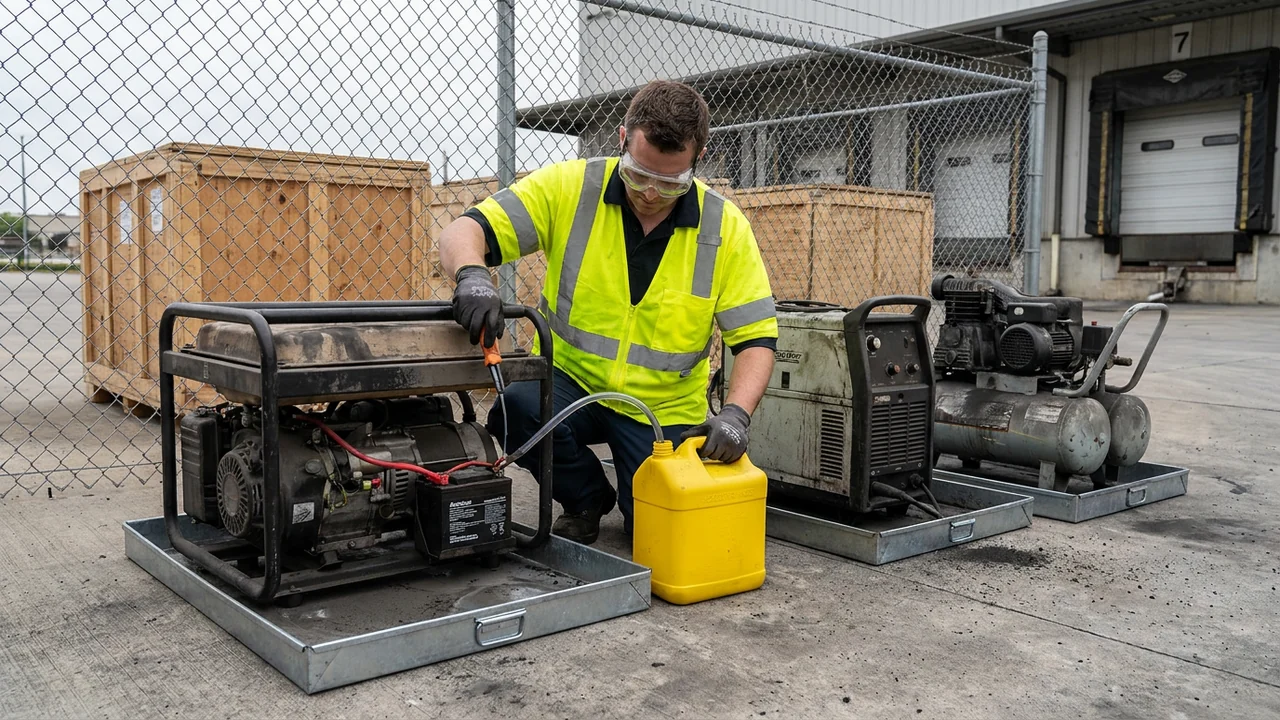
Commercial shops, contractor garages, agricultural barns, and backup-power closets routinely hold portable gasoline or diesel generators, engine-driven welders, high-pressure air compressors, and high-capacity lithium-ion battery power stations. After a fire or flood, treating those machines like ordinary boxed furniture creates immediate life-safety, DOT transport, and warehouse fire risks.
Loading a heat-stressed generator with three gallons of stale gasoline in a plastic tank, a compressed acetylene cylinder with a compromised fusible plug, or a water-soaked lithium-ion battery pack into a closed box truck violates basic loss-control discipline under ANSI/IICRC S320, OSHA Hazard Communication (HazCom), and NFPA lithium-ion battery safety guidance. One leaking carburetor bowl or delayed battery thermal runaway can destroy an entire truckload of customer contents.
Compliance disclaimer: this guide addresses field documentation and pack-out stabilization screening only. Fuel evacuation, compressed-gas recovery, and hazardous waste disposal must follow applicable US EPA hazardous waste regulations, state environmental rules, DOT transport limits, and employer-specific OSHA PPE programs using qualified hazmat technicians or licensed waste haulers whenever regulated hazards exist.
Pre-Pack-Out Stabilization: Generators, Welders & Compressors
Fuel, Battery & Pressure Stabilization Matrix for Portable Shop Equipment
Pre-transport hazards, stabilization steps, and documentation required before moving heavy portable shop equipment.
| Equipment Class | Primary Stored Energy / Hazmat | Pre-Pack-Out Stabilization Action | Transport & Storage Restriction | Claim Documentation Required |
|---|---|---|---|---|
| Gasoline & Diesel Portable Generators | Liquid fuel, crankcase oil, 12V starter battery | Close valve, drain tank via grounded siphon, disconnect battery, plug vents | No unvented vapor in closed vault; stage outdoors if tank heat-warped | Rating plate, hour meter, fuel-drain log, and condition photos |
| Engine-Driven & Shop Welders (MIG/TIG/Stick) | Fuel (if engine-driven), shielding gas cylinders, capacitors | Close cylinder valves, remove regulators, install safety caps, discharge caps | Never transport shielding/fuel gas bottles inside passenger/contents vans | Welder serial plate, cylinder supplier tags, and torch/lead inventory |
| Piston & Rotary Air Compressors | Stored compressed air, compressor oil, condensate water | Open tank drain petcock to 0 PSI, inspect relief valve, drain fouled oil | Vertical/crated securing; contain oil-water condensate for proper disposal | Tank ASME data plate, motor rating tag, and rust/soot photos |
| Portable Li-Ion Power Stations & Tool Packs | High-density lithium-ion cells prone to thermal runaway | Quarantine outdoors away from structures if wet, charred, or swollen | Do NOT pack in box trucks or climate vaults if thermal/water stressed | Model/Wh rating label, thermal damage photos, and disposal manifest |
| Pressure Washers & Fuel-Fired Space Heaters | Gasoline/kerosene/diesel, high-pressure pump oil, hoses | Depressurize pump/wand, drain fuel tanks, cap oil breathers | Segregate fuel-scented units from soft-goods pack-out trailers | Pump/engine serials, freeze-crack or soot photos, and nozzle count |
Liquid Fuels, Crankcase Fluids, and Odor Cross-Contamination
Portable generators, pressure washers, plate compactors, and kerosene torpedo heaters arrive on job sites with partially filled fuel tanks, gummed carburetors, and cracked plastic fuel caps. During a fire or flood, radiant heat expands gasoline vapors while water intrusion displaces lighter fuel out of tank vents and into crankcase oil reservoirs.
Loading an un-drained generator into an enclosed truck alongside boxed office files or residential upholstery creates two severe problems: flammable vapor accumulation inside the cargo box and persistent petroleum hydrocarbon odor transfer onto porous contents. Even a small weep from an inverted float bowl can ruin adjacent cartons and violate commercial carrier hazardous-material rules.
Before any engine-driven equipment leaves the site—even for short-distance rigging to a clean staging yard—crews wearing proper OSHA 1910.132 PPE must photograph the intact unit in place, inspect the tank and fuel lines for thermal softening or water entry, and coordinate safe defueling into grounded, rated safety containers with bonded spill-containment mats underneath. Any fuel contaminated with firefighting foam, soot, or floodwater must be managed under EPA hazardous waste protocols rather than poured into drains or dumpsters.
- Capture specs before draining: Shoot the engine nameplate, hour meter, and generator kilowatt data plate before tilting or wiping the frame.
- Bonded siphon discipline: Use grounded non-sparking transfer pumps and labeled safety cans; keep open ignition sources outside the perimeter.
- Oil-water emulsion check: Pull the oil dipstick and photograph milky water-contaminated oil or soot-blackened reservoirs as proof of internal ingress.
Lithium-Ion Power Stations vs Lead-Acid Starter Batteries
Modern job sites and mobile service shops increasingly rely on high-capacity lithium-ion (Li-Ion) portable power stations, cordless welder packs, and 48V/60V battery banks alongside traditional flooded lead-acid starter batteries on diesel generators. Treating both chemistries identically is dangerous.
Flooded or AGM lead-acid batteries damaged by impact or heat risk sulfuric acid spills and hydrogen off-gassing; their terminals should be disconnected, taped with non-conductive dielectric tape, and removed to acid-resistant secondary containment trays. Lithium-ion battery packs exposed to fire heat, crushing debris, or water immersion—especially Category 2 or Category 3 conductive water—present a documented delayed thermal-runaway hazard per NFPA lithium-ion battery safety guidance.
Never place fire-exposed, submerged, dented, or swollen Li-Ion batteries inside enclosed pack-out trucks, wooden vaults, or heated warehouses. As reinforced in the Field Guide on Lithium-Ion Battery, Propane, and Hazmat Stabilization, isolate suspect packs outdoors at a safe standoff distance, photograph model labels and physical distress for total-loss substantiation, and engage specialized battery-recycling or hazmat disposal vendors.
- Zero-vault rule for suspect Li-Ion: Any battery pack exposed to heat discoloration, water submersion, or casing impact stays out of warehouse vaults.
- Terminal isolation: Disconnect negative-first on starter batteries and cap exposed lugs to prevent dead shorts during rigging.
- OEM safety bulletins: Attach manufacturer prohibitions against reusing submerged Li-Ion cells directly to the claim line item.
Pressurized Air Receivers and Welding Shielding-Gas Cylinders
Commercial air compressors and MIG/TIG welding rigs introduce stored mechanical and chemical pressure hazards that are easy to overlook during rapid emergency board-up or pack-out. A shop compressor receiver tank holds substantial compressed air even when unplugged, and water or heat exposure can seize its safety relief valve or weaken welded seams.
Always open the bottom tank drain valve slowly to verify zero residual gauge pressure before unbolting floor anchors or rolling the compressor onto a liftgate. Collect any oily rusty discharge in a pan for proper fluid handling, and inspect the ASME pressure-vessel nameplate—if fire exposure blistered tank paint or annealed metal, flag the tank for certified hydrostatic inspection or condemnation rather than routine cleaning.
For welders, separate the electrical welding power source from all argon, CO2, oxygen, acetylene, or propane cylinders. Welding gas bottles are frequently vendor-owned leased cylinders stamped with supplier neck collars. Shut cylinder valves, bleed regulator lines, remove delicate brass gauges, screw on protective steel valve caps, and document supplier markings for direct gas-vendor pickup instead of hauling pressurized cylinders inside restoration box trucks.
- ASME plate capture: Photograph the welded pressure-vessel data tag on air compressors to establish capacity and heat-exposure status.
- Valve-cap mandate: Never move a detached shielding or fuel gas cylinder without its threaded steel safety cap secured.
- Regulator & lead triage: Coil and bag damaged MIG guns, TIG torches, copper ground clamps, and gauges separately so brass fittings are not crushed.
Documenting Hazmat Prep Labor and Disposal Costs on the Contents Scope
Estimators routinely leave legitimate money on the table—or trigger unexplained invoice pushback—by burying fuel draining, battery stabilization, and hazmat staging inside generic pack-out hours. Adjusters reviewing a commercial shop schedule need to see why stabilizing a 12-kilowatt diesel generator or four welding stations took specialized labor and containment supplies rather than standard box-packing rates.
Break pre-pack-out stabilization into transparent, photo-backed line entries aligned with Managing Unlabeled Liquids, Chemicals, Aerosols, and Flammables and OSHA HazCom labeling rules. Photograph the before-state (full fuel gauge, connected battery, attached gas bottles), the stabilized state (drained, capped, tagged), and the hazardous-waste transfer manifest or licensed disposal receipt.
When a unit is condemned on site due to heat-warped windings, submerged alternators, or compromised pressure tanks, capture full stabilization proof before decommissioning or salvage haul-off so environmental compliance fees are cleanly reimbursed alongside equipment replacement.
- Scope transparency: Separate pre-pack stabilization labor and spill consumables from standard contents manipulation hours.
- Manifest pairing: Attach EPA/state waste manifests or certified battery-disposal receipts directly to the corresponding asset ID.
- Subrogation warning: If a generator or heater is suspected as the fire origin under NFPA 921, preserve fuel and wiring undisturbed until origin investigators release it.
Practitioner Verification Checklist (E-16)
- Check loss-origin status before touching any generator, welder, or heater; hold potential ignition artifacts intact if origin investigation is active.
- Photograph engine nameplates, ASME tank tags, hour meters, and cylinder supplier neck rings prior to draining fluids or removing regulators.
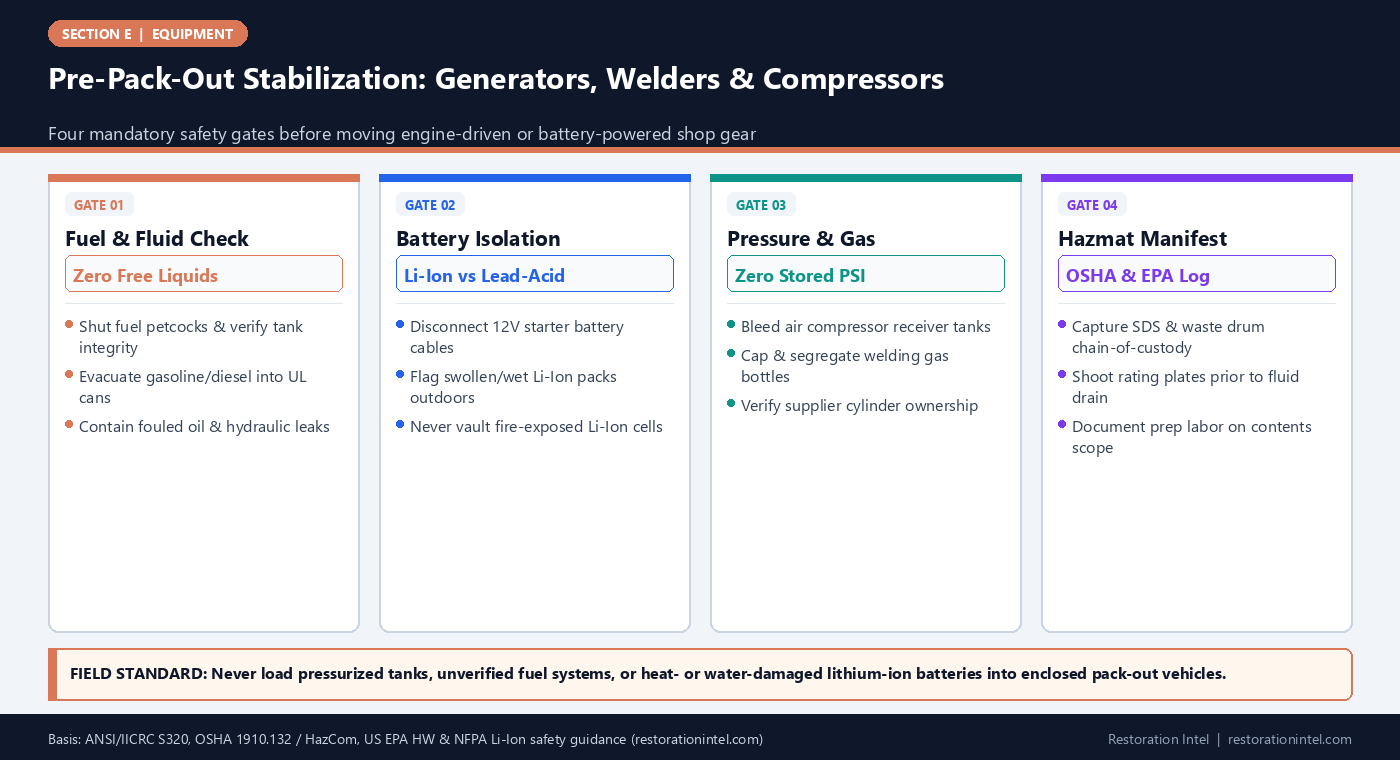
- Close fuel valves, drain gasoline/diesel into grounded safety cans over containment mats, and manage contaminated fluids under EPA rules.
- Disconnect and insulate lead-acid terminals; quarantine heat-stressed, swollen, or water-exposed lithium-ion packs outdoors away from vaults.
- Depressurize air receiver tanks to zero PSI, cap welding cylinders for vendor retrieval, and attach hazmat prep logs to the claim packet.
Standards, Authority References & Related Reading
Primary standards, insurance definitions, and sibling Restoration Intel guides referenced in this brief:
- OSHA 1910.132 Personal Protective Equipment Standard
- OSHA Hazard Communication Standard (HazCom)
- US EPA Hazardous Waste Framework
- NFPA Lithium-Ion Battery Safety Resources
- ANSI/IICRC S320 Standard for Professional Contents Restoration
- ANSI/IICRC S700 Fire & Smoke Restoration Standard
- Related Guide: Rating-Plate, Serial Number, and Asset-Tag Capture Standards for Commercial Equipment Claims
- Related Guide: Salvage Value, Scrap Recovery, and Decommissioning Documentation for Condemned Heavy Equipment
- Related Guide: Field Guide: Lithium-Ion Battery, Propane, and Hazmat Stabilization Rules in Fire and Flood Pack-Outs
- Related Guide: Managing Unlabeled Liquids, Chemicals, Aerosols, and Flammables During Pack-Out
- Related Guide: Chemical, Hazmat, Asbestos & Lead-Soot Contamination Losses: Pack-Out Sequencing & Cross-Contamination Containment
.md twin for desk QA and team training.Frequently Asked Questions
Can crews transport a gas generator with a half-full tank inside an enclosed pack-out truck?
No. Un-drained fuel tanks inside enclosed cargo boxes create flammable vapor hazards, leak risks during transit, and severe petroleum odor cross-contamination onto adjacent contents. Drain and stabilize fuel systems outdoors under proper safety controls first.
What should crews do with lithium-ion battery packs that got wet in a sprinkler or flood loss?
Isolate water-exposed, charred, or swollen lithium-ion packs outdoors at a safe standoff distance away from buildings and combustible materials. Never store compromised Li-Ion cells inside enclosed trucks or warehouse vaults; engage qualified battery disposal vendors.
Who owns the tall argon or oxygen cylinders strapped to a commercial welder?
Most industrial gas cylinders are leased or exchanged through regional welding-gas suppliers whose ownership stamp appears on the cylinder neck ring. Photograph the markings, cap the valves safely, and coordinate vendor pickup rather than claiming cylinder ownership.
Does OSHA or EPA guidance in a restoration field brief replace licensed hazmat disposal?
No. Field checklists govern safe initial triage and claim documentation only; any regulated hazardous waste, contaminated fuel, or damaged high-energy battery disposal must comply with applicable EPA, DOT, state environmental, and OSHA employer requirements.