Direct Answer: Commercial kitchen and bakery pack-out requires station-zoned segregation of porous and food-contact items, cold-chain isolation of walk-in refrigeration, dual-track chain of custody for serialized appliances and bulk smallwares, and documented health department, gas-pressure, and hood-suppression recertification before reopening.
.md twin for estimator QA and carrier file documentation.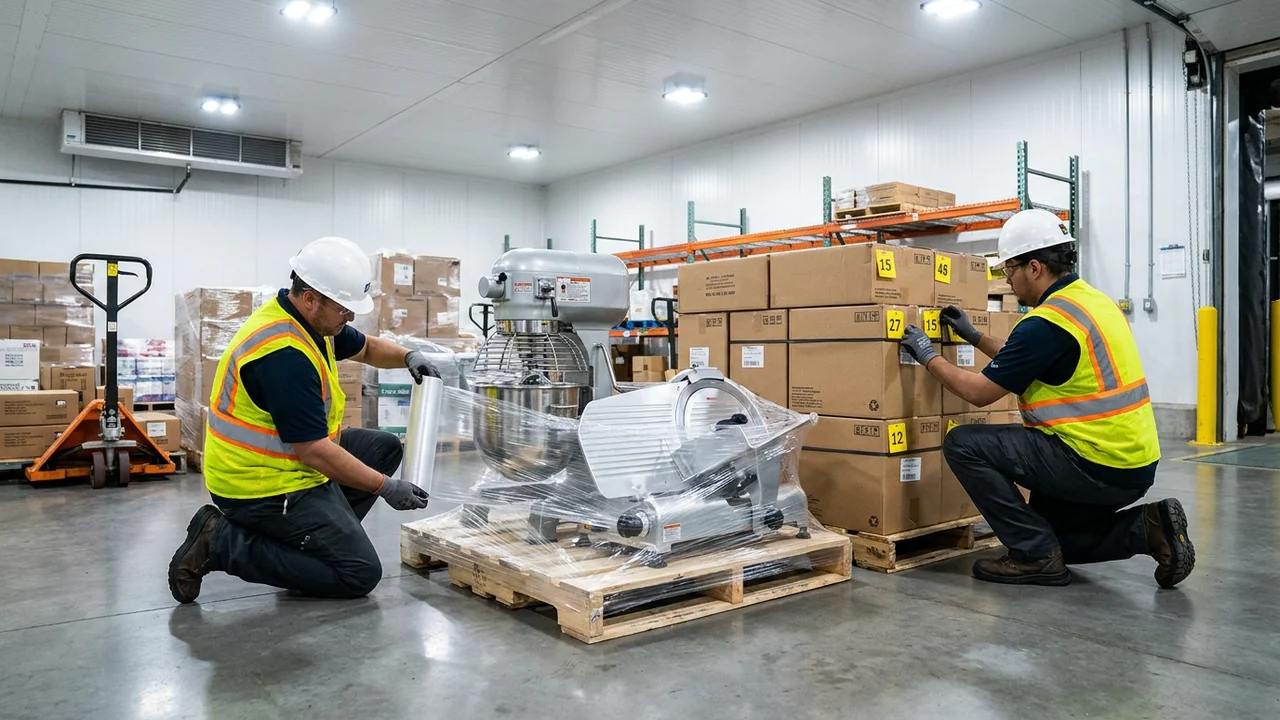
Packing out a fire- or water-damaged restaurant, commissary bakery, or institutional kitchen is never a standard furniture-and-box move. Every pan, planetary mixer, proof box, espresso group head, and stainless prep table sits inside a regulated food-safety ecosystem governed by local Environmental Health authorities, municipal mechanical and gas inspectors, and commercial fire marshals. If a crew loads soot-dusted sheet pans alongside condemned walk-in produce or disconnects a six-burner range without tracking gas shutoffs and fire-suppression links, the restoration plant faces cross-contamination liability and the restaurant stays padlocked weeks after structural repairs wrap.
On the claim side, food-service losses combine high-value serialized appliances—combi ovens, spiral dough mixers, blast chillers, and commercial dishwashers—with thousands of smallwares that look interchangeable in a vault unless tracked by kitchen station. Under ANSI/IICRC S320, contents teams must preserve both physical condition and verifiable custody across de-installation, ultrasonic or food-grade decontamination, climate-controlled storage, and mechanical reset.
Coordinating pack-out sequencing with food-service cleanability triage and formal chain-of-custody sign-offs prevents missing-smallware disputes and satisfies inspectors on reset day. Regulatory disclaimer: Health department reopening permits, food-contact surface sanitation approvals, gas-line pressure tests, and fire-suppression clearances are controlled exclusively by the local Authority Having Jurisdiction (AHJ) and licensed trade contractors; restoration protocols support documentation and never replace official municipal inspections.
Food-Service Pack-Out & Recertification Gates
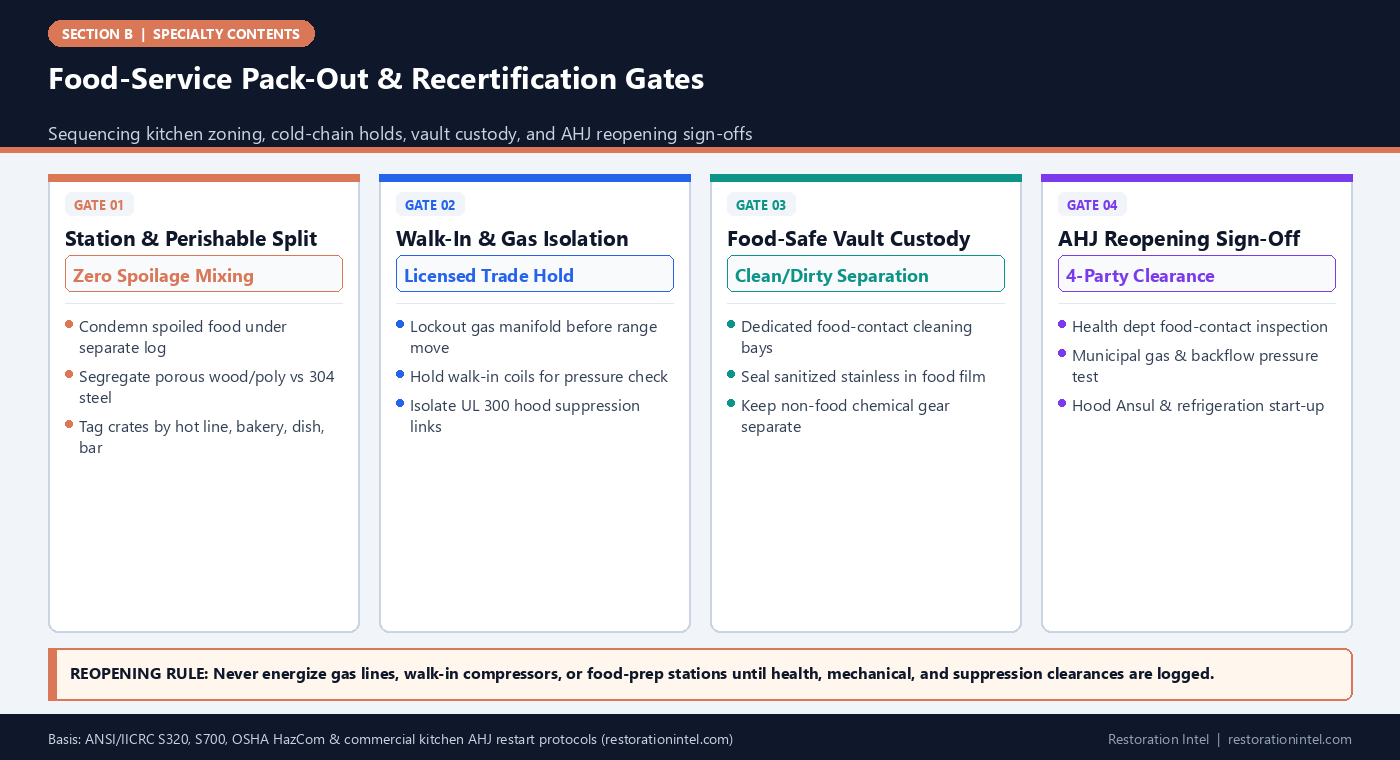
Commercial Kitchen Pack-Out, Custody & Recertification Matrix
Operational handling, custody controls, and reopening verification gates across core food-service zones.
| Kitchen Zone / Asset Group | Pack-Out & Stabilization Rule | Chain-of-Custody Method | Cross-Contamination Boundary | Recertification / Restart Gate |
|---|---|---|---|---|
| Hot Cooking Line (Ranges, Fryers, Combi Ovens) | Licensed gas/electrical disconnect; drain fryer oil into approved waste drums | Individual OEM serial tag + manifold shutoff photo log | Keep degreasing solvents and fire-extinguishing powder off stainless controls | Municipal gas pressure test, pilot/thermocouple check & UL 300 hood link sign-off |
| Bakery & Pastry Equipment (Spiral Mixers, Deck Ovens, Sheeters) | Lock bowls/guards; crate belt guards and stone oven hearths separately | Station-tagged pallet manifest + stone hearth edge-check photos | Separate flour/protein-charred porous wood peels from restorable stainless bowls | Food-contact NSF surface inspection, belt sanitation & thermostat calibration check |
| Walk-In Coolers, Freezers & Prep Refrigeration | Hold fixed walk-in box; isolate evaporator coils and log condenser pressures | Dedicated cold-chain sensor log + compressor serial verification | Never pack condemned perishable food inside stainless equipment crates | EPA-certified HVAC/R leak & hold test, NSF gasket integrity & 41F/0F stabilization log |
| Smallwares, Gastronorm Pans, Knives & Bar Gear | Sort by material (304/316 steel vs polycarbonate/wood) at pack-out | Batch-counted crate barcodes grouped by station (Line, Pastry, Garde-Manger) | Prohibit household/non-food chemical racks inside kitchen restoration bays | Food-grade ultrasonic rinse, sanitizer concentration log & ATP/visual swab verification |
| Dish Pit, Warewashers & Plumbing Trim | Disconnect booster heaters, chemical feed lines, and backflow assemblies | Separate leased chemical dispensers (vendor-owned) from insured machines | Label caustic warewash chemical lines clearly under OSHA HazCom before transport | Sanitizing cycle temperature/PPM test (180F thermal or chemical test strip) & grease-trap check |
| Point-of-Sale, Kitchen Display Systems & Scales | Photograph cabling; remove thermal paper rolls and wrap in ESD bags | MAC/serial asset tag + NTEP legal-for-trade scale seal check | Keep high-pressure steam and aqueous cleaners away from display enclosures | OEM bench diagnostic, touchscreen calibration & weights-and-measures seal check if disturbed |
Pre-Pack Perishable Segregation and Walk-In Refrigeration Holds
The fastest way to derail a commercial kitchen pack-out occurs in the first two hours: crews either haul equipment while spoiled walk-in inventory sits warming beside cleanable stainless steel, or someone cuts power to a salvageable walk-in compressor without logging temperatures and line integrity. Under ANSI/IICRC S700, perishable spoilage and contaminated dry goods must be inventoried and cleared for condemned disposal separately before restorable gear is staged.
Walk-in coolers and freezers rarely move off-site because cam-lock panels, floor screeds, and evaporator lines tie into building systems. Instead of dismantling a walk-in box blindly, teams place a formal refrigeration hold, clear condemned food with the owner and adjuster, and bring in a licensed refrigeration technician to test compressor windings, condenser fins, gaskets, and refrigerant pressure.
Reach-in prep tables, undercounter bar coolers, and mobile blast chillers that roll onto liftgates require upright transport after defrosting and draining. Tipping a reach-in sideways lets compressor oil migrate into capillary lines, turning a cleanable unit into a mechanical failure.
- Spoilage firewall: Log condemned walk-in food and open dry-goods sacks under witness-logged disposal rules before crating smallwares.
- Walk-in hold protocol: Record box temperatures, coil soot exposure, and gasket integrity before sanitizing fixed boxes.
- Upright-only transport: Strap reach-ins upright on palletized skids and allow oil settling before test-powering.
Station-Zoned Crating and Material Segregation During Pack-Out
Commercial kitchens run on station muscle memory. A line cook reaching for sixth-pans and tongs during service cannot wait while staff unpack mixed boxes labeled “Kitchen Misc.” Effective pack-out mirrors the restaurant’s layout by dividing custody into discrete zones: Hot Line, Garde-Manger/Cold Prep, Bakery/Pastry, Dish Pit, Dry Storage, and Bar/Espresso.
Inside each zone, crews apply a strict material filter before packing. Non-porous 304 and 316 stainless steel bowls, sheet pans, cast-iron skillets, and NSF anodized aluminum utensils move forward to food-safe restoration. Scored HDPE cutting boards, wooden baker’s peels, woven bannetons, smoke-permeated silicone mats, and melted squeeze bottles fail under B-19 food-service triage and belong in the witnessed non-salvageable schedule.
Every crate leaving the site should carry a color-coded station label and barcode tying back to the zone manifest. Seal bins holding chef knives, immersion circulators, or portafilters with numbered tamper-evident ties after an open-bin count photo.
- Six-zone labeling: Prefix every box tag with station codes (HOT, PREP, BAKE, DISH, BAR, DRY) so reset crews rebuild stations fast.
- Porous food-contact filter: Never waste cleaning labor on smoke-permeated wood peels, scored poly boards, or blistered non-stick pans.
- Leased equipment separation: Flag vendor-owned dish machines, dosing pumps, soda towers, and brewers per third-party asset rules.
Gas Disconnects, Fire Suppression Links, and Heavy Line Rigging
Heavy commercial cooking appliances—six-burner ranges, charbroilers, deck ovens, tilt skillets, and deep fryers—sit beneath Type I exhaust hoods tied directly into Ansul or other UL 300 wet-chemical fire-suppression systems and high-capacity natural gas or propane manifolds. Restoration pack-out crews must never uncouple rigid black-iron gas piping, disconnect suppression appliance drop lines, or shear tethered quick-disconnect hoses without licensed mechanical and fire-suppression technicians documenting the baseline.
Before any hot-line unit rolls forward from the wall, drain fryer vats completely into sealed steel disposal drums, photograph the exact appliance position relative to the suppression nozzles, and verify whether the local utility or fire marshal placed a red tag on the gas meter or shutoff manifold. Moving appliances out from beneath a hood changes nozzle aim and appliance coverage geometry, which means every reset requires formal suppression recertification.
For multi-deck bakery ovens, stone-hearth pizza ovens, and floor-standing spiral mixers exceeding 1,000 pounds, coordinate rigging specs early under heavy equipment rigging protocols. Ceramic hearth stones crack cleanly if lifted unevenly by pallet forks; document hearth condition before unbolting and crate refractory slabs vertically on padded A-frames.
- Suppression nozzle mapping: Shoot pre-move alignment photos showing each hood nozzle over fryers, griddles, and broilers before sliding appliances out.
- Safe oil & chemical purge: Drain fryer shortening and caustic grill cleaners into labeled containers following OSHA HazCom and EPA waste rules.
- Refractory & glass protection: Remove and separately crate ceramic deck stones, tempered steamer doors, and thermostat capillary bulbs before rigging.
Vault Isolation and Food-Grade Decontamination Chain of Custody
Once commercial kitchen assets arrive at the restoration facility, chain of custody splits into two distinct tracks: structural food-contact decontamination and mechanical/electrical bench verification. Restoration plants that clean fire-damaged household furniture, pet-contaminated upholstery, or automotive shop parts must never process restaurant smallwares in the same open wash sink or ultrasonic tank without dedicated food-grade isolation.
Under food-grade stainless restoration standards, food-contact racks, mixer attachments, and prep tables should pass through dedicated food-safe alkaline wash bays, clean potable water rinses, and NSF-approved sanitizing solutions—never fragranced deodorizers or industrial petroleum solvents that leave toxic residues on food surfaces.
After cleaning and drying, wrap sanitized stainless surfaces immediately in clean, food-grade poly sheeting or pallet shrouds and record the cleaning batch date, chemical product SDS, rinse verification, and post-clean inspection sign-off inside the asset’s custody record. That paper trail proves to skeptical health inspectors and restaurant owners that clean equipment was never exposed to ozone chemical off-gassing or general soot vault dust.
- Dedicated food-contact bay: Isolate kitchenware ultrasonic tanks and wash tables from non-food industrial or bio-hazard jobs.
- Zero fragrance/solvent rule: Bar scented masking agents and non-food-grade rust inhibitors from any surface touching food or potable ice.
- Sealed clean-side storage: Wrap restored prep tables, mixer bowls, and smallware crates immediately post-sanitation with dated QC seals.
Health Department, Gas, and Equipment Recertification Before Reopening
Returning cleaned equipment to the kitchen floor is only half the reset; the restaurant cannot legally serve a single plate until recertification gates clear in sequence. First, licensed mechanical and plumbing trades reconnect gas manifolds, test line pressure, restore grease-interceptor and floor-sink drainage, and verify backflow preventers on dish machines, combi ovens, and ice makers. Second, a certified fire-suppression technician inspects, re-aims, hydro-tests if due, and re-tags the UL 300 hood system over the reset cooking line.
Third, commercial kitchen equipment technicians verify operational safety and calibration—checking oven thermostat accuracy, refrigeration holding temperatures (typically 41 degrees Fahrenheit or below for coolers and 0 degrees Fahrenheit for freezers), and high-temperature dish-machine rinse sanitizing cycles. NTEP-certified deli and bakery scales must retain intact weights-and-measures seals or undergo state recertification if dismantled.
Finally, the Environmental Health inspector conducts a pre-opening walkthrough reviewing food-contact surface integrity, sanitation test kits, and cold-storage logs. Presenting a clean binder containing calibration and recertification certificates, NSF cleaning logs, and trade sign-offs—coordinated with B-20 valuation documentation—keeps reopening on schedule and protects Business Interruption timelines.
- Sequence the trades: Complete plumbing/backflow, gas pressure-test, and UL 300 hood recertification before scheduling the health department final.
- Verify food-zone integrity: Confirm zero delaminated welds, pitted heating elements, or heat-warped door gaskets that fail health-code inspection.
- Assemble the reopening binder: Deliver cleaning chemistry SDSs, refrigeration stabilization logs, and OEM safety checkoffs to the operator before inspection.
Practitioner Verification Checklist (B-21)
- Segregate and witness-log condemned perishable food and porous smoke-damaged plastics/wood before packing restorable stainless steel.
- Obtain licensed gas-shutoff, electrical lockout, and UL 300 hood suppression documentation prior to pulling hot-line appliances.
- Keep walk-in refrigeration fixed on site under licensed HVAC/R hold testing; transport reach-ins upright only after defrosting.
- Bar-code and station-tag every crate (Hot Line, Prep, Bakery, Dish, Bar) and flag vendor-leased dispensers separately.
- Process food-contact assets exclusively in isolated food-grade wash bays with zero fragrances or non-food solvents, then shroud clean.
- Compile gas pressure clearance, UL 300 hood re-tag, refrigeration temp logs, and health-department food-contact sign-offs before reopening.
Standards, Authority References & Related Reading
Primary standards, insurance definitions, and sibling Restoration Intel guides referenced in this brief:
- ANSI/IICRC S320 Standard for Professional Contents Restoration
- ANSI/IICRC S500 Water Damage Standard
- ANSI/IICRC S700 Fire & Smoke Restoration Standard
- OSHA Hazard Communication Standard (HazCom)
- US EPA Hazardous Waste Framework
- Restoration Industry Association (RIA)
- Related Guide: Commercial Kitchens, Bakeries & Food Service: Scope & Hazard Boundaries
- Related Guide: Commercial Kitchens, Bakeries & Food Service: Capture, Serial & Provenance Logging
- Related Guide: Commercial Kitchens, Bakeries & Food Service: Cleanability vs Total-Loss Triage
- Related Guide: Commercial Kitchens, Bakeries & Food Service: Valuation, LKQ Sourcing & Policy Traps
- Related Guide: Preventive Cleaning vs Full Refurbishment for Stainless Steel and Food-Grade Processing Gear
- Related Guide: Field Guide: Chain-of-Custody Form Elements & Pack-Out Sign-Off Template
.md twin for desk QA and team training.Frequently Asked Questions
Can a restoration crew pack out a restaurant walk-in cooler?
Usually no. Fixed walk-in coolers and freezers are built with cam-lock panels, floor screeds, and hard-piped refrigeration lines tied into the structure. Crews normally place a hold on fixed walk-ins for licensed HVAC/R testing and sanitize them in place, while packing out portable reach-in coolers upright.
Why do health departments reject kitchen equipment cleaned with standard restoration deodorizers?
Food-contact surfaces require NSF-compliant detergents and potable-water sanitizers that leave no toxic or scented residues. Standard fire-odor masking agents or industrial solvents violate health codes on surfaces that touch food or ice.
What happens when an appliance is rolled out from under a Type I exhaust hood for cleaning?
Moving ranges, fryers, or charbroilers disturbs gas quick-disconnects and changes appliance alignment beneath UL 300 fire-suppression nozzles. A licensed fire-suppression contractor and gas fitter must verify positioning, pressure-test lines, and re-tag the hood before cooking resumes.
Should wooden baker's peels and scored plastic cutting boards be packed out after a kitchen fire?
Typically no. Porous wood, heavily scored HDPE cutting boards, and smoke-permeated silicone mats trap acidic soot and combustion byproducts inside microscopic grooves that cannot be reliably recertified for food contact.
How should restaurant smallwares be organized so reopening does not stall?
Pack and barcode smallwares strictly by kitchen station—Hot Line, Cold Prep, Bakery/Pastry, Dish Pit, and Bar—with open-crate photo counts before sealing so kitchen staff can restock stations immediately upon return.