Direct Answer: Whether labor, inbound freight, and professional installation can be depreciated in an ACV calculation depends on state insurance regulations, specific policy endorsements, and whether the cost is inseparable from delivering a working replacement asset—requiring estimators to split equipment hardware from setup labor cleanly.
.md twin for estimator QA and carrier file documentation.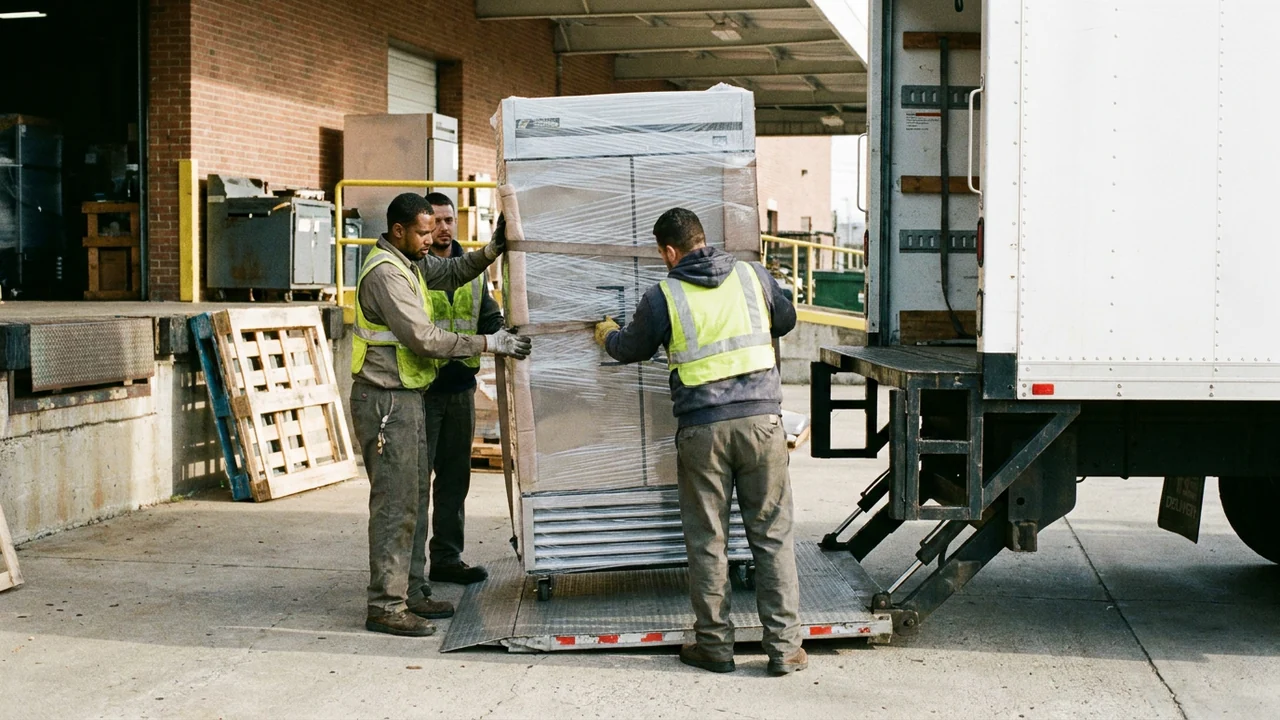
When a residential homeowner loses a built-in double wall oven or a commercial clinic loses a plumbed sterilization unit, the replacement price tag is never just the box at the loading dock. Getting that unit operational again requires LTL freight, liftgate delivery, rigging or stair carry, electrical or plumbing hookup, and haul-away of the ruined carcass.
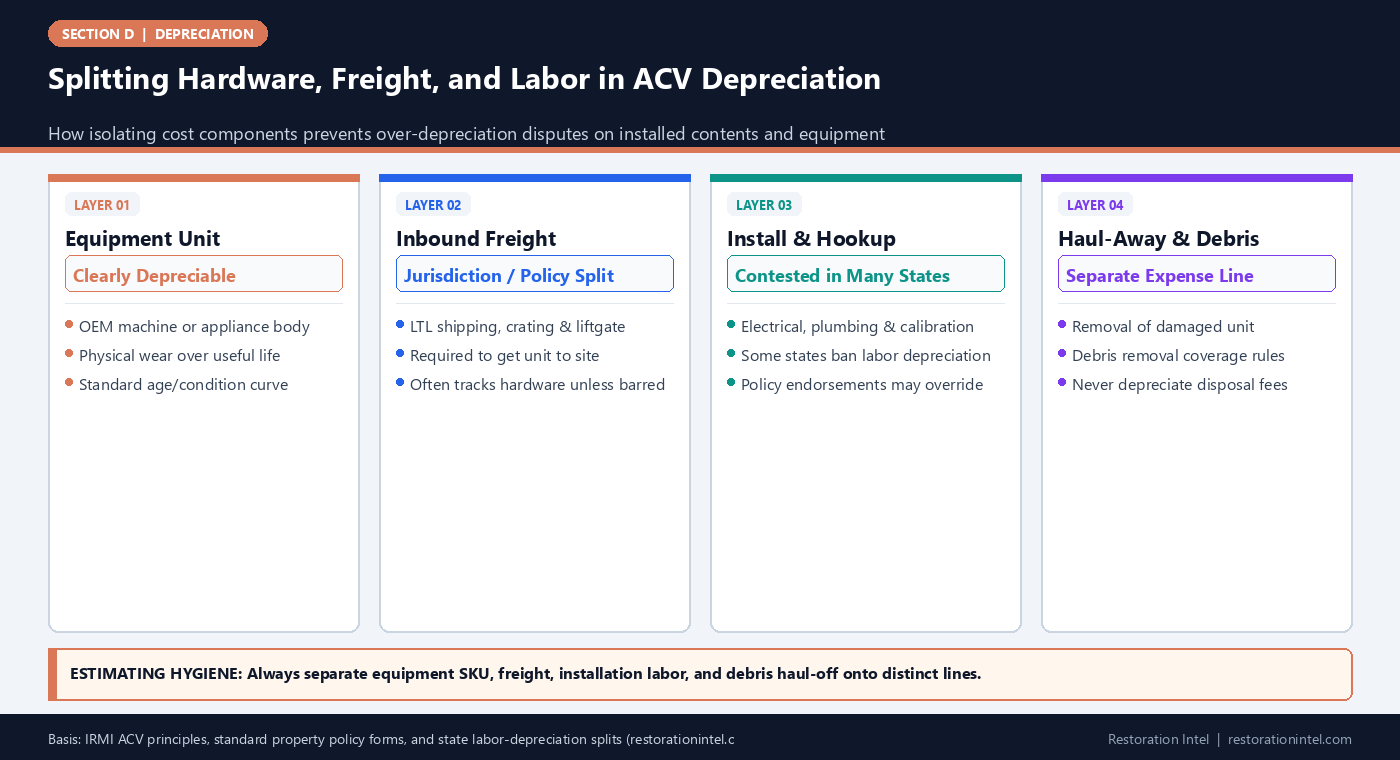
Disputes erupt immediately when an adjuster depreciates the entire installed total—applying 40 percent wear to the electrician’s hookup labor and freight invoice right alongside the machine itself. Because state insurance commissioners, appellate courts, and carrier policy endorsements divide sharply on whether labor is depreciable in Actual Cash Value calculations, estimators must separate unit hardware, freight, and installation labor into distinct line items rather than burying them inside a single lump sum.
Splitting Hardware, Freight, and Labor in ACV Depreciation
Cost Component Breakdown for Installed Contents and Commercial Equipment
How each element of a replacement quote behaves under ACV depreciation and carrier desk audit rules.
| Cost Component | Examples on Claim | Typical ACV Treatment | Primary Audit Risk | Recommended Line Structure |
|---|---|---|---|---|
| Base Equipment / Unit | Washer, safe, commercial printer, medical chair | Depreciated by age and pre-loss condition | Wrong model tier or omitted commercial suffix | Dedicated SKU line with rating-plate proof |
| Inbound Freight & Liftgate | LTL pallet delivery, white-glove stair carry, crating | Varies by carrier/state; often grouped with RCV if inseparable | Unexplained flat shipping fees without vendor quote | Separate freight line backed by carrier/vendor quote |
| Installation & Calibration | Hardwire electrical, gas line hookup, IT rack setup | Disallowed from depreciation in several states unless endorsed | Burying $1,500 install inside equipment price hides dispute | Break out hourly/flat trade labor onto separate lines |
| Specialty Rigging / Crane | Heavy safe, commercial freezer, rooftop/loft unit | Evaluated alongside install labor vs equipment RCV | Omitted entirely on initial desk estimate | Attach rigging vendor bid with access photos |
| Disposal / Haul-Off | Removing burned appliance or hazmat refrigerant recovery | Should NOT be depreciated; governed by debris removal coverage | Software auto-depreciating bundled haul-away | Isolate under debris removal / mitigation scope |
Why Labor Depreciation Is One of the Most Contested Issues in ACV
At the heart of the labor depreciation debate is a simple conceptual question: can human labor depreciate? Materials—sheet metal, wiring harnesses, upholstery foam, and compressors—physically wear out over time. An hour of a licensed electrician’s or appliance installer’s labor installed five years ago does not rust, fray, or become obsolete in the same physical sense, yet when that old installation is destroyed, the insured must pay today’s full labor rate to put the replacement unit back into service.
Across the United States, courts and state insurance departments remain divided on whether general ‘Actual Cash Value’ wording permits insurers to depreciate labor. Several states prohibit labor depreciation unless the policy expressly defines ACV to include labor, while other jurisdictions allow carriers to depreciate all elements of replacement cost—including labor, overhead, and delivery—when computing ACV. Many modern carrier endorsements now explicitly state whether labor is depreciable.
- Read the policy ACV endorsement first: Carriers increasingly attach state-specific ACV definitions stating explicitly whether labor and installation are depreciable.
- Verify state regulatory bulletins: State departments of insurance periodically issue bulletins restricting labor depreciation on non-endorsed forms.
- Avoid blended line items: When labor is baked invisibly into a single ‘installed appliance’ line, neither side can audit whether labor was depreciated lawfully.
Freight, White-Glove Delivery, and Crating vs Hardware Value
Unlike local retail goods picked up at a big-box store, heavy residential contents (gun safes, pianos, pool tables, commercial kitchen gear, and custom medical equipment) carry substantial inbound freight, crating, and specialized delivery charges. A $3,200 commercial mixer might require $650 in palletized LTL freight and liftgate drop-off.
If an estimator omits freight from RCV, the insured cannot actually replace the asset for the agreed figure. Conversely, once freight is included, carriers differ on whether shipping is part of the depreciable retail replacement cost of the delivered item or an ancillary installation expense. Separating unit price from quoted freight lets the adjuster apply the jurisdiction’s exact rule cleanly without stripping delivery charges out of RCV.
- Quote delivered RCV transparently: Show manufacturer/dealer unit price plus documented freight quote to destination ZIP code.
- Document access constraints: Stairs, narrow hallways, or second-floor clinic suites justify white-glove or rigging charges.
- Keep RCV intact even when ACV varies: Even where a carrier depreciates freight in ACV, the full freight cost remains recoverable upon replacement under RCV.
Contents vs Building Coverage Boundaries on Installed Equipment
Hardwired or plumbed items—built-in wall ovens, wine cellar cooling units, commercial walk-in compressors, dental chairs, or server rack UPS units—often sit right on the borderline between Coverage A / Building and Coverage C / Business Personal Property (BPP). Under ISO CP 00 10, permanently installed fixtures and machinery may belong under Building coverage or tenant improvements and betterments rather than movable contents.
Misclassifying an installed item can trigger the wrong deductible, wrong sublimit, or an unnecessary depreciation argument if the building side and contents side apply different rules. Coordinating between the structure estimator and contents estimator before submission prevents duplicate billing or omitted hookup labor, reinforcing scope clarity emphasized in Which Xactimate Line Items Do Adjusters Actually Approve?.
- Check landlord vs tenant lease lines: In commercial losses, lease language often determines whether built-in equipment sits on tenant BPP or landlord building.
- Coordinate Xactimate and XactContents: Confirm installation plumbing/electrical lines appear in one estimate only—never both and never zero.
- Exempt disposal from depreciation: Haul-off and landfill fees for destroyed equipment belong to debris removal, not depreciated asset value.
Structuring Schedules to Avoid Unnecessary Holdback Friction
Even in jurisdictions where labor and freight are depreciable in the initial ACV check under an RCV policy, remember that those withheld dollars remain recoverable once installation is completed and invoiced. The risk is highest on ACV-only policies, underinsured commercial claims, or cash-out settlements where non-recoverable depreciation permanently reduces what the insured collects.
Presenting a transparent three-line block for any installed asset—Line 1: Equipment Hardware, Line 2: Inbound Freight/Crating, Line 3: Installation/Calibration Labor—positions the claim file for quick desk review. If local rules exempt labor from depreciation, the adjuster can uncheck depreciation on Line 3 in two clicks instead of re-auditing the entire schedule.
- Attach vendor breakout quotes: Request itemized dealer quotes separating machine MSRP, freight, and on-site commissioning.
- Preserve pre-loss install photos: Photograph existing electrical whips, plumbing shutoffs, and floor anchors before demolition.
- Flag ACV-only exposure early: When a policy lacks RCV, labor depreciation disputes directly impact permanent net recovery.
Practitioner Verification Checklist (D-05)
- Review the policy’s ACV definition endorsement and state rules to see whether installation labor is exempt from depreciation.
- Break every installed or freight-heavy asset into separate lines: Base Unit, Inbound Freight/Liftgate, Installation Labor, and Disposal.
- Confirm whether hardwired or plumbed equipment belongs under Coverage A/Building, Tenant Improvements, or Contents/BPP to avoid omissions.
- Ensure debris removal and refrigerant recovery/haul-off fees are never subjected to physical asset depreciation.
- Include itemized dealer quotes showing delivery ZIP freight and commissioning labor so full RCV is preserved.
Standards, Authority References & Related Reading
Primary standards, insurance definitions, and sibling Restoration Intel guides referenced in this brief:
- IRMI Insurance Glossary: Actual Cash Value (ACV)
- IRMI Insurance Glossary: Depreciation
- IRMI Insurance Glossary: Replacement Cost Value (RCV)
- Verisk Xactimate Estimating Platform
- Related Guide: RCV vs ACV Fundamentals in Contents Claims: How Replacement Cost, Depreciation, and Holdbacks Actually Work
- Related Guide: Sales Tax, Shipping, and Crating in RCV and ACV Contents Settlements
- Related Guide: Debris Removal, Haul-Off, and Landfill Fees for Total-Loss Contents: Where Valuation Ends and Mitigation Begins
- Related Guide: Field Guide: Commercial Tenant vs Landlord Split Quick-Reference Table
- Related Guide: Which Xactimate Line Items Do Adjusters Actually Approve?
.md twin for desk QA and team training.Frequently Asked Questions
Can an insurance carrier depreciate installation labor on contents or equipment?
It depends on the state and the policy language. Some states prohibit depreciating non-physical labor in ACV calculations unless the policy explicitly permits it, while other jurisdictions and endorsements allow depreciating all components of replacement cost.
Should haul-away and disposal of a ruined appliance be depreciated?
No. Removing and disposing of damaged debris is a post-loss expense typically governed by debris removal provisions, not a physical asset that suffers wear and tear.
Why separate inbound freight from the base unit price on a contents schedule?
Separating hardware, freight, and installation labor allows the desk examiner to apply the exact policy and jurisdictional depreciation rules to each component without stripping legitimate shipping costs out of RCV.
Does labor depreciation matter if the policy has Replacement Cost coverage?
Yes for cash flow, because depreciating labor lowers the initial ACV payout; and permanently if the insured opts not to replace the item or has an ACV-only policy.