Direct Answer: Retail and warehouse scope boundaries require separating store fixtures and material-handling equipment from sellable stock, enforcing OSHA pallet-racking stability and sprinkler-clearance rules before entry, and distinguishing intact outer cartons from smoke-, water-, or temperature-adulterated consumer inventory.
.md twin for estimator QA and carrier file documentation.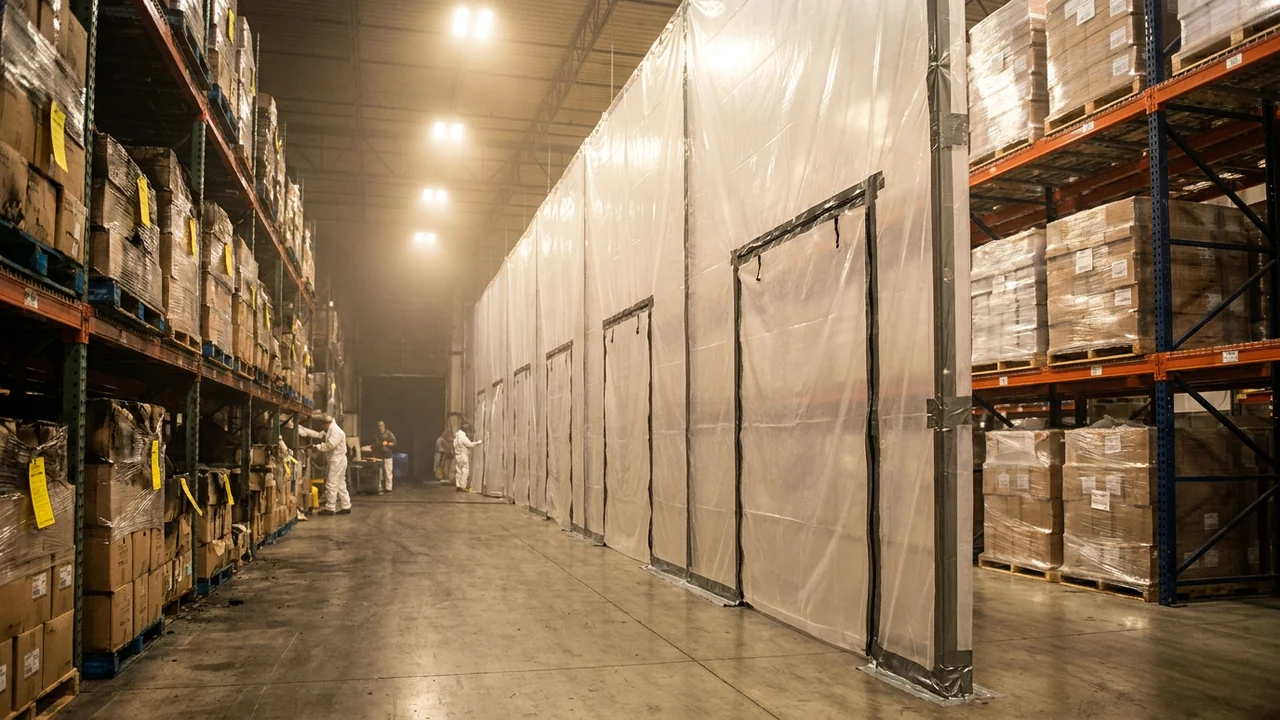
Retail sales floors and distribution warehouses invert the normal contents-restoration mindset. In an office or residence, value sits in furniture and equipment used by the occupant. In a retail store or warehouse, the overwhelming concentration of dollar exposure sits inside sellable inventory stacked floor-to-ceiling on pallet racking, gondola runs, and backroom cages—governed not just by ANSI/IICRC S320 cleanliness standards, but by consumer-safety laws, brand-integrity contracts, and strict occupational safety rules.
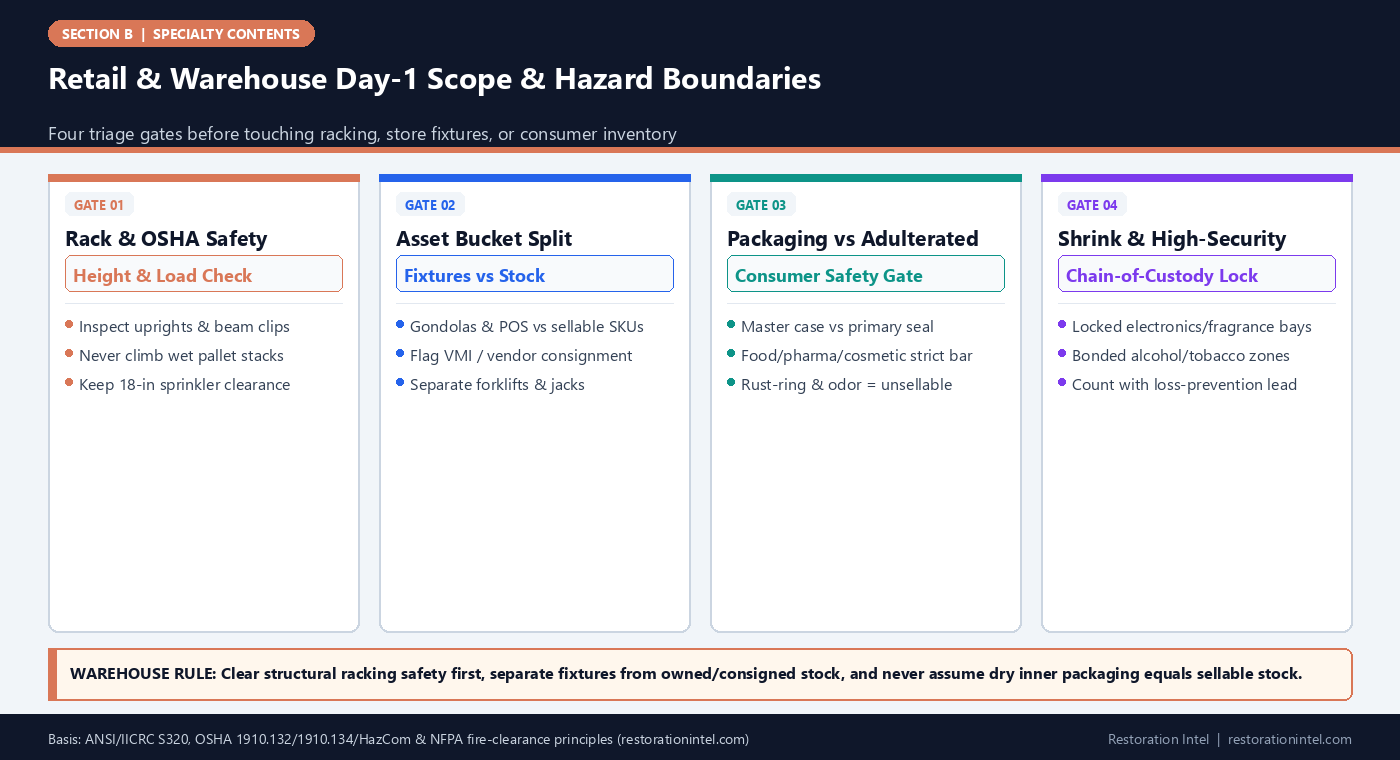
Before a single box comes off a shelf, field leads must draw three sharp boundaries on Day 1. First is the asset-class split separating permanent building utilities, retail merchandising fixtures (gondolas, point-of-sale counters, illuminated endcaps), material-handling fleet (forklifts, reach trucks, pallet jacks), and sellable stock (owned vs. vendor-consigned). Second is physical rack and OSHA safety: water-softened master cartons atop twenty-foot pallet racking can shift and collapse onto technicians below, while fire-warped steel uprights or blocked fire-sprinkler deflectors create immediate life-safety exclusions.
Third is the sellable packaging versus adulterated stock boundary. A shrink-wrapped pallet or sealed glass bottle that appears dry inside a smoke-stained or sprinkler-soaked master carton may still fail regulatory adulteration standards or manufacturer warranty rules, rendering it unsellable through normal retail channels. Safety and regulatory disclaimer: This guide covers operational claim scoping only—not OSHA legal compliance, FDA/USDA regulatory rulings, or product-recall counsel. Enforce site Lockout/Tagout, fall-protection, and forklift exclusion rules, and obtain written guidance from qualified safety engineers, regulatory authorities, and brand owners before clearing any consumer stock.
Retail & Warehouse Day-1 Scope & Hazard Boundaries
Retail Merchandising & Warehouse Stock Scope & Hazard Matrix
Operational boundaries separating structural systems, store fixtures, handling equipment, and regulated consumer inventory.
| Facility Zone / Asset Class | Coverage & Ownership Split | Primary Physical / OSHA Hazard | Regulatory / Brand Adulteration Gate | Mandatory Day-1 Boundary Action |
|---|---|---|---|---|
| Selective & Cantilever Pallet Racking | Verify slab-bolted TIB/Building vs removable BPP rack | Bent uprights, sheared anchor bolts, collapsing wet pallet loads | Rack load-rating placards invalid after fire heat or forklift impact | Establish exclusion tape; require certified rack inspection before unloading upper tiers |
| Gondola Shelving, Slatwall & Endcaps | Tenant BPP fixtures (unless custom built-in millwork/TIB) | Tip-over when unbalancing weighted displays; broken glass shelves | Electrical UL risks in illuminated display headers | De-energize display lighting; separate fixture hardware from SKU stock |
| Sellable Retail & Warehouse Stock | Insured Inventory/Stock (separate from Fixtures & Supplies) | Heavy master cases falling from compromised corrugated cartons | Smoke odor, Category 2/3 splash, rust rings, or temp excursions adulterate food/cosmetics/toys | Quarantine affected aisles; hold stock intact for brand/regulatory & adjuster sign-off |
| Vendor-Managed & Consigned Displays | Third-Party Vendor / Brand-Owned Property | Same falling-load and chemical hazards as owned stock | Vendor contract governs salvage, destruction & credit-back rules | Tag vendor endcaps separately; notify brand rep before moving or discarding |
| Forklifts, Reach Trucks & Pallet Jacks | BPP Equipment or Scheduled/Leased Fleet | Li-ion/lead-acid charging bays, propane cylinders, hydraulic leaks | OSHA powered industrial truck safety & charging ventilation rules | Isolate damaged batteries/propane tanks; verify lease decals before handling |
| High-Value Cages (Electronics, Liquor, Pharma) | Inventory/Stock (high-shrinkage & regulated categories) | Shattered glass, flammable spirits vapor, broken sharps/cosmetics | Excise-tax/bonded destruction rules or strict brand tamper-seal rules | Conduct joint count with store loss-prevention or warehouse manager under video/sign-off |
Pallet Racking Height, Structural Stability, and OSHA Clearance Rules
Warehouse contents losses introduce vertical hazards absent from standard commercial offices. Selective pallet racking routinely rises sixteen to thirty feet above the concrete slab, holding ton-weight pallets of liquids, boxed appliances, or textiles on corrugated master cases. When overhead fire sprinklers activate—or when a roof breach dumps rain onto upper bays—corrugated cardboard absorbs moisture rapidly, loses vertical stacking crush strength, and allows upper pallets to lean or burst out of shrink-wrap without warning.
Equally critical are racking steel integrity and fire-code clearances. Fire exposure can anneal cold-formed rack beams, impact from emergency response vehicles can buckle vertical uprights, and fallen merchandise frequently blocks fire-exit aisles or stacks dangerously close to ceiling sprinkler heads (where fire codes and warehouse standards commonly mandate an 18-inch clearance plane below sprinkler deflectors for proper spray distribution). Under OSHA 1910.132 PPE and general workplace safety duties, restoration crews must never climb unstable racking, step onto wet pallet decks, or pull bottom cartons out from leaning columns.
Establish a clear Drop-Zone Exclusion Perimeter before inventory sweeps start. Use certified, trained lift operators on inspected equipment—or wait for a structural rack engineer to clear heat- or impact-compromised bays—before destacking overhead pallets down to floor level for triage.
- Inspect rack uprights and anchors first: Red-tag any bay showing buckled columns, sheared beam safety pins, or heat-discolored steel until cleared by a qualified engineer.
- Enforce hard hats, safety toes, and vests: Require ANSI-rated head protection, steel/composite-toe footwear, and high-visibility vests across all active racking and forklift aisles.
- Protect sprinkler and egress clearances: Keep emergency restacking aisles clear and maintain required vertical clearance below active sprinkler deflectors.
Separating Store Fixtures, Material-Handling Gear, and Sellable Stock
On commercial retail and warehouse property forms, merchandise held for sale (“Stock”) is routinely tracked, valued, and sometimes sublimited differently from store furniture and fixtures (gondolas, checkouts, mannequins, warehouse racking) and operational equipment (forklifts, stretch-wrappers, floor scrubbers, POS terminals). Blending them together into one walkthrough spreadsheet creates immediate valuation disputes under D-12 commercial stock valuation rules.
Physical boundaries also extend into low-voltage store infrastructure. Check-lane POS registers, barcode scanners, and countertop pin-pads belong on BPP/equipment schedules, whereas recessed ceiling security domes, EAS anti-theft pedestals bolted into concrete entrances, and hardwired store-audio amplifiers may cross into Building or Tenant Improvements depending on lease terms—a split detailed in E-15 POS and security triage.
Inside the backroom, inspect pallet racking attachment and forklift ownership. Bolted racking may be classified as tenant trade fixtures or landlord building improvements depending on the industrial lease, while propane/electric reach trucks and pallet wrappers frequently operate under third-party leases or scheduled inland marine floaters.
- Tag four distinct asset streams: Separate Sellable Stock, Merchandising Fixtures, Material-Handling Fleet, and Store Supplies (shopping bags, shipping boxes, labels) from Hour 1.
- Flag Vendor-Managed Inventory (VMI): Isolate third-party consigned displays (greeting cards, eyewear racks, beverage coolers, seasonal vendor endcaps) so ownership is verified upfront.
- Verify rack & lease status: Request the warehouse lease and forklift maintenance contracts before coding bolted racking or material-handling lifts.
Sellable Packaging vs Adulterated Stock: Why 'Dry Inside' Doesn't Mean Sellable
The biggest technical trap in retail and warehouse claims is equating outer dryness with commercial sellability. Even when a foil snack pouch, screw-top jar, or boxed toy inside a damp master carton looks dry, exposure to combustion smoke, dirty sprinkler runoff, or cooler temperature excursions can legally adulterate consumer inventory under food, drug, cosmetic, and brand-integrity rules—rusting can seams microscopically, tainting porous cartons with odor, or destroying traceable lot codes.
Never discard or liquidate questionable stock unilaterally. Quarantine suspect lots by SKU and obtain written disposition determinations from the manufacturer, store quality-assurance officer, or health authority alongside the adjuster per stock loss documentation standards.
- Separate master carton from primary seal: Document whether damage stopped at outer shipping boxes (re-packable only if QA approves) or reached primary seals.
- Enforce zero-tolerance categories: Hold infant formula, pharmaceuticals, dented/wet canned goods, cosmetics, and pet food for mandatory QA review.
- Preserve brand-destruction rules: Verify whether trademark owners forbid secondary salvage resale and require witnessed destruction.
Hazmat Storage Aisles, Battery Bays, and Aerosol Containment
Retail stores and warehouses concentrate regulated consumer chemicals: automotive fluids, pool oxidizers, lithium-ion tool batteries, aerosol paints, and propane cylinders. When sprinkler water mixes damaged cartons with breached containers, standard aisles quickly become multi-class hazmat zones.
Under OSHA HazCom, OSHA 1910.134, and EPA Hazardous Waste rules, map chemical aisles using the planogram or WMS layout before washdown, pull SDS sheets, and route ruptured chemicals or stressed battery packs through licensed environmental contractors rather than general roll-off dumpsters.
- Audit chemical and battery bays early: Mark paint, oxidizer, aerosol, and e-bike/tool battery aisles on the Day-1 hazard map.
- Inspect forklift charging stations: Lock out submerged chargers and isolate electrolyte leaks before floor squeegeeing.
- Segregate damaged retail chemicals: Never mix ruptured containers or pressurized aerosols into general construction debris.
High-Shrinkage Cages, ERP Cycle-Count Baselines, and Loss-Prevention Controls
High-value stock—electronics, fragrances, power tools, spirits, and tobacco—sits inside locked cages because shrinkage risk is high. When a disaster disables store alarms or roll-up doors, crews must coordinate dual-custody cage access with loss-prevention staff and secure surviving goods immediately.
At the same time, freeze a date-of-loss POS or Warehouse Management System (WMS) perpetual inventory snapshot per C-17 warehouse ERP mapping before moving stock, laying clean groundwork for B-58 capture and provenance logging.
- Freeze ERP/WMS data immediately: Export date-of-loss bin counts and landed costs before physical stock relocates.
- Lock down security-cage access: Maintain dual-custody sign-in logs and board up broken display glass immediately.
- Document excise or bonded stock: Flag alcohol or tobacco requiring state revenue witness verification before destruction.
Practitioner Verification Checklist (B-57)
- Inspect pallet racking uprights, beam clips, anchor bolts, and water-softened upper pallet stacks; establish exclusion zones until structural safety is verified.
- Confirm OSHA PPE (hard hats, safety-toe boots, high-vis vests), forklift exclusion perimeters, and 18-inch sprinkler-deflector clearances in restacking zones.
- Separate facility assets cleanly into Building/TI, Merchandising Fixtures (gondolas/POS), Material-Handling Fleet, Owned Stock, Supplies, and Vendor Consignment.
- Map hazmat retail aisles (paints, oxidizers, aerosols, lithium-ion batteries) and electric forklift charging bays before any washdown or debris removal.
- Quarantine smoke-, water-, or temperature-exposed consumer inventory without assuming dry inner items are sellable; log QA/regulatory hold requirements.
- Freeze the client’s POS/WMS perpetual inventory snapshot at loss date and conduct joint loss-prevention counts inside locked high-shrinkage cages.
Standards, Authority References & Related Reading
Primary standards, insurance definitions, and sibling Restoration Intel guides referenced in this brief:
- ANSI/IICRC S320 Standard for Professional Contents Restoration
- ANSI/IICRC S500 Water Damage Standard
- ANSI/IICRC S700 Fire & Smoke Restoration Standard
- OSHA 1910.132 Personal Protective Equipment Standard
- OSHA 1910.134 Respiratory Protection Standard
- OSHA Hazard Communication Standard (HazCom)
- US EPA Hazardous Waste Framework
- Related Guide: Retail Merchandising & Warehouse Stock: Capture, Serial & Provenance Logging
- Related Guide: Warehouse & Stockroom Pre-Loss Controls: Pairing ERP Cycle Counts with Visual Zone Maps
- Related Guide: Stock, Consumables, and Perishables Valuation in Commercial BPP Claims: Wholesale Cost vs Selling Price
- Related Guide: Point-of-Sale, Security, and Low-Voltage Smart Systems: Contents vs Building Fixture Triage
- Related Guide: Field Guide: Emergency Food & Perishable Stock Loss Documentation Checklist (Residential & Commercial)
- Related Guide: Leased, Financed, and Vendor-Consigned Equipment: Handling Third-Party Ownership on a Contents Inventory
.md twin for desk QA and team training.Frequently Asked Questions
Why can't crews immediately pull wet cartons off upper warehouse pallet racking?
Water-logged corrugated master cases lose vertical compression strength rapidly, and fire heat or forklift impacts can weaken steel rack beams and uprights. Always inspect rack integrity and use qualified lift operators with exclusion zones rather than climbing or pulling from below.
If a glass jar or foil pouch inside a smoke-damaged shipping box looks dry, can the store still sell it?
Often no. Consumer-safety regulations (such as FDA/USDA adulteration rules for food, drugs, and cosmetics) and manufacturer brand standards routinely prohibit selling stock exposed to combustion smoke, contaminated suppression water, temperature excursions, or compromised outer traceability codes.
Why must retail store fixtures be separated from sellable stock on Day 1?
Policies frequently distinguish Furniture & Fixtures (gondolas, racking, POS terminals) from Stock (merchandise held for sale), applying different valuation rules—such as wholesale/landed cost for stock versus RCV/ACV for fixtures—and sometimes separate sublimits.
How should restoration teams handle vendor-consigned endcaps and third-party displays?
Leave vendor-owned displays and consigned stock segregated under distinct intake tags, capture vendor ID decals, and coordinate disposition with the brand representative before cleaning or discarding.
What first-hour data should estimators request from a damaged retail store or warehouse?
Request a frozen date-of-loss POS or WMS inventory export by bin/SKU, store floor planogram, SDS records for chemical aisles, and lease/equipment schedules covering racking and forklifts.