Direct Answer: Preventive cleaning applies to sound stainless steel surfaces holding light airborne dust or superficial soot without corrosion or sealed-cavity intrusion, whereas full refurbishment is mandatory whenever acidic smoke, floodwater, or heat compromises welds, food-zone gaskets, motor bearings, insulated cavities, or sanitary surface finish.
.md twin for estimator QA and carrier file documentation.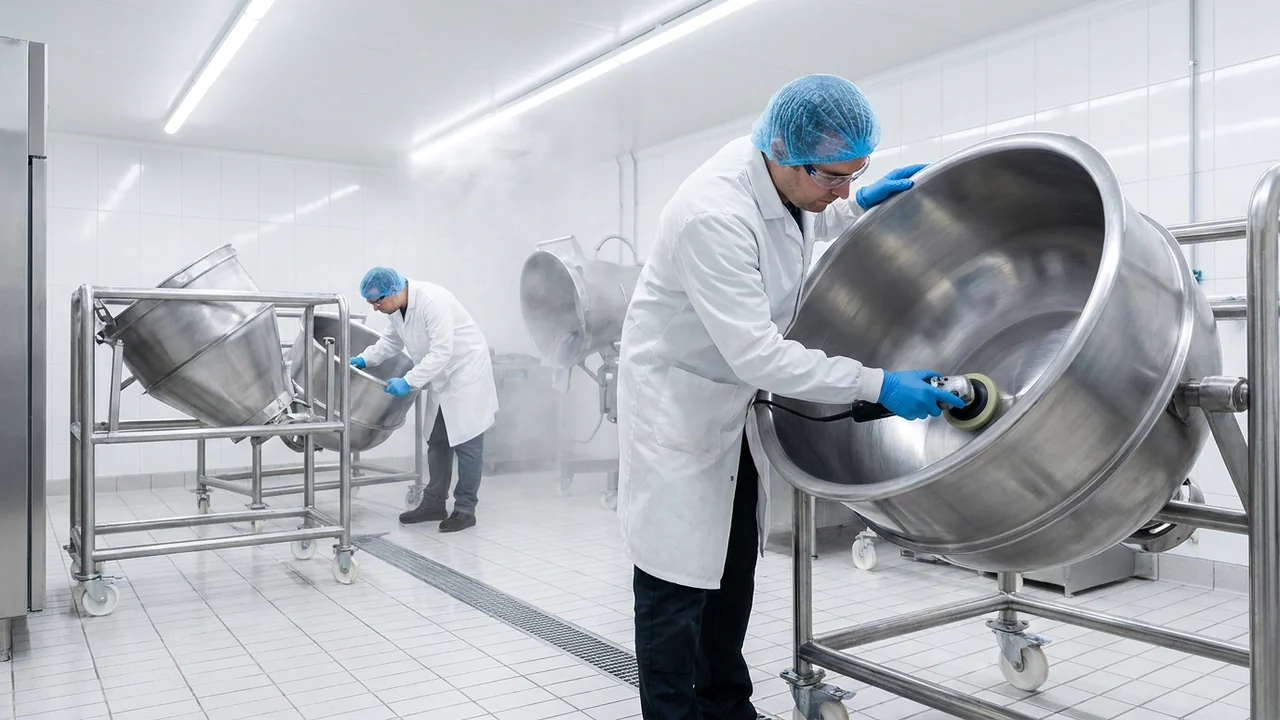
Stainless steel commercial kitchen lines, bakery proofers, meat-processing grinders, brewery fermenters, and pharmaceutical-grade prep tables look deceptively indestructible after a loss. Because 304 and 316 stainless steel does not swell like particleboard or char like drywall, inexperienced crews frequently write ‘wipe down stainless steel’ across an entire commercial schedule—while specialized equipment vendors quote full factory refurbishment or replacement for the very same units.
Under ANSI/IICRC S320, ANSI/IICRC S700, and ANSI/IICRC S500, the dividing line between preventive surface cleaning and full mechanical/sanitary refurbishment rests on metallurgy, food-contact hygiene, and internal cavity intrusion. Superficial drywall dust on an open prep table demands rapid preventive cleaning before alkaline plaster dust traps ambient moisture; protein smoke drawn into a walk-in evaporator coil, or Category 2 water inside a double-wall insulated proofing cabinet, requires disassembly, seal replacement, and verified sanitization.
Choosing the wrong track carries sharp consequences. Under-scoping drives delayed pitting corrosion and failed health-department inspections weeks after reopen; over-scoping cleanable stainless fixtures triggers justified carrier pushback under IRMI economic salvage standards.
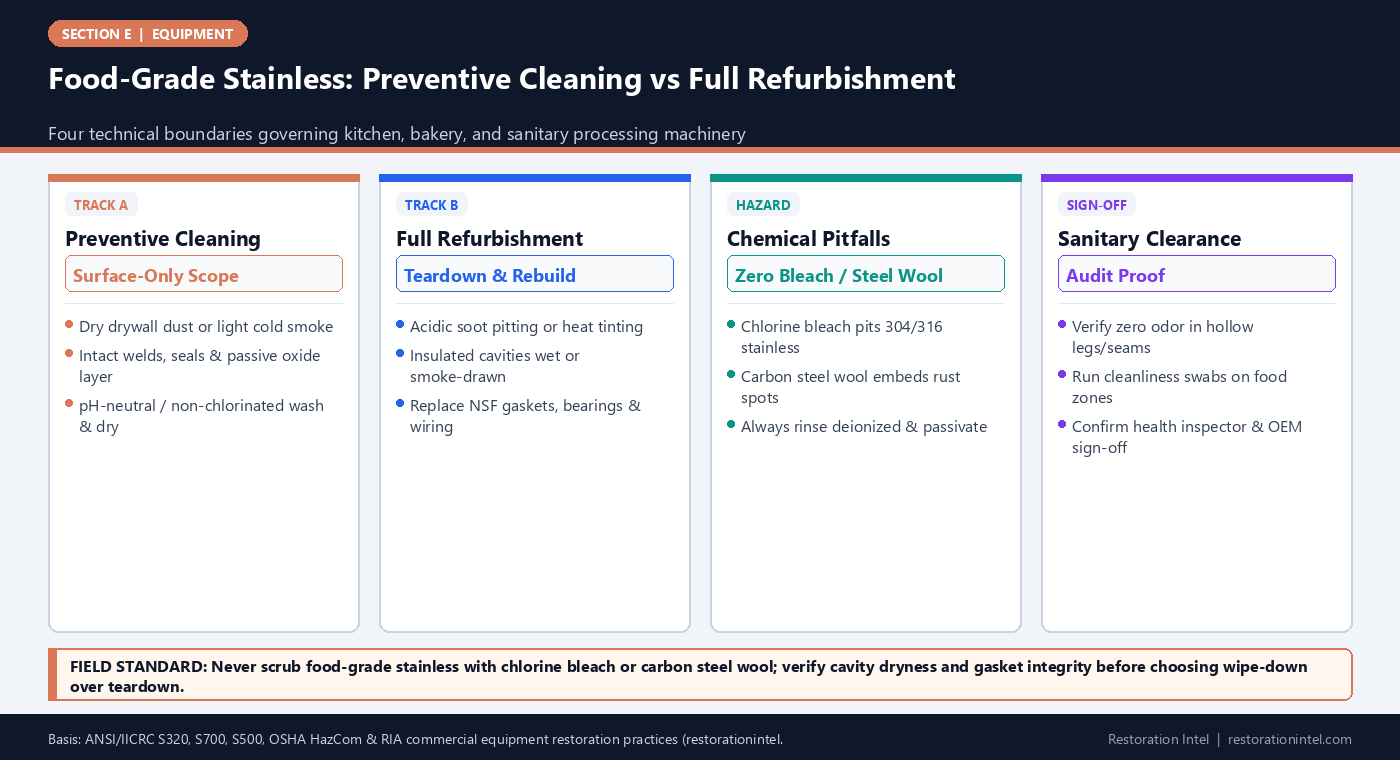
Food-Grade Stainless: Preventive Cleaning vs Full Refurbishment
Preventive Cleaning vs Full Refurbishment Criteria for Food-Grade Gear
Technical triggers separating rapid on-site stabilization cleaning from shop-level mechanical and sanitary refurbishment.
| Asset Type | When Preventive Cleaning Suffices | When Full Refurbishment Is Required | Critical Failure Risk if Mis-Scoped | Verification Standard |
|---|---|---|---|---|
| Open Stainless Prep Tables, Shelving & Sinks | Non-corrosive dust or light cold soot on accessible tops/undersides | Heat warping, chloride soot pitting, or water inside unsealed tubular legs | Delayed rust bleed at welded gussets and hidden leg bacteria | Visual macro + pH wipe + crevice/weld inspection |
| Commercial Mixers, Slicers & Grinders | Exterior splash/dust with sealed gearbox and zero intrusion | Smoke odor in motor housing, wet grease seals, or food-zone pitting | Bearing seizure, lubricant contamination, and pathogen trap in seals | OEM teardown report, bearing/seal invoice, and food-zone swab |
| Reach-In Refrigerators & Walk-In Evaporators | Exterior cabinet dust only; compressor/evap bay isolated & dry | Soot drawn across finned coils, wet bottom insulation, or swollen door gaskets | Persistent rancid protein odor blown onto fresh stock; gasket mold | Coil fin wash log, gasket replacement, and thermal hold test |
| Convection Ovens, Fryers & Combi-Steamers | Surface grease/dust outside untouched burner/electronics bay | Fire-suppression chemical discharge, wet control PCBs, or soaked insulation | Ansul potassium-acetate corrosion on aluminum/steel and PCB shorting | Control diagnostics, insulation inspection, and gas/UL safety test |
| Stainless Conveyor Belts & Packaging Lines | Dry debris cleared promptly with food-safe detergent and rinse | Water/soot in roller bearings, UHMW guides, photo-eyes, or gearmotors | Line stoppages, premature roller lockup, and sanitation audit failure | Disassembly log, bearing/belt swap list, and ATP/cleanliness test |
Why Stainless Steel Pits: Chloride Soot, Bleach, and Carbon Steel Errors
Food-grade 304 and 316 stainless steel resists rust because of a microscopic chromium-oxide passive film across its surface—not because the alloy is chemically invincible. Two common loss-site mistakes strip that passive layer overnight: leaving acidic combustion soot sitting on damp stainless during delayed claim negotiations, and sending cleanup crews in with chlorine-bleach disinfectants or ordinary carbon-steel scouring pads.
When PVC cable jackets, plastic packaging, or restaurant foam insulation burn, smoke deposits hydrochloric acid and chloride salts onto cool stainless hoods, prep tables, and mixer bowls. Under humid mitigation conditions, those salts pull moisture from the air and initiate pinpoint pitting corrosion that cannot be erased with simple detergent wiping. Likewise, wiping stainless with sodium hypochlorite (bleach) or scraping scorched deposits with carbon-steel wool embeds free iron particles that bloom into surface rust within days.
Preventive cleaning therefore serves as an immediate stabilization step within the first 24 to 48 hours: vacuum dry soot and alkaline drywall dust with HEPA equipment first, wash with manufacturer-approved non-chlorinated detergents following OSHA HazCom SDS rules, rinse with clean or deionized water, and dry thoroughly—while flagging any visible etching, heat-tint discoloration, or crevice pitting for passivation or full refurbishment.
- HEPA vacuum before wet wipe: Dry-extract loose soot and gypsum dust first so moisture does not turn dust into an abrasive corrosive paste.
- No-chloride rule: Ban household chlorine bleach, muriatic acid, and carbon steel brushes from every stainless kitchen and processing zone.
- Chemical-suppression urgency: Wet-chemical hood discharge (Ansul/potassium salts) is strongly alkaline and corrodes aluminum/stainless trim rapidly unless neutralized fast.
Hollow Frames, Double-Wall Insulation, and Gasket Boundaries
The external surface of a commercial proofing cabinet, steam-jacketed kettle, or reach-in cooler tells only half the story. Food-processing equipment is built with double-wall insulated skins, folded sheet-metal seams, hollow square-tube legs, press-fit rubber door gaskets, and weep holes engineered for routine wash-down—not pressure-driven sprinkler runoff, Category 2/3 floor flooding, or heavy pressurized smoke.
Once contaminated water or dense protein smoke penetrates fiberglass or polyurethane foam insulation behind welded stainless panels, surface wiping achieves nothing. Trapped moisture breeds anaerobic odors and microbial colonies inside wall cavities, while porous magnetic door gaskets absorb smoke oils that off-gas onto fresh food inventory every time the door closes.
Inspectors must check bottom leg glides, underside seam rivets, removable side inspection panels, and gasket channels before signing off on preventive cleaning. Whenever internal insulation is saturated or non-removable gaskets hold smoke or grease-fire odor, the scope crosses into full refurbishment (complete teardown, insulation/gasket replacement, and re-sealing) or constructive total loss if refurbishment exceeds replacement value.
- Seam & glide test: Tilt tables and reach-in coolers to inspect hollow leg caps, underside channels, and floor-contact leveling feet.
- Gasket replacement default: Treat smoke-impregnated or sewage-exposed magnetic door gaskets and silicone O-rings as automatic replace items.
- Insulation core check: Document water dripping from cabinet weep holes or thermal-camera cold spots indicating wet cavity foam.
Motors, Gearboxes, and Food-Zone Sanitary Standards
Commercial slicers, vertical cutter-mixers, dough sheeters, and wash-down conveyor drives pair food-contact stainless housings with electric motors, gear reducers, grease-packed bearings, and safety interlock switches. Even on ‘wash-down rated’ IP65/IP69K machinery, high-heat fire exposure can shrink shaft lip seals, while cooling fans pull airborne soot directly across stator windings.
Full refurbishment goes beyond cosmetic polishing: it requires bench disassembly by a qualified equipment technician, flushing and re-greasing food-grade H1 bearings, testing motor windings and safety interlocks, replacing heat-hardened elastomer seals, and verifying smooth, pit-free food-contact surfaces free of micro-crevices where bacteria can harbor.
Documenting why a commercial mixer needs specialist bench teardown rather than a $120 site wipe-down relies on diagnostic evidence covered in Diagnostic Testing and OEM Teardown Protocols and Evaluating Equipment Restoration Vendors. Attach bearing inspection photos, thermal-seal checks, and food-inspector compliance criteria so the adjuster sees mechanical necessity rather than padded labor.
- H1 food-grade lubricant rule: Any gear or bearing service on food machinery must specify NSF H1 food-grade grease/oil replacement.
- Micro-pit rejection: Scratches, weld cracks, or chemical pits on direct food-contact bowls, blades, and chutes fail sanitary smooth-surface rules.
- Interlock & guard check: Verify blade guards, magnetic bowl switches, and emergency stops operate to OEM specs before returning gear to service.
Structuring Preventive vs Refurbishment Pricing for Carrier Approval
Adjusters push back when a contents estimate bills blanket ‘heavy stainless restoration’ across both an untouched prep shelf and a smoke-gutted combi-oven. Separating the schedule cleanly into Tier 1 (on-site preventive cleaning/passivation-safe wash) and Tier 2 (shop refurbishment or total-loss replacement) builds immediate credibility with desk reviewers and RIA-aligned commercial claims teams.
For Tier 1 preventive cleaning, bill timely stabilization labor, non-chlorinated food-safe chemistry, and rapid drying clearly as damage mitigation that saved the carrier full refurbishment or replacement costs. For Tier 2 refurbishment, pair the specialist vendor’s itemized teardown quote (parts, seals, coil cleaning, passivation, calibration, and cleanliness verification) directly beside verified Like-Kind-and-Quality replacement pricing.
When refurbishment plus rigging, temporary rental, and sanitary re-certification approaches replacement cost, pivot cleanly to total loss rather than exposing the restaurant or food plant to delayed bearing failures or health-department closure.
- Mitigation ROI framing: Highlight preventive cleaning performed within 48 hours as active corrosion prevention that avoided pitting replacement.
- Side-by-side economics: Compare full refurbishment quote + rigging + downtime against OEM new replacement before committing to shop rebuilds.
- Health-authority readiness: Include pre-reopen swab and inspection documentation so the insured clears local environmental health sign-off smoothly.
Practitioner Verification Checklist (E-18)
- Perform HEPA dry vacuuming and non-chlorinated preventive wash within 24–48 hours on sound stainless surfaces to halt chloride or alkaline pitting.
- Prohibit chlorine bleach, acid descalers, and carbon-steel wool on all 304/316 food-grade stainless equipment.
- Inspect hollow legs, double-wall insulated cavities, magnetic gaskets, and food-zone welds for hidden water, soot, or pitting.
- Route motor-driven food machinery exposed to smoke, heat, or water for specialist teardown, H1 bearing service, and seal replacement.
- Separate Tier 1 preventive cleaning lines from Tier 2 refurbishment quotes and verify refurbishment cost stays well below LKQ replacement.
Standards, Authority References & Related Reading
Primary standards, insurance definitions, and sibling Restoration Intel guides referenced in this brief:
- ANSI/IICRC S320 Standard for Professional Contents Restoration
- ANSI/IICRC S700 Fire & Smoke Restoration Standard
- ANSI/IICRC S500 Water Damage Standard
- OSHA Hazard Communication Standard (HazCom)
- Restoration Industry Association (RIA)
- IRMI Insurance Glossary: Salvage
- Related Guide: Diagnostic Testing and OEM Teardown Protocols: Proving Internal Smoke, Moisture, or Surge Damage
- Related Guide: OEM Calibration, Recertification, and Warranty Preservation Costs on Contents Schedules
- Related Guide: Evaluating Equipment Restoration Vendors: Reading Lab Reports, Megohm Testing, and Cleanliness Swabs
- Related Guide: Structure Fire, Smoke & Protein-Residue Losses: Non-Salvageable vs Restorable Criteria
- Related Guide: Structure Fire, Smoke & Protein-Residue Losses: Carrier Scope Justification & Total-Loss Defense
.md twin for desk QA and team training.Frequently Asked Questions
Why can't crews use household bleach to sanitize flood-exposed stainless steel kitchen tables?
Chlorine bleach attacks the chromium-oxide passive layer of 304 and 316 stainless steel, causing pinpoint pitting corrosion—especially inside welds, seams, and warm kitchens—which permanently compromises sanitary cleanability.
When is preventive surface cleaning enough for stainless steel commercial equipment?
Preventive cleaning works when solid, non-insulated stainless surfaces received dry drywall dust or light non-corrosive cold soot with zero chemical pitting, intact welds and seals, and no water or smoke intrusion into motors or insulated cavities.
What separates full refurbishment from normal cleaning on a commercial mixer or slicer?
Full refurbishment involves mechanical disassembly, flushing and replacing NSF H1 food-grade lubricants and shaft seals, cleaning motor windings, swapping heat- or smoke-compromised gaskets, re-passivating affected stainless, and proving sanitary cleanliness via swab testing.
Should double-wall insulated warmers or refrigerators with wet cavity foam be cleaned or replaced?
Once contaminated water or dense protein smoke saturates internal foam or fiberglass insulation inside sealed double-wall cabinets, wiping the exterior skin does not remove odor or microbial hazards—those units require full panel teardown/re-insulation if feasible, or total-loss replacement.