Published November 14, 2026. By Will Tygart · Restoration Intel Editorial Desk.
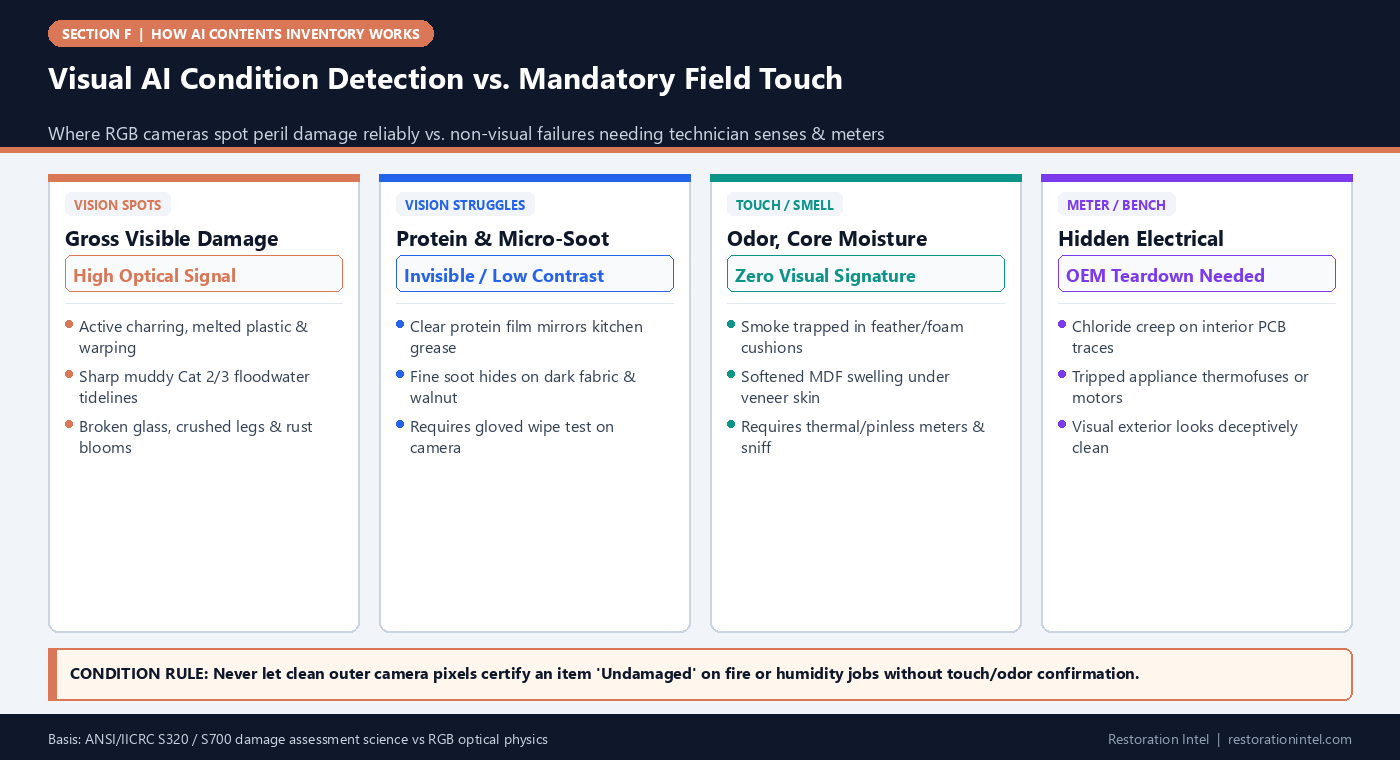
Direct answer. Visual AI reliably detects gross flame char, clear floodwater tidelines, crushed framing, and heavy particulate soot — yet cannot verify lingering smoke odor inside foam, sticky protein film, wet MDF hidden underside swelling, or internal circuit corrosion that demand physical field touch, smell, or meters.
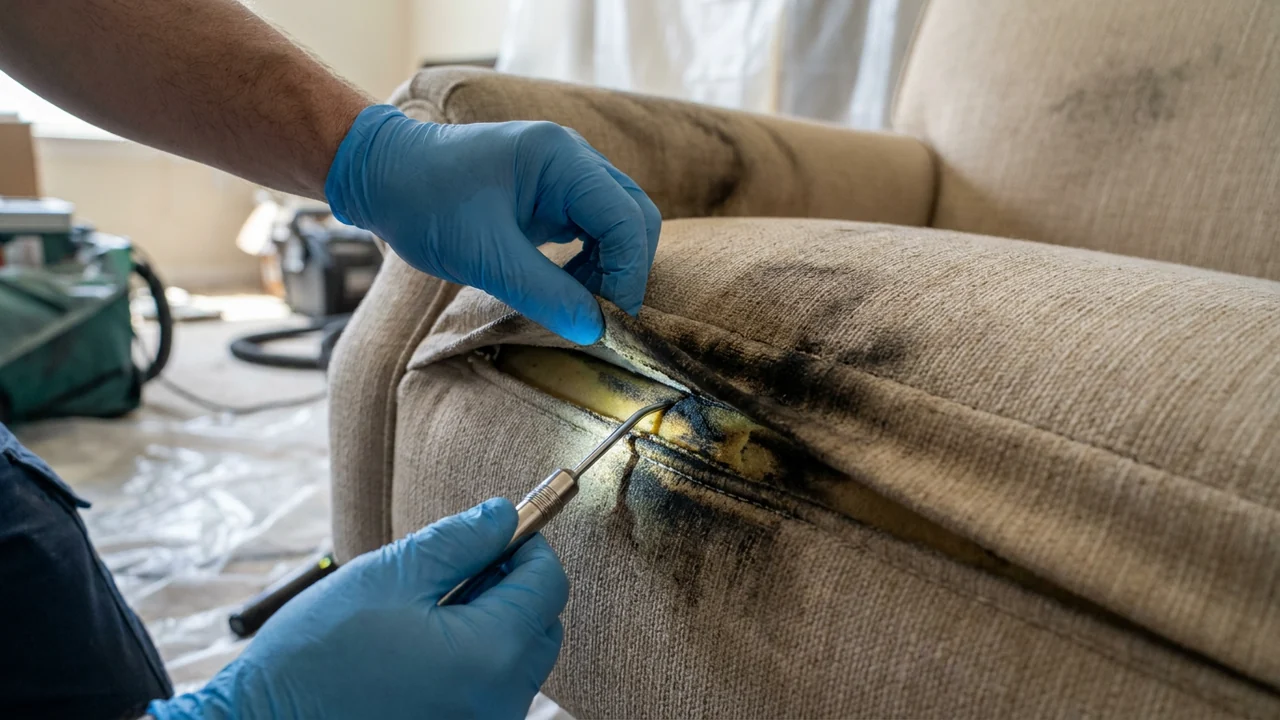
Knowing *what* sits in a burned kitchen solves half the contents schedule; knowing *how badly it was hurt* drives the entire settlement budget — cleaning hours, ultrasonic/ozone steps, or outright total-loss replacement. As automated vision models increasingly claim automated ‘damage severity tagging’, contents leads must draw a crisp boundary between visible pixel cues and real loss physics.
Camera pixels register reflected visible light on exterior faces. They do not register hydrocarbon odor absorbed inside sofa batting, cannot press a thumb against swollen particleboard bottom rails, and cannot sniff rancid protein grease residue baked thinly onto brushed aluminum. Relying blindly on AI visual condition tags misgrades roughly a third of subtle smoke and water damage.
Peril Condition Assessment: Visual Model Signal vs. Required Field Verification
| Peril / Damage Mechanism | What AI Vision Reliably Detects | What Visual Cameras Miss Completely | Required Field Verification Technique |
|---|---|---|---|
| Heavy Fire / Direct Heat | Blistered paint, melted cords, collapsed foam, cracked screens | Internal insulation melt inside sealed motor housing | Macro exterior deformation + internal inspection if high value |
| Light Smoke & Protein Kitchen Grease | Dark soot streaks against white trim & painted walls | Sticky transparent protein odor coating dark granite, cabinets & appliances | Perform visible dry-sponge or chemical-wipe contrast swipe on camera + narrate odor |
| Cat 1–3 Water & Capillary Wicking | Visible waterline stains on pale upholstery skirts & stained boxes | Hidden underside particleboard delamination & damp foam mattress cores | Pin/pinless moisture meter contact reading photographed right on surface |
| Prolonged Humidity / Hidden Mold | Blooming white/green surface colony patches on leather & wood | Musty microbial growth beneath dresser backboards & sofa dust covers | Tilt furniture lightly or lift bottom dust cloth under bright worklight |
| Water / Acidic Smoke on Electronics | Mud splash on bottom chassis feet | Microscopic hydrochloric acid corrosion creeping across copper circuit boards | Authorize qualified electronics bench diagnostic rather than exterior wipe pass |
Making Invisible Damage Visible on Camera for Carrier Proof
If a camera cannot smell synthetic smoke embedded inside a $3,200 sofa or feel soggy plywood under a heavy bookcase, carrier desk examiners reviewing still photos face the exact same blind spot! The most persuasive technicians turn invisible physical tests directly into clear camera evidence.
Draw a single straight clean-wipe streak across a lightly coated cabinet door with a white dry chemical sponge so contrast jumps visually; hold a lit moisture meter reading `24.6%` straight against a damp dresser side panel; tilt swollen laminate shelves slightly so separation seams face the lens. Those quick actions feed multimodal fusion pipelines and bulletproof adjuster files simultaneously.
- Distinguish pre-existing wear honestly: Flag pre-loss pet scratches, chipped corners, and aged rust explicitly during walkthroughs per S320 baseline documentation.
- Never certify electronics safe visually: Clean plastic exterior housings routinely conceal acidic soot corrosion that causes electrical shorts weeks after loss (S700 risk guidance).
Pairing Field Audio Tags With Visual Condition Scoring
Because vision alone under-scores protein odor, soft-goods dampness, and mechanical stiffness, spoken crew tags (`Heavy acrid smoke odor in wool rug`, `Swollen seam on lower left drawer`) should carry override priority inside multimodal damage fields. When an audio note records peril damage despite clean-looking RGB frames, route the line cleanly to cleaning/triage scope rather than letting vision drop it to `No Damage`.
Avoiding Automated Total-Loss Overreach
Just as cameras miss hidden odor, raw visual detectors sometimes over-condemn perfectly cleanable hard surfaces coated in light loose ash because soot looks dramatic in high contrast. Keep restore-vs-replace decisions grounded in estimator judgment and all-in cost math rather than visual severity percentages alone.
Field Execution Checklist
- Shoot a dry-sponge contrast swipe on camera whenever light smoke or transparent protein grease sits invisible on dark finishes.
- Include readable moisture meter contact screens inside macro photos of subtle water-affected wood or upholstery.
- Override AI `Undamaged` defaults with explicit field voice notes whenever odor, moisture feel, or sticky residue exists.
- Never mark electronic appliances clean/safe from clean exterior plastic shots; escalate exposed electronics for proper testing.
- Log obvious pre-existing damage honestly during Room Anchor checks to keep carrier negotiations crisp.
Related Restoration Intel Guides & Reference Standards
- Companion Brief (F-06): Multimodal Fusion: Combining Visual Clues, Room Context, and Audio Descriptions Into One Line Item
- Companion Brief (A-10): Inter Rater Reliability Contents Estimators Field Technicians
- Companion Brief (A-15): Total Loss Threshold Accuracy Cleaning Cost Vs Replacement
- Companion Brief (F-03): Voice-Narrated Inventory Capture: How Speech Recognition Combines With Video to Resolve Ambiguous Items
- Internal Guide: Contents Restoration After Fire: Pack-Out Protocols
- Primary Authority: ANSI/IICRC S320 Standard for Professional Contents Restoration
- Primary Authority: ANSI/IICRC S700 Fire & Smoke Restoration Standard
- Primary Authority: ANSI/IICRC S500 Water Damage Standard
- Primary Authority: NIST AI Risk Management Framework
Frequently Asked Questions
Can AI detect smoke odor from high-resolution video?
No. Cameras only capture optical pixels; smoke smell, damp sponge foam cores, and greasy protein residues require human field senses and physical touch.
How do crews prove light invisible smoke damage to an adjuster from photos?
Shoot a contrasting white chemical dry-sponge swipe streak directly across the coated surface and pair it with HVAC/air-register soot context photos.
Why shouldn't visual models trigger automatic total-loss disposal?
Heavy loose soot looks catastrophic visually yet often wipes clean easily on glazed ceramics or solid metal, while pristine-looking wet electronics can be total losses internally.
Should technicians put moisture meters directly in frame?
Yes — photographing pin or pinless meter readings resting squarely against affected wood panels provides indisputable visual damage documentation.
.md twin (ai-condition-grading-damage-tagging-visual-vs-field-touch.md).