Direct Answer: Microbial contents cleaning relies on physical source removal—true HEPA vacuuming, detergent agitation, damp wiping, and specialized textile washing—rather than biocide masking, backed by negative-pressure processing booths, moisture checks, and per-item QA sign-off proving return to ANSI/IICRC S520 Condition 1.
.md twin for estimator QA and carrier file documentation.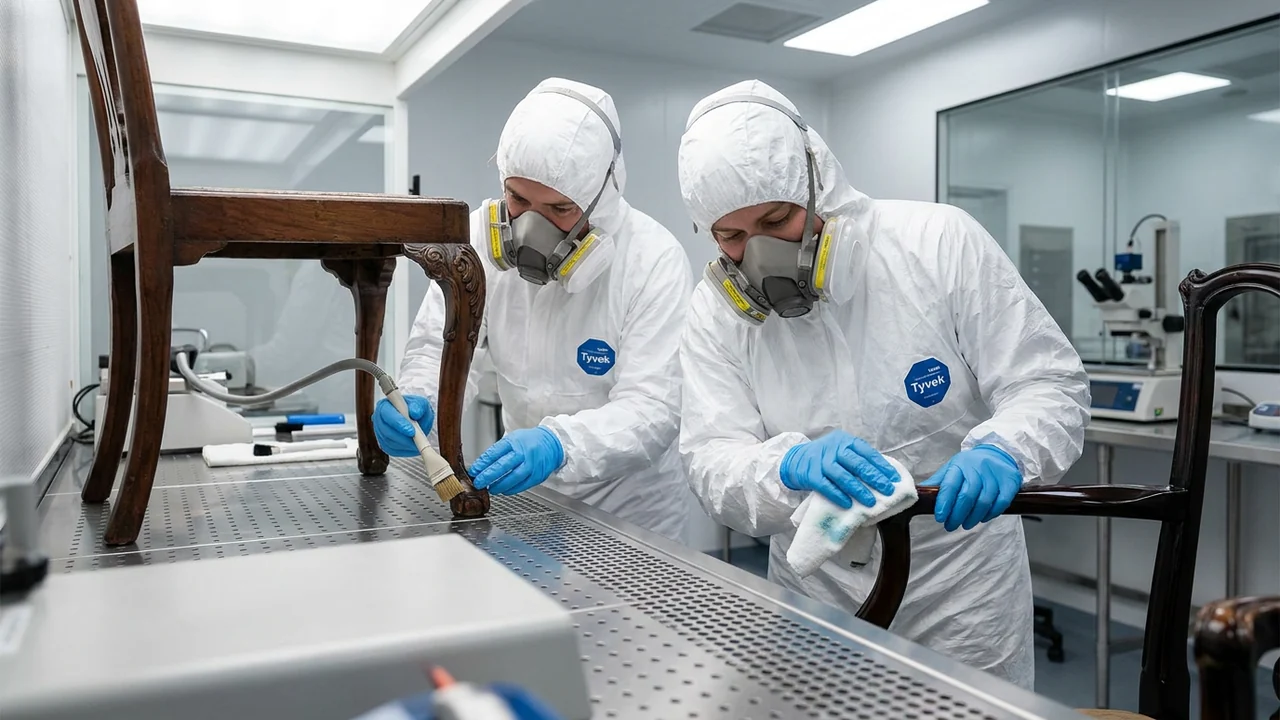
Once restorable Condition 2 and surface Condition 3 contents arrive inside a warehouse quarantine bay, processing success hinges on one principle emphasized across both ANSI/IICRC S520 and US EPA mold remediation guidance: physical removal of fungal biomass and settled spores. Simply spraying disinfectants, sanitizers, or masking fragrances over colonized wood or dusty electronics fails remediation standards because dead spores and cell-wall fragments remain allergenic.
Different material substrates demand carefully matched mechanical and wet-cleaning workflows. High-efficiency particulate air (HEPA) vacuuming with soft brush attachments lifts loose particulates without embedding them deeper; controlled detergent damp wiping lifts adhered residue off glass, metal, and sealed hardwood without water-spotting finishes; and specialized wet-cleaning systems flush spores out of washable Condition 2 textiles.
Equally important for carrier acceptance under ANSI/IICRC S320 and US EPA IAQ best practices is proving the work happened inside controlled engineering bays and documenting the final Condition 1 state—using visual raking-light inspection, equilibrium moisture checks, and barcode-linked processing logs.
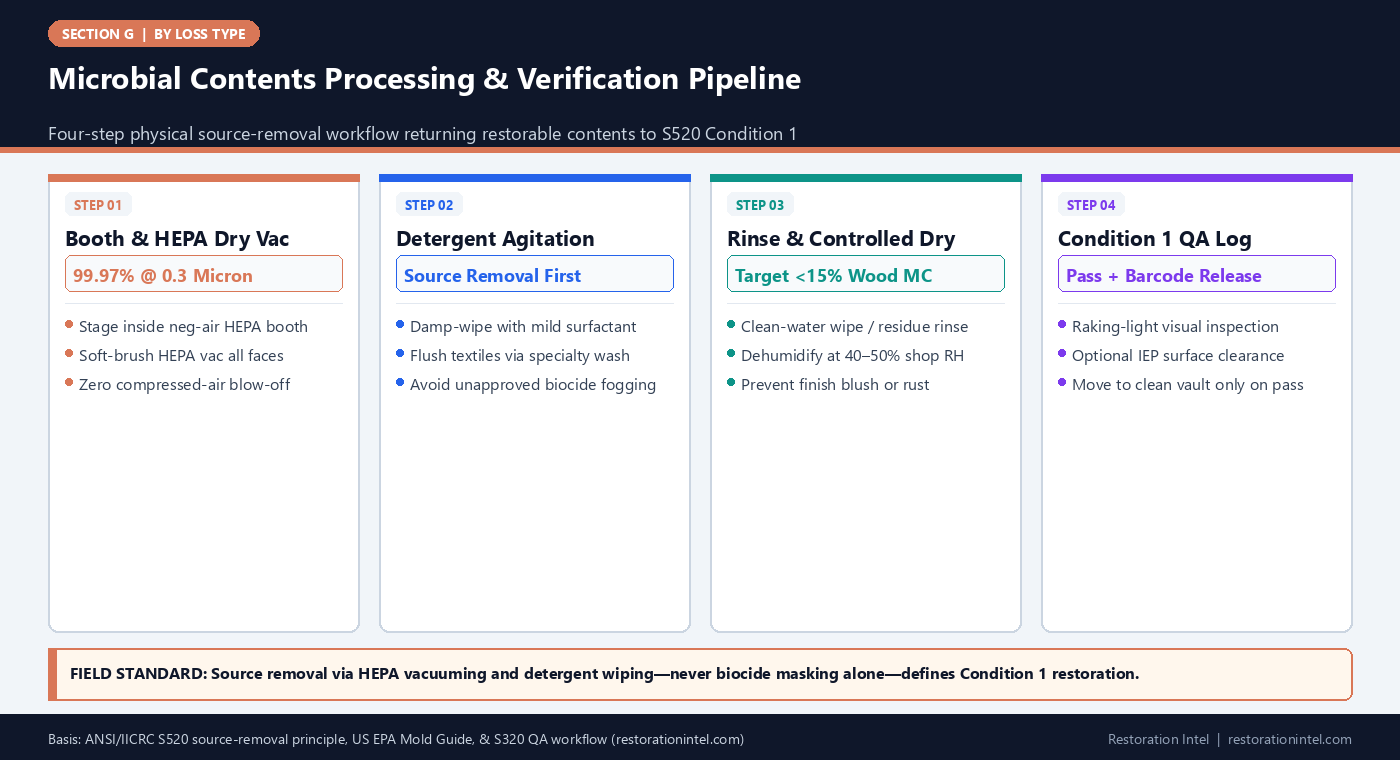
Microbial Contents Processing & Verification Pipeline
Substrate-Specific Microbial Cleaning Methods & Processing Documentation
Standardized physical removal protocols, chemistry controls, and post-cleaning verification checks by material class.
| Content Substrate | Primary Physical Removal Method | Detergent / Moisture Control | Prohibited Shortcut | Verification & File Documentation |
|---|---|---|---|---|
| Non-Porous Glass, Ceramic, Cookware | True HEPA vacuuming + immersion or multi-bucket detergent wash | Mild alkaline/neutral surfactant + clean-water rinse + immediate towel dry | Dry wiping without HEPA pre-vac or skipping rinse step | Visual zero-film check, count reconciliation, batch clean log |
| Stainless, Chrome & Coated Metals | HEPA vacuuming + microfiber damp wipe | pH-neutral cleaner; dry immediately and apply light protective coat if bare steel | Acidic or bleach solutions that pit stainless steel or strip plating | Raking-light sheen check, corrosion note, barcode sign-off |
| Sealed Hardwood Furniture | HEPA soft-brush vacuum + overlapping microfiber damp wipe | Low-moisture surfactant wipe followed by clean damp-rag rinse and dry buff | Saturating joints, using steam mops, or heavy wet scrubbing | Raking-light check on undersides, <15% wood MC log, pre/post photo |
| Finished / Sealed Leather | HEPA vacuum with crevice/brush tip + specialist leather cleaner | Controlled low-moisture pH-balanced leather emulsion + conditioner | Alcohol/bleach wipes that strip dye or crack hide fibers | Odor check, colorfastness log, technician sign-off |
| Washable Condition 2 Textiles | HEPA pre-vac if heavy dust + specialty wet-cleaning / Esporta wash | EPA-compliant detergent agitation + multiple high-dilution rinse cycles | Ozone-only closet hang without physical spore flushing | Wash-cycle batch ID, dry-weight check, odor-free QA sign-off |
| Restorable Electronics (External / Dry PCB) | ESD-safe HEPA vacuuming inside clean booth; wipe exterior casing | 99% isopropyl alcohol on uncorroded contacts/housings where tech-approved | High-pressure compressed air blowing spores into room or shop | Bench power-on & diagnostic pass certificate, serial match |
Physical Source Removal vs Biocide and Fogging Shortcuts
Both ANSI/IICRC S520 and US EPA mold remediation guidance draw a bright line between cleaning and disinfecting. Dead fungal spores, hyphal fragments, and mycotoxin-bearing cell walls still trigger allergic and irritant reactions in building occupants even after chemical biocides render them non-viable. Therefore, spraying an EPA-registered antimicrobial across dirty furniture without physical removal fails the fundamental definition of remediation.
True remediation starts with mechanical source removal: true HEPA vacuuming (99.97 percent efficiency at 0.3 microns, verified sealed units—not consumer shop vacuums fitted with aftermarket cartridges) followed by surfactant-assisted damp wiping or specialized immersion washing. Surfactants break surface tension and lift microscopic spores into disposable microfiber cloths or wash effluent so contaminants physically leave the object.
Where an approved antimicrobial or sanitizer is specified by project protocol—such as after sewage-plus-mold overlap or specific commercial hygiene rules—it must be applied strictly as a secondary step on already pre-cleaned, non-porous surfaces according to product label dwell times and EPA IAQ ventilation precautions.
- HEPA vacuum first, wet-wipe second: Lifting dry loose particulates before introducing damp cloths prevents smearing spores into wood grain.
- Fold-and-flip microfiber discipline: Use clean cloth quadrants for every pass and bag used wipes immediately inside the booth.
- Zero fog-and-forget claims: Never bill antimicrobial fogging or ozone treatment as a standalone cure for settled mold spores.
Substrate-Specific Workflows for Wood, Textiles, and Electronics
Applying one aggressive cleaning chemical across every household item creates costly secondary damage—bleach pits stainless appliances, excess water swells wood veneer joints, and harsh solvents cloud piano lacquer. Processing rooms must route items through substrate-specific stations staffed by trained contents technicians.
On sealed hardwood tables and casegoods, crews start with a gentle horsehair-brush HEPA vacuum pass across tops, carved legs, drawer interiors, and raw undersides, then wipe with a wrung-out microfiber cloth dampened in mild neutral detergent before immediately wiping dry. For washable Condition 2 clothing, bedding, and drapes, specialized hydraulic-action or multi-rinse wet-cleaning machines outperform standard dry-cleaning solvents at flushing insoluble particulate spores from fabric weaves as noted in Contents Cleaning SLAs by Category.
Electronics require the highest restraint. Only Condition 2 units with light dry exterior dust or verifiable clean internal boards should enter ESD-safe HEPA cleaning; units showing active fungal growth across insulated wiring harnesses, sticky corrosion on circuit traces, or mold inside sealed foam cooling ducts should pivot immediately to technical non-salvageable status.
- Wood moisture guardrails: Keep damp wiping brief and verify wood moisture equilibrium returns below roughly 12 to 15 percent in climate-controlled drying bays.
- Textiles test-batch check: Separate colorfast everyday washables from delicate wool, silk, or structured suiting before immersion cycles.
- Never blow out PCs in open shop: Perform electronics HEPA vacuuming exclusively inside negative-pressure ESD cleaning hoods.
Engineering Controls Inside the Warehouse Processing Booth
Cleaning colonized or spore-dusted belongings on open shop tables right next to finished clean storage vaults defeats every field containment step taken at the loss site. High-performing contents facilities route microbial lots into dedicated negative-pressure cleaning booths equipped with continuous HEPA air scrubbers, washable non-porous workbenches, and point-of-use HEPA vacuum stations.
Technicians inside microbial cleaning booths maintain appropriate respiratory and dermal protection matched to exposure severity, keep food and clean packing supplies strictly outside the booth perimeter, and bag dirty HEPA vacuum bags and spent microfiber wipes before shifting work orders.
Just as important is post-cleaning drying discipline. Newly washed wood, leather, and textiles must dry inside dehumidified, HEPA-filtered staging rooms maintained around 40 to 50 percent relative humidity so residual moisture never triggers secondary mold bloom inside wrapped storage crates—aligning processing craft with quarantine processing standards.
- Dedicated clean/dirty bay flow: Move items one-way from Dirty Intake -> HEPA/Wash Booth -> Controlled Dry -> Clean QA Release.
- Daily booth sanitation: Damp-wipe stainless benches, floor mats, and tool handles between different job lots.
- Verify dry equilibrium before wrapping: Never seal wood furniture or boxed linens in plastic wrap while internal moisture remains elevated.
Post-Cleaning Verification, Clearance Proof, and Processing Logs
Carriers increasingly audit microbial cleaning invoices for proof that cleaning actually restored items rather than merely relocating dust. A defensible processing packet under ANSI/IICRC S320 ties every cleaned barcode or batch lot to timestamped pre- and post-cleaning photos, cleaning method codes, technician sign-off, and final QA release.
Post-cleaning inspection begins with the naked eye under bright raking LED light: surfaces must show zero visible fungal growth, dust films, or lingering musty odors. On high-value or commercial microbial claims—or where an independent IEP oversaw initial assessment—third-party surface verification such as tape-lift microscopy or swab/ATP screening on representative hard and soft goods provides objective third-party corroboration of Condition 1 status.
Archive all cleaning batch logs, wash-cycle records, electronics bench test reports, and QA release timestamps in one searchable packet. That paper trail prevents post-delivery odor callbacks and protects cleaning margin during desk review.
- Three-point QA release check: Require raking-light visual cleanliness, normal dry-odor check, and equilibrium moisture pass before vaulting.
- Pre/post macro pairs: Attach matched before-and-after photos on hero Tier 1 pieces to validate specialty cleaning labor.
- Independent IEP clearance separation: When surface tape-lift clearance is specified, engage an independent IEP rather than self-certifying.
Practitioner Verification Checklist (G-23)
- Perform all microbial contents cleaning inside dedicated negative-pressure HEPA booths using true HEPA vacuuming before any wet wiping.
- Enforce physical source removal with mild surfactants and specialized textile washing rather than relying on biocides or ozone fogging alone.
- Match cleaning chemistry and moisture levels to substrate sensitivity (neutral damp-wipe on sealed wood; zero harsh bleach on stainless steel).
- Dry cleaned items in climate-controlled 40–50% RH staging bays and verify moisture equilibrium before wrapping for clean vault storage.
- Log barcode-level cleaning methods, pre/post QA photos, raking-light pass checks, and independent IEP clearance results where applicable.
Standards, Authority References & Related Reading
Primary standards, insurance definitions, and sibling Restoration Intel guides referenced in this brief:
- ANSI/IICRC S520 Mold Remediation Standard
- US EPA Mold Remediation in Schools and Commercial Buildings / Guide
- US EPA Indoor Air Quality (IAQ)
- ANSI/IICRC S320 Standard for Professional Contents Restoration
- Related Guide: Mold & Prolonged Humidity Microbial Losses: Non-Salvageable vs Restorable Criteria
- Related Guide: Mold & Prolonged Humidity Microbial Losses: Pack-Out Sequencing & Cross-Contamination Containment
- Related Guide: Mold & Prolonged Humidity Microbial Losses: Carrier Scope Justification & Total-Loss Defense
- Related Guide: IICRC Cat 3 Contents Pack-Out Protocol
- Related Guide: Contents Cleaning SLAs by Category
.md twin for desk QA and team training.Frequently Asked Questions
Why can't crews just spray antimicrobial disinfectant on moldy furniture instead of HEPA vacuuming?
Dead mold spores and fungal fragments still cause allergic and irritant responses in occupants. Both ANSI/IICRC S520 and US EPA mold guidance require physical source removal via HEPA vacuuming and detergent wiping rather than killing mold in place.
Is compressed air safe for blowing mold dust out of electronics inside a restoration shop?
No. Blowing compressed air in an open shop aerosolizes spores across workbenches and clean vaults. Electronics cleaning must use ESD-safe true HEPA vacuuming inside a negative-pressure hood or booth.
How do contents facilities verify cleaned mold items are safe to move into standard clean storage?
Items pass through a documented QA release gate verifying zero visible residue under raking light, no residual musty odor, safe equilibrium moisture levels, and—when specified—independent IEP surface clearance testing.
What documentation helps justify specialty microbial cleaning rates to a carrier desk examiner?
Maintain item- or batch-level logs tying barcodes to containment booth usage, HEPA and detergent method codes, pre-and-post cleaning photographs, wash-batch records, and final QA sign-off.