Direct Answer: Veterinary cleanability vs. total-loss triage separates sealed stainless hardware, non-porous kennel panels, and factory-sealed retail supplies that can be safely decontaminated from surgical electronics, microfluidic analyzers, porous exam textiles, and compromised pharmaceuticals that require OEM evaluation or mandatory condemnation.
.md twin for estimator QA and carrier file documentation.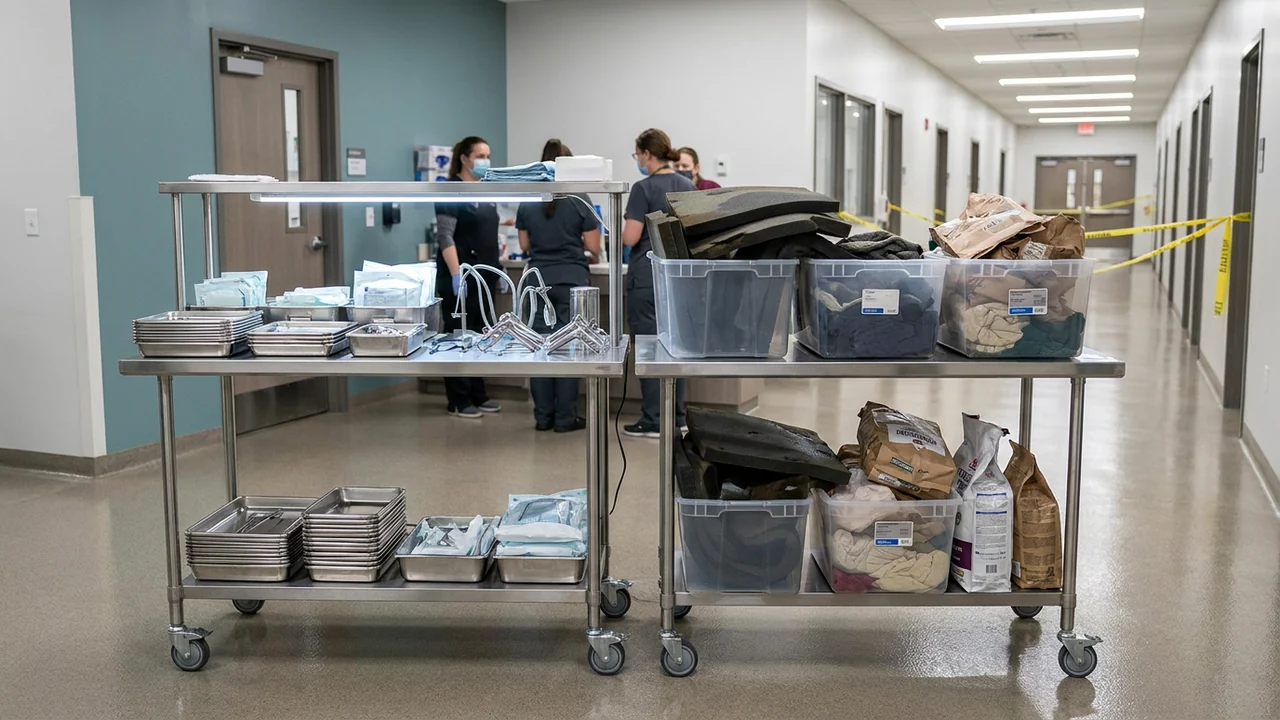
Walking through a smoke-damaged or water-intruded veterinary hospital presents one of the sharpest triage paradoxes in commercial contents restoration. Two rooms separated by a single corridor can hold heavy-gauge 304 stainless steel wet-prep tubs that clean up like new alongside multiparameter anesthesia monitors, benchtop hematology analyzers, and isoflurane vaporizers whose external casings wipe clean in five minutes while their internal circuitry and optical chambers are permanently compromised.
Unlike general office furniture, veterinary contents operate at the intersection of clinical infection control, precision diagnostic optics, and controlled pharmaceutical custody. Applying residential wipe-and-deodorize assumptions to a surgical suite, dental operatory, or isolation ward under ANSI/IICRC S320 invites immediate pushback from hospital medical directors, biomedical service vendors, and commercial desk adjusters alike.
Effective triage pairs physical peril boundaries from ANSI/IICRC S500 and ANSI/IICRC S700 with manufacturer sterility tolerances. Clinical and regulatory disclaimer: Restoration contractors do not certify medical devices for animal patient use or render legal or pharmacy compliance opinions; attending veterinarians, biomedical engineers, OEM service departments, and state or federal veterinary pharmacy and DEA authorities govern clinical reuse and controlled-substance disposition.
Veterinary Hospital Cleanability vs Total-Loss Triage Tiers
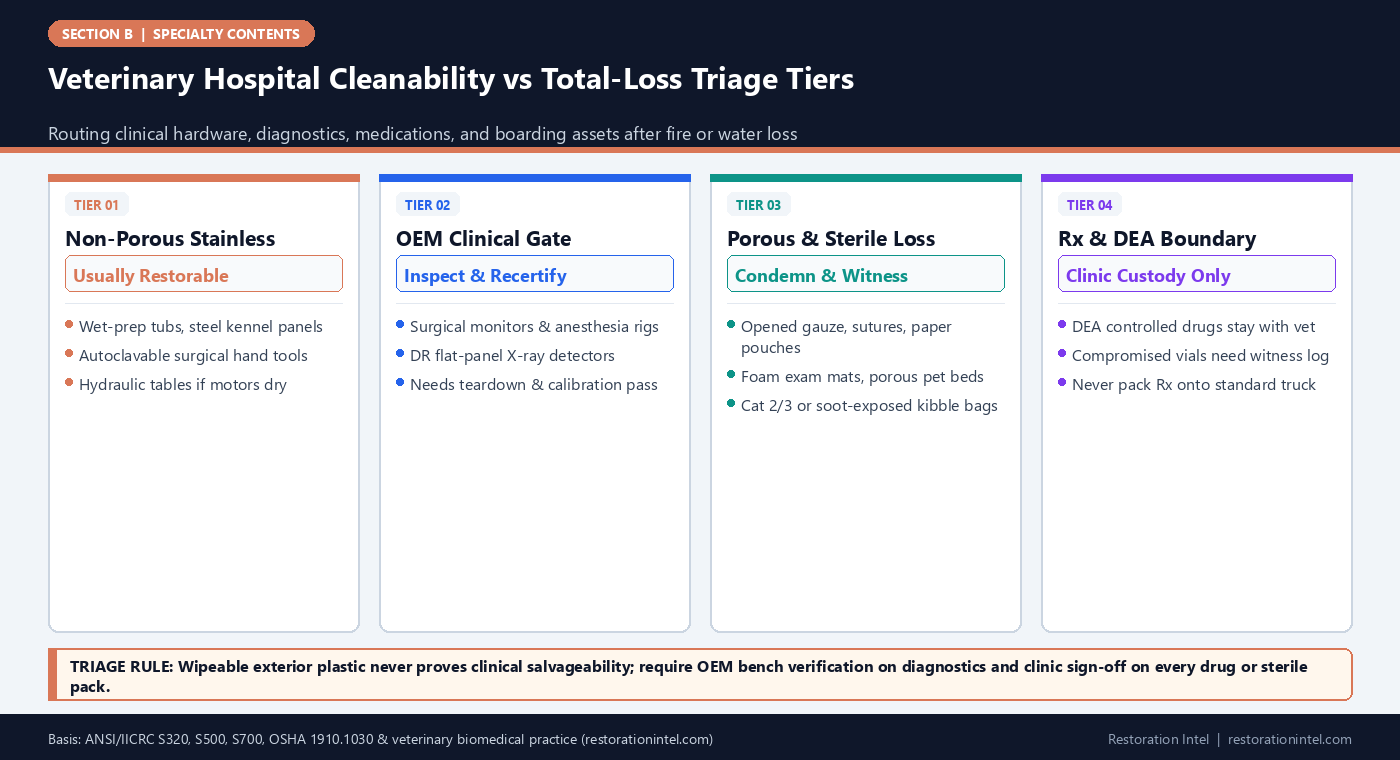
Veterinary Asset Cleanability vs Total-Loss Triage Matrix
Practical disposition rules across clinical, surgical, pharmaceutical, and retail zones in veterinary facilities.
| Asset Category | Clean / Cat 1 Water | Cat 2 / Cat 3 Bio-Water | Smoke, Soot & Thermal | Required Triage Proof |
|---|---|---|---|---|
| Multiparameter Surgical Monitors (ECG, SpO2, EtCO2) | Condemn if internal PCB wet; bench-test if dry housing splash only | Total loss if water entered vents, ports, or battery bay | OEM teardown; acidic soot corrodes micro-boards and gas sensors | OEM bench report, serial photo, and moisture/soot entry shots |
| Benchtop Blood & Chemistry Analyzers | OEM optical/fluidic inspection required before clinical reuse | High total-loss rate; bio-aerosol fouls microfluidics and optics | Usually total loss if smoke drawn through cooling fans | Manufacturer error-log export and authorized service condemnation |
| Hydraulic & Electric Lift Exam / Surgery Tables | Restorable if actuator housings, foot pedals, and cords stay dry | Pad total loss; steel base restorable after S500/OSHA decon | Clean stainless frame; replace smoke-tainted vinyl/foam top | Actuator continuity test, seam inspection, and upholstery photos |
| Stainless Kennel Banks, Runs & Isolation Cages | Restorable with mechanical wash, rinse, and approved disinfectant | Restorable for welded steel; remove porous caulk and drain gaskets | Restorable unless thermal warp compromises latches or welds | Before/after decon photos and seam/sealant replacement log |
| Veterinary Rx, Vaccines & DEA Controlled Drugs | Vet/pharmacy evaluation; cold-chain or label compromise = loss | Mandatory total loss under clinical and pharmacy hygiene rules | Mandatory total loss for exposed, heated, or smoke-tainted stock | Clinic drug inventory log; DEA registrant controls scheduled disposal |
| OTC Pet Food, Treats, Shampoos & Retail Gear | Sealed plastic jugs wipeable; paper kibble bags wet = total loss | Total loss on porous bags, open treats, and porous collars/toys | Condemn permeable bags and soft textiles; test hard sealed bottles | Batch count photos separating permeable vs hermitically sealed SKUs |
Why Surgical Monitors and Benchtop Analyzers Fail Hidden-Damage Tests
General contents estimators frequently misclassify veterinary diagnostic hardware because modern clinic equipment sits inside wipeable ABS polymer shells. A multiparameter patient monitor, portable veterinary ultrasound, or benchtop dry-chemistry blood analyzer may show only light soot dusting on its touchscreen bezel after a back-room electrical fire. Yet every cooling intake slotted along the rear chassis pulls combustion gases, chlorides, and fine carbon particulates directly across unsealed printed circuit boards, optical lenses, and sidestream capnography pumps.
Under corrosion creep mechanics, acidic smoke residues absorb ambient humidity over days and weeks, etching copper traces and causing intermittent sensor drift. In a human or veterinary operating theater, an intermittently drifting EtCO2 or blood-pressure reading is clinically unacceptable—meaning cosmetic cabinet cleaning without internal verification creates severe patient-safety and malpractice exposure.
Benchtop hematology, electrolyte, and immunoassay analyzers carry an even tighter optical threshold. Their internal photometers, centrifuge spindles, and peristaltic reagent lines depend on dust-free calibration tolerances; soot particulates or Category 2/3 humidity inside sample chambers regularly prompt OEM service teams to issue formal condemnation letters rather than risk skewed patient lab results.
- Never power on wet or soot-drawn electronics: Energizing a contaminated surgical monitor shorts power-supply boards and destroys diagnostic evidence; refer to OEM teardown protocols.
- Document cooling fans and ports: Photograph rear air vents, USB/probe receptacles, and battery compartments with macro lighting to prove internal exposure pathways.
- Separate probes and transducers: Ultrasound transducers, SpO2 clips, and temperature probes often carry independent replacement values and softer elastomer seals than main consoles.
Hydraulic Lift Tables, Wet-Prep Tubs, and Stainless Kennel Systems
Heavy mechanical gear in treatment rooms and boarding wings yields high salvage return when crews separate restorable stainless steel from porous cushions and flooded drives. Welded 304 stainless wet-prep tables, dental sink grates, and modular kennel banks tolerate degreasing, ultrasonic hardware cleaning, and hospital disinfection under OSHA 1910.1030 and ANSI/IICRC S320.
Hydraulic and electric lift tables require component-level triage. If Category 2 or Category 3 water submerges a floor-level scissor-lift motor, foot pedal, or battery charger, replacing the lower drive sub-assembly may be warranted while the stainless top remains salvageable. Conversely, padded exam mats, V-trough positioners, and stitched vinyl cushions rarely survive sewage wicking or protein smoke because contaminants penetrate needle perforations into open-cell foam.
In kennel rooms, inspect perimeter silicone caulk, acoustic baffles, and plastic grates. Even when stainless kennel doors clean well, porous acoustic foam absorbs odor permanently after fire or mold events and requires replacement.
- Split frame from cushion: Log stainless hydraulic frames separately from replaceable padded tops so sound steel is not scrapped.
- Check hydraulic oil reservoirs: Flooded sumps can emulsify water into lift cylinders; verify seals before certifying salvage.
- Audit kennel acoustics and latches: Test spring latches after thermal exposure and condemn soaked sound-baffle panels.
Sterile Consumables, Opened Packs, and Diagnostic Kits Under Peril Exposure
Veterinary hospitals stock substantial sterile consumables: autoclave-wrapped surgical packs, suture boxes, IV catheters, endotracheal tubes, radiography aprons, and snap-test kits. Triage follows packaging permeability and sterility integrity—not whether a carton looks dry from across the room.
Any surgical kit wrapped in breathable autoclave paper, linen drape, or Tyvek pouches becomes non-salvageable upon wetting, microbial humidity, or smoke permeation because compromised barrier paper voids sterility assurance. Opened bulk bins of gauze, bandages, and syringes likewise cannot be decontaminated reliably.
Factory-sealed glass vials or hermetically sealed plastic canisters inside closed cabinets outside the heat zone may warrant medical-director review, though low-unit consumables in heavy smoke or Category 3 zones cost more to swab and verify than to replace under economic feasibility rules.
- Paper-pouch sterility rule: Condemn autoclave packs with damp, stained, or smoke-exposed paper barriers without attempting on-site re-sterilization.
- Temperature-sensitive test kits: Flag ELISA/snap cartridges exposed to fire heat or extended HVAC outages even if boxes appear intact.
- Lead aprons and thyroid shields: Category 3 fluid wicking into Velcro straps or stitched seams typically forces replacement.
DEA-Scheduled Drugs vs Non-Controlled Rx vs OTC Pet Supplies
Mischandling the pharmacy closet creates severe regulatory risk. Animal hospitals store DEA Schedule II–V drugs—including hydromorphone, morphine, ketamine, buprenorphine, midazolam, and pentobarbital—alongside non-controlled antibiotics, insulin, vaccines, and front-of-house over-the-counter (OTC) pet food, treats, shampoos, and collars.
Crews must enforce a strict custody boundary around scheduled drugs. Even after heat, smoke, or flood exposure, technicians must never pack controlled vials into restoration boxes, haul them to a vault, or discard them in dumpsters under EPA hazardous waste and controlled-substance laws. The clinic’s DEA registrant and veterinarian retain custody for reverse-distributor or witnessed destruction.
OTC retail merchandise follows barrier rules: multi-wall paper kibble bags, freeze-dried treats, and fabric harnesses absorb smoke and Category 2/3 moisture and route to non-salvageable counts, whereas hermetically sealed cans and non-porous shampoo bottles outside heat zones can be wipe-tested.
- Maintain a hard DEA line: Document external safe condition for the adjuster while leaving drug counts and destruction strictly to the registrant.
- Separate cold-chain biologics: Group vaccines, insulin, and blood-bank units separately so spoilage aligns with policy utility clauses.
- Split retail OTC SKUs by barrier: Photograph paper kibble bags and soft beds separately from wipeable sealed cans.
Isolation Wards, Parvovirus Bio-Boundaries, and Witness Staging
Veterinary hospitals differ from standard clinics in one critical microbial dimension: zoonotic and species-specific pathogens such as canine parvovirus, feline panleukopenia, ringworm dermatophytes, leptospirosis, and multi-drug-resistant wound bacteria. When fire suppression water or a sewer backup crosses from an isolation ward or treatment drain into general equipment storage, triage decisions must account for biological cross-contamination as well as peril damage.
Field crews wearing appropriate OSHA 1910.132 PPE should establish clean-to-dirty containment zones before moving any mobile carts or kennel hardware. Non-porous stainless cages and washable plastic transport carriers from isolation rooms require hospital-approved virucidal protocols rather than standard fragrance deodorizers, whereas porous wood, cardboard, and absorbent cat-tree carpeting inside boarding wings go straight to witness staging.
For every item triaged as total loss, stage clean witness-bin groupings by category—electronics, clinical consumables, retail bags, and porous exam pads—before disposal authorization under B-41 pack-out and recertification protocols.
- Segregate isolation-ward gear: Never mix isolation-ward stainless pans or mops with lobby retail shelving or clean surgical packs during staging.
- Verify disinfectant compatibility: Confirm cleaning chemistry won’t pit anodized aluminum dental units or cloud acrylic oxygen-cage doors.
- Lock witness sign-off before haul-off: Obtain written adjuster and clinic-owner disposal authorization before discarding condemned diagnostics or bulk retail stock.
Practitioner Verification Checklist (B-39)
- Separate non-porous stainless steel hardware and kennel panels from electronic diagnostics, porous textiles, and sterile consumables on Day 1.
- Tag all soot- or moisture-exposed surgical monitors, blood analyzers, anesthesia vaporizers, and DR detectors for OEM bench inspection—never power-test on site.
- Isolate DEA-scheduled controlled substances under the clinic veterinarian’s exclusive custody; log cabinet exposure only without handling or transporting vials.
- Split hydraulic/electric lift tables into mechanical frames vs. porous foam/vinyl cushions so restorable steel isn’t needlessly scrapped or padded tops improperly kept.
- Condemn permeable paper-pouch sterile kits, opened bandages, soaked kibble bags, and Category 2/3-exposed foam bedding with witness photos prior to disposal.
Standards, Authority References & Related Reading
Primary standards, insurance definitions, and sibling Restoration Intel guides referenced in this brief:
- ANSI/IICRC S320 Standard for Professional Contents Restoration
- ANSI/IICRC S500 Water Damage Standard
- ANSI/IICRC S700 Fire & Smoke Restoration Standard
- OSHA 1910.1030 Bloodborne Pathogens Standard
- OSHA 1910.132 Personal Protective Equipment Standard
- US EPA Hazardous Waste Framework
- Related Guide: Veterinary Hospitals & Animal Care Facilities: Scope & Hazard Boundaries
- Related Guide: Veterinary Hospitals & Animal Care Facilities: Capture, Serial & Provenance Logging
- Related Guide: Veterinary Hospitals & Animal Care Facilities: Valuation, LKQ Sourcing & Policy Traps
- Related Guide: Veterinary Hospitals & Animal Care Facilities: Pack-Out, Chain of Custody & Recertification
- Related Guide: Diagnostic Testing and OEM Teardown Protocols: Proving Internal Smoke, Moisture, or Surge Damage
- Related Guide: Cleaning Cost vs Depreciated ACV: Navigating the Economic Feasibility Trap on Restorable Contents
.md twin for desk QA and team training.Frequently Asked Questions
Can a soot-exposed veterinary anesthesia machine or surgical monitor be restored just by wiping the outer case?
No. Cooling fans and rear vent ports pull acidic soot particulates across internal circuit boards, pressure transducers, and vaporizer seals. External cleaning alone leaves latent corrosion risk and does not restore clinical clearance without OEM teardown and calibration.
Who handles DEA-controlled medications after a fire or flood at a veterinary hospital?
The clinic’s DEA registrant and attending veterinarian retain legal custody of all controlled substances. Restoration crews should never pack, transport, or discard scheduled drugs, and should document only exterior cabinet conditions while the clinic coordinates compliant witness destruction or transfer.
Are stainless steel veterinary kennel banks and wet-prep tables usually restorable?
In most clean water, Category 2/3 water, and non-deforming smoke losses, welded 304 stainless steel kennels and wet-prep tubs are restorable through mechanical washing, removal of compromised caulk or rubber gaskets, and hospital-approved disinfection.
What happens to sealed retail pet food and treats during smoke or water triage?
Multi-wall paper kibble bags and permeable treat pouches exposed to floodwater or heavy smoke odor are typically condemned as non-salvageable because contaminants penetrate packaging. Hermetically sealed cans or non-porous plastic bottles outside heat zones may be wipe-tested if clinic and carrier agree.
Why do paper-pouch autoclave surgical packs become total losses after moisture or smoke exposure?
Sterile barrier pouches rely on breathable medical-grade paper or Tyvek to block microbes while allowing steam or gas penetration during sterilization. Once wetted, stained, or permeated by smoke particulates, barrier integrity is compromised and the pack cannot be trusted as sterile.