Published November 14, 2026. By Will Tygart · Restoration Intel Editorial Desk.
Direct answer. Brand and model identification routinely drops below 60 percent on soot-darkened, backlit, or tightly installed appliances unless field technicians follow structured distance, oblique-lighting, and fallback macro protocols calibrated to real loss environments.
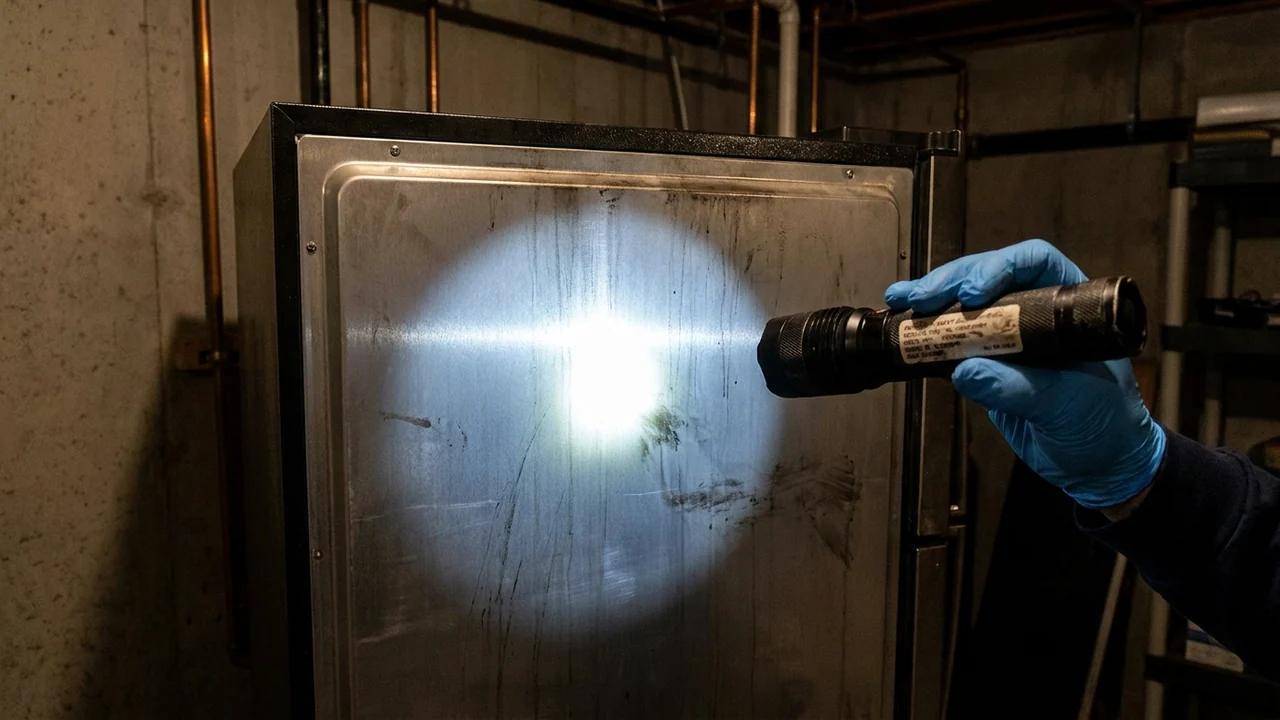
In clean retail showrooms, smartphone cameras and optical character recognition (OCR) pipelines read appliance brand badges and UPC labels with near-perfect ease. Inside a smoke-damaged kitchen or flooded utility basement, those clean assumptions collapse immediately. Heavy soot coats brushed stainless control panels, direct phone flash bounces blinding white glare off embossed metal plates, and stacked laundry towers leave three inches of clearance behind rear serial stickers.
Understanding exactly where and why brand/model capture degrades prevents estimators from drowning in unidentifiable generic lines — and stops operations leads from setting unrealistic 99 percent label-capture expectations on impossible clearances without mechanical pull-out or mirrors.
Loss Environment Degradation Matrix & Recovery Tactics
| Asset Category | Primary Label Location | Top Loss-Site Failure | Target Verified Match Band | Practical Field Recovery Step |
|---|---|---|---|---|
| Major Kitchen Appliances | Inside door frame / crisper liner / bottom kickplate | Grease + soot haze; warped paper stickers near leak line | 88–95% clean capture | Wipe soot gently with dry microfiber cloth only after context photo; pull bottom kickplate bezel |
| Built-In Wall Ovens / Stack Units | Inner upper door lip or rear junction panel | Zero rear access before electrical disconnect | 75–88% without pullout | Shoot open-door jamb sticker + front knob layout for OEM model family match |
| Small Countertop Electronics | Underside molded plastic housing | Heavy cord clutter; low-contrast embossed gray-on-black text | 80–90% clean capture | Flip unit on dry towel; bounce side flashlight across embossed lettering |
| Garage / Shop Power Tools | Side motor housing foil decal | Oil grime + abrasion predating loss | 70–85% exact model | Capture color trade dress + battery voltage platform + chuck/blade capacity |
| Flat-Panel TVs & Monitors | Rear VESA bracket recess | Wall mounts hide stickers tight to drywall | 65–85% mounted; 95% unmounted | Use telescoping mirror/selfie angle behind VESA gap or capture OS About screen if powered safely |
Why Missing Brand and Model Drops LKQ Settlement Value
An appliance line labeled ‘Stainless Refrigerator — 25 cu ft’ leaves pricing entirely at the mercy of builder-grade assumptions. Across major kitchen suites, smart TVs, prosumer audio, and cordless tool ecosystems, entry-level retail replacements sit 40 to 70 percent below mid-to-upper OEM tiers that look nearly identical in a wide room photograph.
When brand and model strings are captured reliably at first visit, estimators select exact OEM or current-generation LKQ replacements in seconds and carrier desk examiners approve pricing without supplement pushback. When they are missing, schedules wait days for someone to revisit the vault or ask the insured for old purchase emails.
- Character precision matters: A single misread digit inside an LG or Whirlpool model suffix can flip capacity, panel finish, or dispenser configuration.
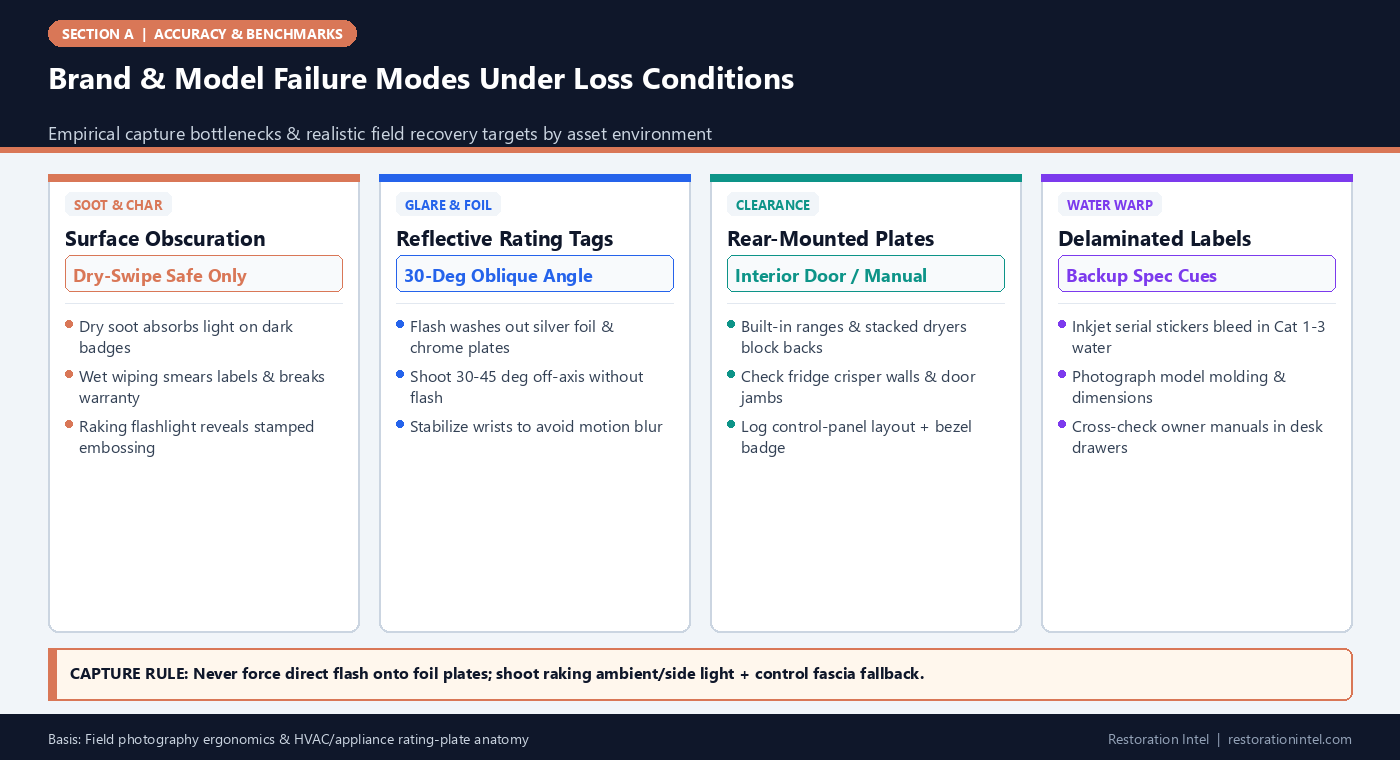
- Never wipe wet ink: Before touching any damp paper rating tag, photograph it untouched — rubbing smeared thermal ink destroys the last trace of the serial number.
Three-Shot Rule for High-Risk Tagged Equipment
High-reliability field teams stop relying on single zoom shots from waist height. For any item above $400 replacement cost, run a disciplined three-frame sequence that gives both estimators and OCR extraction models clean signal:
First, frame the full front elevation showing overall dimensions, finish, and physical condition. Second, shoot the primary badge or control fascia so tier features (knob count, induction glass, inverter branding) remain readable even if the plate fails. Third, lock macro focus 6 to 10 inches away from the rating plate with an angled light source rather than camera flash.
- Keep camera lens parallel to the tag plane to prevent trapezoidal distortion that breaks automated OCR decoders.
- Check interior door seals, crisper frames, and breaker-door manuals before reporting a unit ‘label illegible’.
Integrating Fallback Identifiers When Plates Are Destroyed
Heavy fire char or prolonged flood immersion legitimately destroys paper stickers. When a rating plate is unreadable or melted away, crews should still capture physical surrogate proofs instead of writing ‘unknown brand’.
Photograph stamped UL/CSA metal plates, distinctive handle geometry, burner grates, interior rack stamps, and exact tape-measured width/height/depth. Pairing dimensional measurements with brand emblem shots usually narrows OEM catalog matches down to one or two model families.
Field Execution Checklist
- Shoot rating plates at 6–10 inches with phone flash OFF and side LED illumination ON at a 30-degree angle.
- Always capture a front full-elevation shot showing controls and finish alongside any serial macro.
- Photograph undamaged wet paper labels BEFORE wiping or flexing the item so ink bleed doesn’t erase numbers.
- Check drawer fronts, owner manuals, and warranty folders on site when built-in unit rear plates are inaccessible.
- Record physical dimensions (width/depth/capacity) whenever direct char or corrosion destroys the OEM tag.
Related Restoration Intel Guides & Reference Standards
- Companion Brief (A-12): OCR and Rating-Plate Readability Thresholds in Damaged Appliances and Mechanical Equipment
- Companion Brief (F-05): How OCR Extracts Brand, Model, and Serial Numbers — and When Soot or Glare Breaks It
- Companion Brief (A-11): Photo-to-Line-Item Traceability Standards for Carrier Audit Readiness
- Internal Guide: Contents Restoration After Fire: Pack-Out Protocols
- Internal Guide: How Do I Write an Estimate in Xactimate?
- Primary Authority: ANSI/IICRC S320 Standard for Professional Contents Restoration
- Primary Authority: ANSI/IICRC S700 Fire & Smoke Restoration Standard
- Primary Authority: Verisk XactContents Platform Overview
- Primary Authority: OSHA 1910.132 Personal Protective Equipment Standard
Frequently Asked Questions
What is the single biggest cause of unreadable rating-plate photos?
On-camera LED flash bouncing directly off metallic foil stickers or glossy plastic badges, which clips character edges into solid white glare.
Should technicians uninstall built-in appliances just to read rear serial tags?
Not during initial contents walkthroughs unless electrical/gas/plumbing disconnects are specifically authorized. Check interior door jambs, kickplates, and control bezels first.
What if soot completely covers a metal nameplate?
Take an initial pre-touch proof photo showing soot deposition, then lightly blot or dry-brush only the nameplate corner with a dry microfiber cloth while photographing carefully.
How does bad OCR character confusion impact carrier schedules?
Confusing ‘0’ with ‘O’ or ‘S’ with ‘5’ yields zero catalog hits in automated pricing databases, forcing manual estimator searches or wrong generic substitutions.
.md twin (brand-model-identification-accuracy-loss-conditions.md).