Direct Answer: Fair apparel and soft-goods valuation rejects arbitrary flat-percentage closet haircuts by grouping clothing, footwear, and linens into transparent condition and quality tiers—separating unworn new-with-tags garments, structured outerwear, luxury footwear, and everyday basics before applying depreciation.
.md twin for estimator QA and carrier file documentation.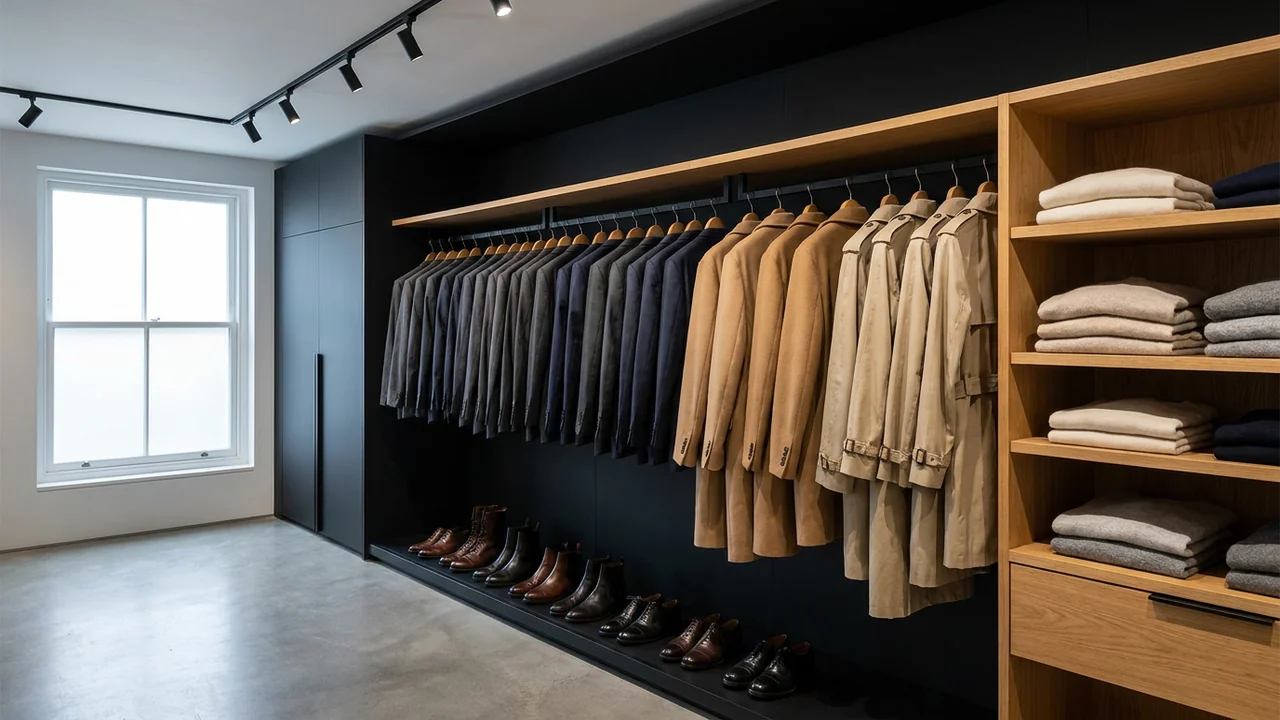
Closets and linen cupboards are where contents schedules most often degenerate into guesswork. A typical family home holds hundreds of individual garments, shoes, coats, handbags, and bedding sets ranging from $12 cotton basics to $900 tailored wool suits or technical gore-tex outerwear. When an estimator dumps an entire walk-in closet onto three generic lines—or an adjuster slaps a blanket 60 percent depreciation across every stitch of fabric—accuracy collapses for both sides.
Soft goods also interact tightly with restoration feasibility. Many textiles exposed to moderate smoke or Category 1/2 water can be restored economically through specialized ozone/wet-cleaning workflows under ANSI/IICRC S320, while charred, shrunk, or Category 3-contaminated garments become total-loss claims. Replacing blanket arbitrariness with structured closet tiering yields defensible RCV and ACV numbers that pass desk audits cleanly.
Structured Soft-Goods & Apparel Valuation Architecture
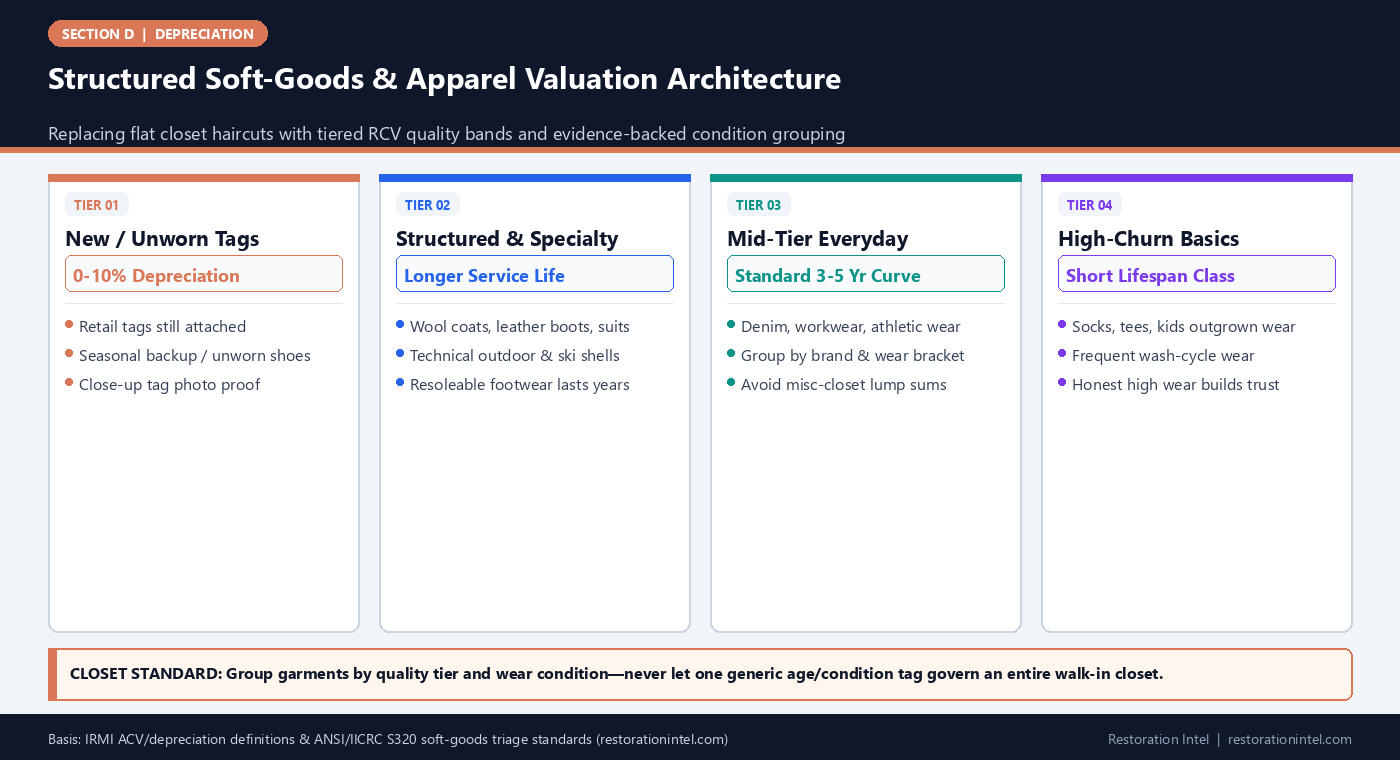
Apparel, Footwear, and Linen Tiering Guide for Contents Schedules
How construction quality, wash frequency, and restoration feasibility drive different RCV and depreciation outcomes across soft goods.
| Soft-Goods Subclass | Typical Replacement Drivers | Lifespan & Depreciation Behavior | Common Valuation Error | Defensible Field Practice |
|---|---|---|---|---|
| New-With-Tags / Unworn Stock | Exact brand/style tag MSRP or current retail | Minimal to 0% physical wear if stored clean pre-loss | Grouped into 'used 3-year clothing' blanket line | Photograph intact retail hang-tags and group separately |
| Tailored Suits, Cashmere & Outerwear | Brand, fiber content, lining & tailoring grade | 5 to 10+ yrs; worn infrequently per season | Priced at fast-fashion polyester suit RCV | Capture label, fabric tag, and tailor/dry-clean care history |
| Goodyear-Welted Leather Boots / Dress Shoes | Full-grain leather, resoleable construction | 8 to 15+ yrs with resoling and cedar shoe trees | Depreciated identically to $40 glued foam sneakers | Document leather soles, brand stamp, and heel condition |
| Technical Outdoor / Safety Workwear | Membrane rating, FR compliance, insulation spec | 4 to 8 yrs depending on abrasion exposure | Replaced with casual fleece or non-FR workwear | Record exact membrane/FR certification tag for LKQ |
| Everyday Shirts, Denim & Activewear | Department or athletic brand tier | 2 to 5 yrs depending on wash-cycle rotation | Claiming 100% Mint on faded daily-wear cotton | Bucket by Brand Tier + Condition (Good / Fair) with shelf counts |
| Bath Linens, Sheets & Bedding | Thread count, weave, down/fill weight | 3 to 7 yrs; guest linens last much longer | Mixing luxury down duvets into $25 blanket lots | Separate guest-suite vs master bedding and capture fabric tags |
Why Blanket Closet Depreciation Breaks Policy Valuation Standards
When an adjuster sees a schedule listing ‘150 Men’s Shirts @ $45 = $6,750’ with zero brand breakdown, the natural defensive reaction is to apply an aggressive blanket depreciation rate—often 50 to 70 percent—and lower the unit price to a generic mass-market average. Both shortcuts distort real indemnity: they underpay the insured who owned tailored shirts and resoleable leather boots while overlooking genuine differences between unworn seasonal garments and worn gym clothes.
Under IRMI ACV principles, value depends on actual pre-loss quality and physical wear. A clean three-bucket closet methodology takes barely longer than a sloppy bulk guess and removes the pretext for arbitrary carrier haircuts.
- Eliminate ‘Misc Clothing Lot’ lines: Split closets into explicit categories: outerwear, suiting, denim/trousers, tops, footwear, athletic, and intimates/basics.
- Tag brand tiers visibly: Group luxury/designer, technical/specialty, mid-market department store, and discount basics on separate sub-lines.
- Document closet density on site: Shoot panoramic hanger-rod and shoe-rack photos before packing so unit counts are indisputably grounded.
Separating New-With-Tags, Seasonal, and Heavy-Rotation Garments
Almost every residential walk-in closet contains garments at completely different stages of consumption. Winter wool coats worn ten times a year, formal occasion dresses, and reserve footwear stored in original boxes experience a fraction of the abrasion and laundering that shrinks everyday cotton T-shirts and running shoes.
Recording honest high wear on high-churn basics (socks, athletic shorts, children’s outgrown seasonal clothes) is one of the fastest ways to earn desk approval for low depreciation on structured outerwear, formalwear, and unworn new-with-tags purchases. Contrast proves the estimator actually inspected the closet rather than copying a single rosy age across 200 items.
- Isolate New-With-Tags (NWT): Photograph retail hang-tags clearly; NWT items suffer zero wear-and-tear prior to loss.
- Note low-cycle formal & winter gear: Flag eveningwear, ski shells, and wool overcoats with seasonal usage notes.
- Respect children’s growth churn: Children’s clothes have short ownership windows and are often newer in chronological age—or outgrown hand-me-downs—requiring candid grading.
Cleanability vs Total Loss on Smoke- and Water-Affected Textiles
Before valuing a single garment for replacement, field teams must triage what is economically and hygienically restorable under ANSI/IICRC S320 and specialized textile-restoration protocols. Dry-clean-only silk, structural wool suits, suede, and technical waterproof membranes respond differently to soot, heat shrinkage, and microbial water exposure than pre-shrunk cotton.
Emergency clothing pack-outs—cleaning an initial 7-to-14-day wardrobe rapidly so the family has wearable outfits while the rest of the claim processes—also reduce Additional Living Expense (ALE) shopping pressure. Only garments that fail test cleaning, show physical heat/scorch/dye-bleed damage, or face Category 3 bio-contamination should move to the non-salvageable replacement schedule.
- Run textile test batches first: Prove non-salvageability on delicate silks, bonded interlinings, or persistent char odor with documented test-clean logs.
- Account for luxury dry-clean limits: Check specialty fur, leather, or designer handbag care requirements against local cleaner capabilities.
- Verify sublimits on furs & accessories: Fur garments and luxury watches/jewelry often hit special homeowners theft or loss sublimits.
Footwear, Handbags, and Bedding Nuances Estimators Miss
Footwear and handbags are consistently under-documented in rushed walkthroughs. Athletic running shoes lose midsole cushioning in 300 to 500 miles (often 1 to 2 years), whereas Goodyear-welted boots, heritage leather briefcases, and structured designer handbags hold value for a decade or longer—and certain collector sneakers or heritage bags hold stable or appreciating secondary value.
Similarly, bedding schedules frequently lump $40 polyester quilts with $450 European white-down comforters and organic percale sheets. Capturing corner fabric care labels takes three seconds per bed and protects real LKQ value without inflating everyday throws, as emphasized in Contents Restoration After Fire: Pack-Out Protocols.
- Shoot shoe soles and heel counters: Unworn treads and leather soles visually confirm Mint/Good footwear status.
- Photograph bedding & quilt labels: Down fill power, wool weight, and organic weave tags drive 5x unit-price differences.
- Watch pair/set rules on suits: When smoke ruins a matching suit jacket while trousers survive, document pair-and-set value loss cleanly.
Practitioner Verification Checklist (D-09)
- Shoot wide panoramic closet rod, drawer, and shoe-rack photos before packing or bagging any textiles.
- Separate non-salvageable garments into distinct quality and condition lines rather than using one flat closet average.
- Photograph intact retail hang-tags on New-With-Tags garments and fabric/brand labels on suits, outerwear, and luxury bedding.
- Distinguish long-life resoleable footwear and structured coats from short-lifespan athletic shoes and everyday cotton basics.
- Document failed test-cleaning results or Category 3 / heat-damage proof before transferring questionable textiles to replacement RCV.
Standards, Authority References & Related Reading
Primary standards, insurance definitions, and sibling Restoration Intel guides referenced in this brief:
- IRMI Insurance Glossary: Actual Cash Value (ACV)
- IRMI Insurance Glossary: Depreciation
- ANSI/IICRC S320 Standard for Professional Contents Restoration
- ANSI/IICRC S700 Fire & Smoke Restoration Standard
- Related Guide: Condition vs Chronological Age: Documenting Pre-Loss Care to Defend Lower Depreciation Percentages
- Related Guide: Cleaning Cost vs Depreciated ACV: Navigating the Economic Feasibility Trap on Restorable Contents
- Related Guide: Pairs-and-Sets Clauses in Contents Claims: Matching China, Suits, Sectional Pieces, and Modular Systems
- Related Guide: Field Guide: Quick-Triage Decision Tree for Soft Goods, Upholstery, Casegoods, and Electronics
- Related Guide: Contents Restoration After Fire: Pack-Out Protocols
.md twin for desk QA and team training.Frequently Asked Questions
Are blanket depreciation rates like 50% on all clothing allowed?
While carriers sometimes propose an average rate on undocumented lump-sum clothing lots, true ACV depends on actual garment quality, type, and pre-loss condition. Grouping items into New-With-Tags, Good structured wear, and Fair basics defeats arbitrary blanket haircuts.
How should New-With-Tags clothing still in the closet be depreciated?
Unworn items with original store hang-tags intact have experienced zero physical wear and tear and should carry 0% or minimal depreciation when documented with clear tag photos.
Why do leather dress shoes and wool coats depreciate more slowly than running shoes?
Running shoes suffer rapid midsole foam breakdown from daily impact and sweat, whereas full-grain welted boots and seasonal wool coats experience low wear cycles and are built for multi-year servicing.
When does smoke-damaged clothing move from cleaning scope to replacement RCV?
Garments move to replacement when thermal shrinkage, char, dye bleed, structural interlining delamination, Category 3 sewage contamination, or failed documented test-cleaning proves they cannot be restored safely and economically.